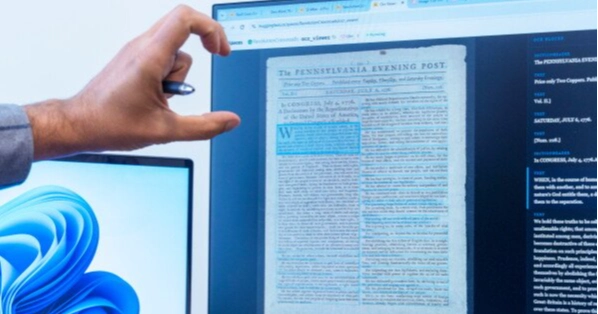
As the United States prepares to mark the 250th anniversary of its independence, the Smithsonian Institution is using artificial intelligence to uncover connections among artifacts and records from the American Revolution.
The initiative, known as Revolution Crossroads, aims to help researchers and the public search Smithsonian collections and connect them with records from institutions such as the Library of Congress.
Researchers began using AI models on the project this spring and have already found connections that would have required extensive manual searches across different catalogs. In one case, they identified a silversmith who advertised a creamer around 1774 that was similar to an item in the Smithsonian's National Museum of American History.
The project team has identified about 10,000 objects linked to people who lived between 1770 and 1810. Some items have been digitized or redigitized to make them easier for AI systems to analyze.
The broader goal is to uncover stories of people whose lives have largely disappeared from historical records.
“Maybe they're not Thomas Jefferson or George Washington, but they did live in a community and build that community,” said Becky Kobberod, the Smithsonian's chief digital and innovation officer.
Natalie Buda Smith, digital strategy director at the Library of Congress, said the project could help researchers find information across institutions rather than limiting their searches to one collection.
The Smithsonian is undertaking the project amid growing debate over AI's risks and the need for stronger oversight. Kobberod said the institution is not using the frontier AI models that have recently faced increased scrutiny.
She also stressed that historians remain involved in reviewing the AI-generated connections. Human experts can identify historical nuances, such as nicknames or terms with meanings that an AI system may misunderstand.
Despite concerns about the technology, Kobberod said the Smithsonian believes it must explore AI's potential.
“It's not going away,” she said. “We do believe we need to lean in and figure out the part that this technology plays in our work.”