Among the thousands of legal cases Meta is facing over the safety of children on its platforms, a trial beginning this week in California could have particularly significant consequences.
The states involved are seeking substantial financial penalties that could theoretically reach $1.4 trillion, along with changes to the way Meta operates Facebook and Instagram.
The lawsuit alleges that Meta knowingly designed features intended to keep children and teenagers engaged and dependent on its platforms, contributing to the growing youth mental health crisis. It also accuses the company of collecting personal information from children under 13 without obtaining parental permission, which would violate federal law.
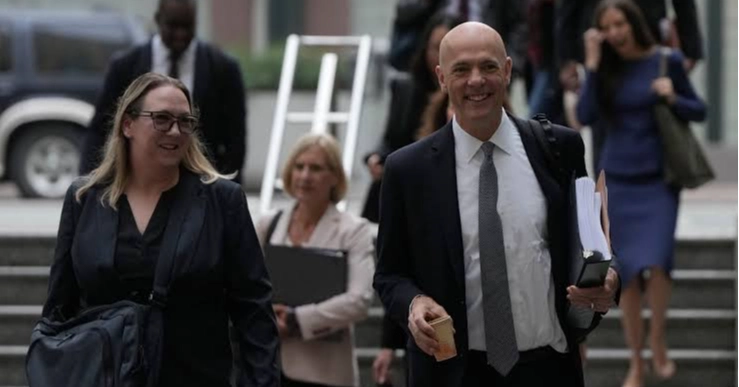
The case was filed by dozens of states three years ago. The trial beginning Tuesday in federal court in Oakland involves California, Colorado, Kentucky and New Jersey as the plaintiffs. The remaining 25 states are expected to pursue separate trials later.
Meta has rejected the allegations, saying evidence presented during the trial will demonstrate the company’s efforts to protect and support young users. The company said it has worked with parents, experts and law enforcement and conducted extensive research into issues affecting young people.
States seek significant penalties against Meta
The case presents major risks for Meta, particularly after the company lost two important cases involving alleged harm to children and teenagers earlier this year. Meta also reported an unusual decline in profits last month, partly because of $2.4 billion in legal costs.
The potential $1.4 trillion penalty disclosed by Meta in a court filing is nearly equivalent to the company’s entire market value. Legal experts say such a penalty would almost certainly push the company into bankruptcy if it were actually imposed.
Eric Goldman, a law professor at Santa Clara University, said state attorneys general are seeking an unusually strong outcome, including potentially significant financial penalties and changes to Meta's business structure.
Meta has described the proposed penalty as completely disconnected from the violations alleged by the states. The company argued in a July court filing that a penalty of that magnitude would be unprecedented in consumer-protection enforcement.
Even if the states win, however, experts believe the court is highly unlikely to impose the full $1.4 trillion amount. Cornell law professor James Grimmelmann said such a judgment would bankrupt Meta, eliminate the value held by its shareholders and potentially leave the states in control of the company.
He noted that courts have previously reduced enormous potential penalties when calculating damages for numerous individual violations. In one example involving Anthropic's AI training practices, plaintiffs initially sought $150,000 for each copyrighted book allegedly copied, but the final amount was reduced to $3,000 per book, resulting in roughly $1.5 billion in damages.
Trial focuses on alleged violations of state and federal laws
The California federal case is more complicated than a separate trial held earlier this year in Los Angeles. In that case, a state court awarded $6 million to a young woman who said she became addicted to social media as a child. The damages were assessed against Meta and Google's YouTube.
That earlier case was considered a bellwether trial, meaning it was selected from thousands of similar lawsuits to provide an indication of how arguments from both sides might perform in court. Jurors concluded that Meta and YouTube were negligent in designing or operating their platforms and that their conduct contributed significantly to the plaintiff's injuries. They also found that the companies knew their services could pose risks to minors but did not provide sufficient warnings.
The Oakland trial differs because state attorneys general are bringing the case and alleging violations of multiple state and federal laws. These include regulations covering children's privacy, false advertising and unfair competition, with penalties potentially applying to each violation.
Meta has introduced safety measures, but states want stronger protections
The trial could result in changes to the way Facebook and Instagram function, which may ultimately prove more significant than any financial penalty.
Meta has introduced several measures aimed at protecting minors. In 2024, Instagram introduced Teen Accounts, which make young users' profiles private by default and impose restrictions on messaging and content while providing parents with additional controls. Meta also uses artificial intelligence to identify possible users under 13 and detect teenagers who may be misrepresenting their ages.
However, child-safety advocates argue that these measures are not enough. Earlier this month, a judge in New Mexico ordered Meta to introduce additional protections, including limits on how long minors can use the platforms, restrictions on AI chatbot interactions and mandatory warnings. The order applies only to users in New Mexico.
Advocates say the California case could give state governments an opportunity to force broader changes to Meta's products and policies.
During jury selection last week, potential jurors were asked about the extent to which they believe Meta has contributed to declining mental health among young people. Many acknowledged that social media could play a role, while also pointing to parents, climate change and broader social conditions as other factors affecting children's and teenagers' mental health.