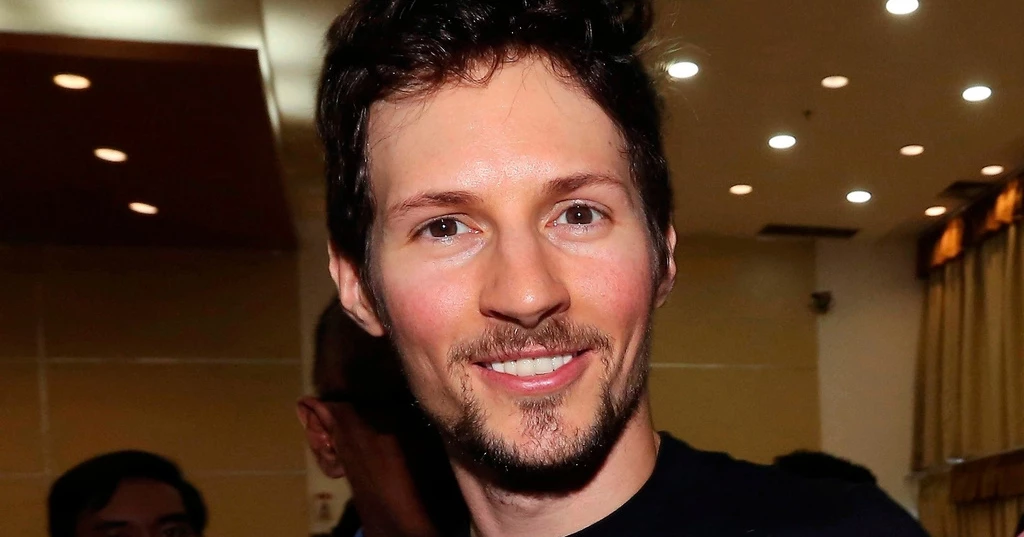
Pavel Durov, the billionaire founder and CEO of messaging app Telegram, has repeatedly faced trouble with both the Kremlin and Western authorities while portraying himself as a defender of free speech.
On Wednesday, Russia's Federal Security Service, or FSB, accused Durov of assisting what it described as terrorist activities and said it was placing his name on international wanted lists.
The Russian-born Durov, 41, responded by posting a picture of himself raising his middle finger on Telegram's official account on X. He has previously condemned Kremlin efforts to restrict Telegram, calling them attacks on freedom of expression.
The case represents an escalation in the Kremlin's efforts to tighten control over the internet and digital communications as Russia prepares for parliamentary elections in September amid growing public fatigue over the four-year war in Ukraine and its economic consequences.
Here is what to know about Durov, Telegram and the charges against him:
Durov founded a major social media platform in Russia
Durov was born in Leningrad, now St. Petersburg, and also holds citizenship in France, the United Arab Emirates and the Caribbean nation of St. Kitts and Nevis.
In 2006, at the age of 22, Durov and his brother Nikolai founded VKontakte, Russia's largest social networking platform, which is similar to Facebook.
The company came under pressure from authorities following mass anti-Kremlin protests in 2011-12, eventually leading Durov to sell his stake in VKontakte.
In 2013, the brothers founded Telegram. Durov left Russia in 2014 and moved to Dubai.
Durov, whose net worth is estimated at $6.6 billion by Forbes, said in a 2024 interview with conservative talk show host Tucker Carlson that Dubai was "the best place for a neutral platform like ours to be in" to protect users' privacy and freedom of speech.
Durov is also known for promoting fitness and healthy living. He has shared photos of his physique and described a daily routine involving 300 pushups, intensive gym workouts and outdoor activities. He follows a strict diet that excludes processed foods and alcohol.
He has six children with three former partners and once said he had donated sperm that resulted in the birth of 100 children in 12 countries.
Telegram is one of the world's most popular messaging apps
Telegram, launched by Durov and his brother in 2013, has more than 1 billion monthly active users worldwide.
The platform offers one-to-one conversations, group chats and large "channels" that allow users to broadcast messages to subscribers. Telegram group chats can have up to 200,000 members, compared with a maximum of 1,024 on WhatsApp. Experts have raised concerns that such large groups can allow misinformation to spread easily.
Telegram provides end-to-end encryption, but users have to manually activate the feature. It is available only for individual conversations and does not work in group chats.
This differs from services such as Signal and Facebook Messenger, where end-to-end encryption is enabled by default.
Telegram has long faced criticism in Russia and the West over what critics describe as insufficient content moderation. Experts say this can make the platform vulnerable to misuse for money laundering, drug trafficking and the distribution of material involving the sexual exploitation of minors.
Russian authorities and Western governments have also criticised Telegram for refusing to provide information about suspected criminals when required by law.
Durov has faced trouble in Russia and France
Russian authorities tried unsuccessfully to block Telegram between 2018 and 2020.
Since Moscow launched its full-scale invasion of Ukraine in 2022, Russian authorities have taken systematic measures to tighten control over the internet.
WhatsApp and Telegram have faced restrictions, while Facebook, Instagram and X have been banned. YouTube has also been throttled. VKontakte has come under the control of companies considered friendly to the Kremlin.
Telegram has repeatedly been fined for failing to comply with official regulations.
Some restrictions can still be bypassed using virtual private network services, although many VPNs have also been blocked.
Despite restrictions on Telegram, the Kremlin, the Russian defence and foreign ministries, and other government agencies continue to use the platform regularly.
Earlier this year, Durov said Russian authorities had opened a criminal investigation against him. He accused them of creating false justifications to restrict access to Telegram as part of an effort to "suppress the right to privacy and free speech."
In August 2024, Durov was arrested in Paris over allegations that Telegram was being used for illegal activities, including drug trafficking and the distribution of images of child sexual abuse.
He was released after four days of questioning on bail of 5 million euros.
Russian President Vladimir Putin, commenting on the arrest at the time, described France's action as "selective." He said several countries, including Russia, had raised concerns about criminals using Telegram for harmful activities and argued that "all platforms of this kind are guilty of this."
Kremlin officials have presented the French case against Durov as evidence of what they describe as Western double standards on freedom of speech.
Moscow has rejected Western accusations that Telegram has been used to coordinate and recruit people for arson and sabotage in Ukraine and elsewhere in Europe.
Russia's latest charges could carry a life sentence
The FSB accused Telegram's administration of failing to remove channels allegedly used by "Ukrainian intelligence agencies, terrorist and extremist organizations to prepare and coordinate acts of sabotage and terrorism, mass murder, and cyberfraud" in Russia.
The agency also accused Ukrainian security services of using a popular dating chatbot on Telegram to lure and recruit Russians for what it called "sabotage and terrorist activities."
The Daivinchik, or Leo-Dating, chatbot has 13.6 million monthly active users.
The FSB said 46 users of the chatbot, aged between 12 and 22, had been detained across Russia over the past year in connection with attacks on law enforcement officers, arson and other acts.
If convicted, Durov could face up to life in prison.