As artificial intelligence continues to expand rapidly across the United States, an unusual debate is emerging among political leaders and tech executives over whether ordinary Americans should directly benefit from the industry's growing wealth.
The discussion gained attention after a recent meeting between Senator Bernie Sanders and Sam Altman, the chief executive of [OpenAI](https://openai.com?utm_source=chatgpt.com). The meeting took place after Sanders proposed that the public should own a 50% stake in major AI companies, with profits going into a public wealth fund that would benefit Americans.
According to people familiar with the talks, Altman told Sanders he also supports the idea of giving the public ownership in AI companies, although he does not agree with the senator's proposal for a 50% stake. Altman reportedly expressed interest in working together to promote the broader concept.
The nearly hour-long meeting highlighted growing pressure on policymakers and AI firms as many Americans remain uncertain about how they will benefit from the AI boom, while concerns continue to rise about its impact on jobs, communities and the environment.
The idea has also attracted support from President Donald Trump. Speaking aboard Air Force One on Friday, Trump said his administration is exploring ways for Americans to share in AI's success and revealed that executives from leading AI companies are expected to visit the White House soon to discuss the issue.
Trump described the concept as a potential partnership between AI companies and the American public. He also noted similarities between the economic concerns of his supporters and those of Sanders' voters.
Public concerns about AI continue to grow across the country. Communities have raised objections to the rapid expansion of data centers, citing worries about electricity use, water consumption and environmental effects. Some states that previously welcomed such projects are now reconsidering tax incentives offered to the industry.
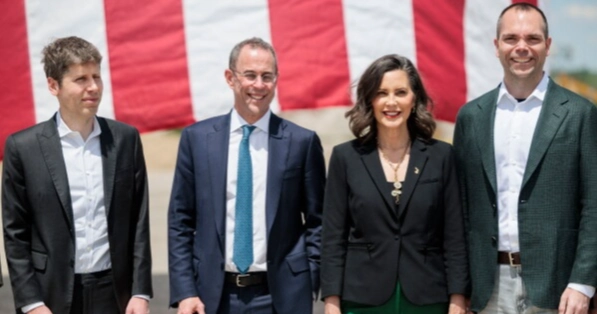
In Michigan, a major data center project backed by Governor Gretchen Whitmer has sparked criticism from activists and some Democratic lawmakers despite promises of thousands of union construction jobs.
Altman acknowledged that many Americans, particularly students, are anxious about AI's long-term impact on employment. A recent poll by the Institute of Politics at Harvard Kennedy School found that about 70% of college students view AI as a threat to future job opportunities.
While concerns continue to grow, many political leaders from both major parties appear to agree that AI development is likely to continue. The debate is increasingly focused on how the technology should be regulated and how its benefits should be shared.
Alongside meetings with Sanders, Altman also held discussions with White House officials and congressional leaders from both parties about the future of AI policy.
Sanders' office said the two sides did not reach agreement on key issues, including his proposal for a 50% public ownership stake that would give citizens a stronger role in decision-making. Sanders also raised concerns about the AI industry's growing influence in elections.
Meanwhile, Washington is moving ahead with efforts to establish rules for the technology. Lawmakers recently unveiled a bipartisan framework for federal AI regulation, while the Trump administration has introduced measures to assess national security risks posed by advanced AI systems before they are released to the public.
Sanders said even supporters of rapid AI development are beginning to recognize that the technology presents serious challenges that require government oversight.