President Donald Trump said Friday that CNN, MS NOW and Politico would be barred from the White House, accusing the three news organizations of repeatedly publishing what he described as “fake news” and unfavorable coverage. He also suggested that additional media outlets could face similar restrictions.
The announcement represents the latest escalation in Trump's increasingly confrontational relationship with news organizations whose reporting he criticizes. As with several previous disputes between Trump and the media, the proposed restrictions could raise questions involving First Amendment protections. However, there was no immediate indication that the administration had actually implemented the ban.
Trump announced the move on his social media platform, saying that the three organizations were being banned from the White House effective immediately because of their alleged “FAKE NEWS” reporting.
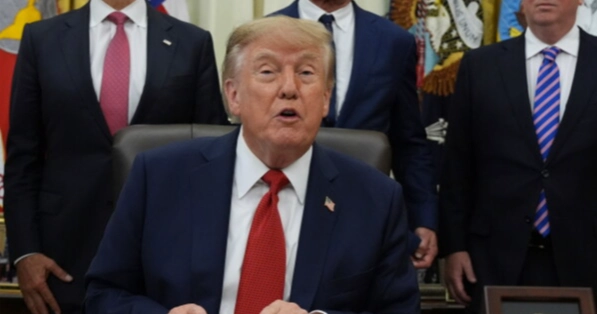
Shortly afterward, reporters asked Trump in the Oval Office to explain the decision.
“Because they’re fake news,” Trump said. He criticized CNN and MS NOW, claiming that their reporting was inaccurate and pointing to what he described as poor ratings. He also accused Politico of publishing false stories.
Trump added that other media organizations could potentially be subjected to similar restrictions, saying that they might have an opportunity to improve their coverage but that the United States needs what he considers to be honest journalism.
Trump did not explain how the proposed restrictions would be enforced. Reporters from CNN, MS NOW and Politico remained on White House property late Friday afternoon, and there was no visible indication that they had been expelled.
CNN criticized the announcement and said it continued to support its White House correspondents and their “fair and accurate reporting.”
The network said the U.S. Constitution protects its ability to report from the White House without government interference. CNN added that if Trump's threatened ban were implemented, it would amount to an unlawful infringement of that constitutional protection.
Politico similarly said it would continue reporting on the Trump administration and future administrations and would defend its First Amendment rights against attempts to restrict its access. MS NOW did not immediately respond to an email requesting comment.
Trump Administration Has Increased Pressure on Media
During Trump's second term, his administration has intensified its disputes with news organizations through lawsuits, regulatory measures and public attacks against individual journalists.
Trump has also criticized reporters personally, both in public appearances and on social media.
The latest threat follows Trump's decision last year to restrict Associated Press journalists' access to the Oval Office, Air Force One and other presidential events. The action came after the AP declined to adopt Trump's preferred name, “Gulf of America,” for the body of water traditionally known as the Gulf of Mexico.
The AP said it would continue using “Gulf of Mexico” while noting Trump's directive when appropriate. The news organization subsequently filed a lawsuit, which remains unresolved.
Since returning to office, Trump has also pursued legal action involving several other media organizations, including The New York Times, The Wall Street Journal and the BBC. His administration has additionally remained involved in a long-running dispute with ABC concerning the renewal of its broadcast licenses.
Potential Impact on White House Press Access
A possible ban on CNN would be particularly significant because the network has traditionally been part of the television press pool that accompanies the president and provides independent coverage of presidential activities.
That pool is designed to ensure that journalists can observe and report on the president's movements and interactions on behalf of the American public and international audiences. CNN was accompanying Vice President JD Vance in Iowa on Friday.
The National Press Club was among the organizations that quickly objected to Trump's announcement.
Its president, Mark Schoeff, said restricting news organizations because of dissatisfaction with their reporting could amount to an effort to determine which journalists are permitted to observe and report on presidential actions.
The legal concept involved is known as “viewpoint discrimination,” which refers to government action targeting particular speakers or organizations because of the views or content they express. That issue has been central to several legal disputes involving Trump's treatment of the press.
Tim Richardson, journalism and disinformation director at PEN America, also criticized the move, arguing that government officials cannot simply restrict journalists because they dislike critical coverage.
Seth Stern, chief of advocacy at the Freedom of the Press Foundation, likewise described the threatened restrictions as a serious potential First Amendment issue, arguing that the White House should not exclude news organizations because they criticize the government.
Trump Offers Few Details About the Proposed Ban
Trump's original social media post did not explain how the restrictions against CNN, MS NOW and Politico would operate.
The announcement came shortly before Trump met reporters in the Oval Office during an event focused on health care. He later planned to travel with the White House press pool to his golf club in Virginia for a meeting and dinner sponsored by his political action committee before spending the weekend at Camp David, where reporters generally do not accompany him.
Trump argued that media organizations should not be permitted to publish what he considers false information while covering the president, his administration or the United States. He also warned that additional news organizations could be targeted.
During the Oval Office event, Trump continued criticizing other major media organizations, including The New York Times and The Washington Post.
Defense Secretary Pete Hegseth also expressed support for Trump's announcement in a post on X, saying the Department of War backed the decision to remove CNN, MS NOW and Politico from the White House.
Previous Court Ruling on White House Press Access
A 1977 federal appeals court ruling in Sherrill v. Knight established important principles concerning White House press access.
The court determined that although the White House does not have an unlimited obligation to provide access to journalists, once it creates press facilities for credentialed reporters, it cannot exclude journalists simply because of the content of their reporting.
The ruling also held that any denial of access must be based on a compelling government interest. Journalists must also receive notice of the proposed denial, an opportunity to respond and a written final decision.