US companies are stepping up efforts to reduce dependence on China for critical minerals used in major weapons systems, as the Trump administration pushes to expand domestic production.
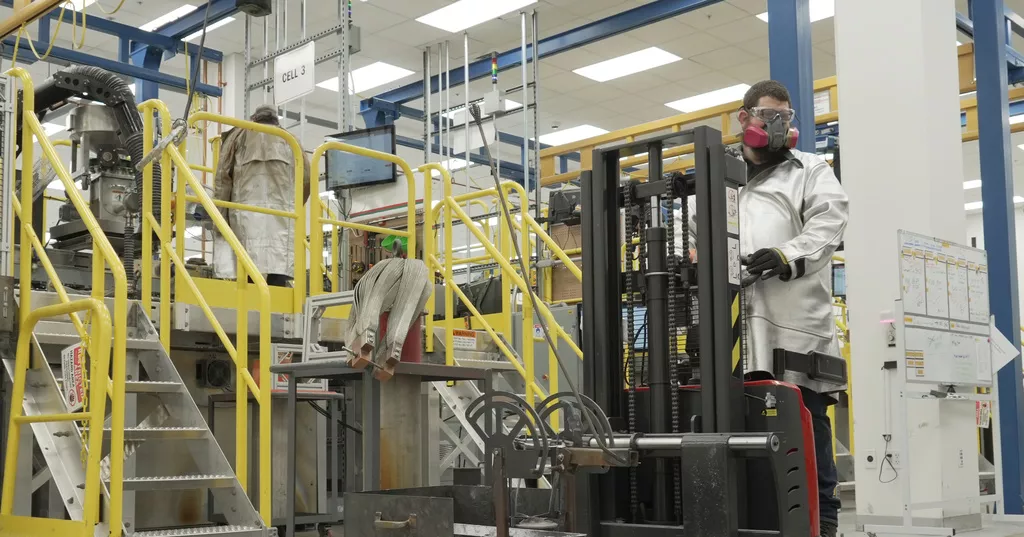
In a small refinery inside a New Hampshire office park, Phoenix Tailings uses electricity to extract critical minerals from mining waste for use in key US weapons, including missiles deployed in the Iran war.
The company recently received a $500 million Pentagon loan to expand its operations. However, building a new facility could take up to 18 months as the administration seeks to increase domestic supplies.
The need has become more urgent as the conflict with Iran reduces US stocks of weapons such as Tomahawk cruise missiles and THAAD interceptors. At the same time, the White House is pressing defense contractors to increase production while imposing stricter rules against sourcing critical minerals from China.
“It will be a tall order and a challenge to replenish these stocks and scale up in the timeframe needed to meet defense demand and regulations,” said Anthony Balladon, Phoenix Tailings’ chief commercial officer and co-founder.
Although the US is moving faster to develop critical mineral supplies outside China's control, it could take years to build new mines and increase production of the powerful magnets needed for many advanced technologies.
Mining waste could help meet demand in the meantime. Phoenix Tailings uses waste from traditional mining as well as recycled magnets and computer disk drives as raw materials.
The Massachusetts-based company plans to build a larger facility to produce critical metals for the defense, aerospace and automotive industries.
Balladon said the company calls the planned facility the “freedom facility” because its goal is to help the US and its allies reduce Chinese influence over rare-earth supplies.
The company produces metals used to make strong permanent magnets for fighter jets, missiles, radar systems and drones. Balladon said critical minerals play an “outsized role” in defense systems, noting that an expensive weapons system cannot operate if it lacks minerals that may be worth only a small fraction of its total cost.
The defense sector particularly depends on samarium and requires about 50 to 100 tons of it annually, while US production remains very limited.
Phoenix Tailings currently produces only about 200 kilograms of the metal a year. Balladon said the company expects to increase output to about five tons within three months and reach a capacity of 120 tons by next year or 2028.
US magnet maker turns to France for supplies
Arnold Magnetic Technologies, which has long depended on China for samarium used in magnets for precision-guided weapons such as Tomahawk missiles, has turned to France for an alternative supply.
The company is sourcing the material from Solvay, a Belgium-based chemical company that restarted processing rare earths from old mining waste in La Rochelle after stopping the operation in the 2000s.
China built up much of the world's rare-earth processing capacity during that period and later used its dominant position to restrict exports of processed critical materials during a trade dispute with the US.
Solvay has since resumed processing and added other rare earths, including samarium, to its operations.
The company said growing demand for permanent magnets, geopolitical concerns over supply chains and demand for more diversified and traceable sources in Europe and the US are driving the expansion.
Arnold CEO Matt Blake said the higher cost of sourcing samarium from Solvay rather than China has not been a major problem because the magnets account for only a small portion of the cost of a weapons system.
However, concerns remain over supplies of other critical minerals.
The US remains dependent on imports of tungsten, with China controlling about 80% of global mine production and an even larger share of processing, according to Brodie Sutherland, CEO of Patriot Critical Minerals Corp.
Sutherland said US efforts to increase tungsten production will take years. Until then, the Pentagon and defense contractors may have to rely on existing stockpiles, increased recycling and limited supplies from countries other than China.
Iran war adds pressure to supply chains
The need to increase production has become more urgent as renewed fighting with Iran puts further pressure on US stocks of advanced missile interceptors, including Patriots and THAADs.
A recent analysis by the Center for Strategic and International Studies said the conflict has raised concerns that the US could have less firepower available in a potential future conflict with China.
The Washington-based think tank warned in May that replenishing stocks of Tomahawks, Patriots and THAAD interceptors could take at least three years.
Meanwhile, President Donald Trump has ordered tighter restrictions on defense contractors sourcing critical materials from China.
The July 20 executive order states that critical materials and components needed to manufacture, maintain and repair US military equipment should be sourced domestically or from allied countries.
Lockheed Martin, which produces THAAD systems and other weapons, said it regularly assesses the global rare-earth supply chain to ensure access to critical materials.
Several other major US defense contractors, including Raytheon Technologies and Northrop Grumman, did not respond to requests for comment.
Balladon said he remained confident that US companies could expand production with the necessary support and partnerships.
“Ultimately, with the right support and partners across the industry, we think we can make it happen,” he said.