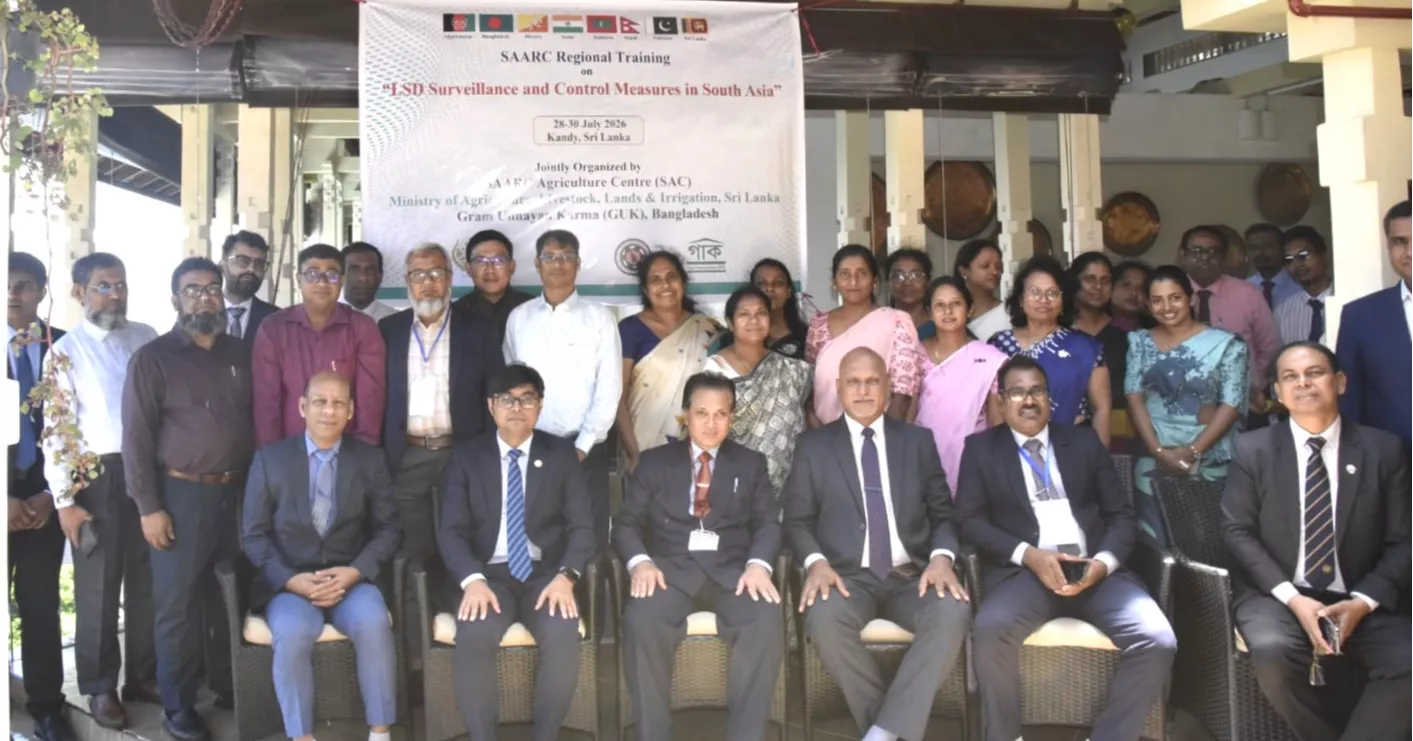
A three-day SAARC regional training on “LSD Surveillance and Control Measures in South Asia” began on Tuesday in Kandy, Sri Lanka, aiming to strengthen regional cooperation and capacity development to control lumpy skin disease (LSD).
The training programme brought together livestock experts and veterinary professionals from five SAARC member states – Bangladesh, Bhutan, Nepal, Pakistan and Sri Lanka, according to a press release.
The event has been jointly organised by the SAARC Agriculture Centre (SAC), the Ministry of Agriculture and Livestock of Sri Lanka, and Gram Unnayan Karma (GUK), Bangladesh.
Delivering oping speech, Director General of Sri Lanka's Department of Animal Production and Health (DAPH) and Chairman of the SAARC CVOs Forum Dr BSS Perera highlighted the critical need for regional collaboration to address transboundary animal diseases.
In his keynote presentation, Virologist at the Veterinary Research Institute of Sri Lanka Dr S Puvanendiran explained that LSD is primarily spread by biting insects such as mosquitoes, flies, and ticks.
He noted that the virus can survive for long periods in skin lesions and scabs, with warm weather, animal movement, and inadequate vector control contributing to its spread.
Speaking in the event as a special guest, GUK Director Md Mokhlesur Rahman stressed the importance of raising awareness among farmers and strengthening collaboration between veterinarians, farmers, and development organisations for effective disease prevention.