
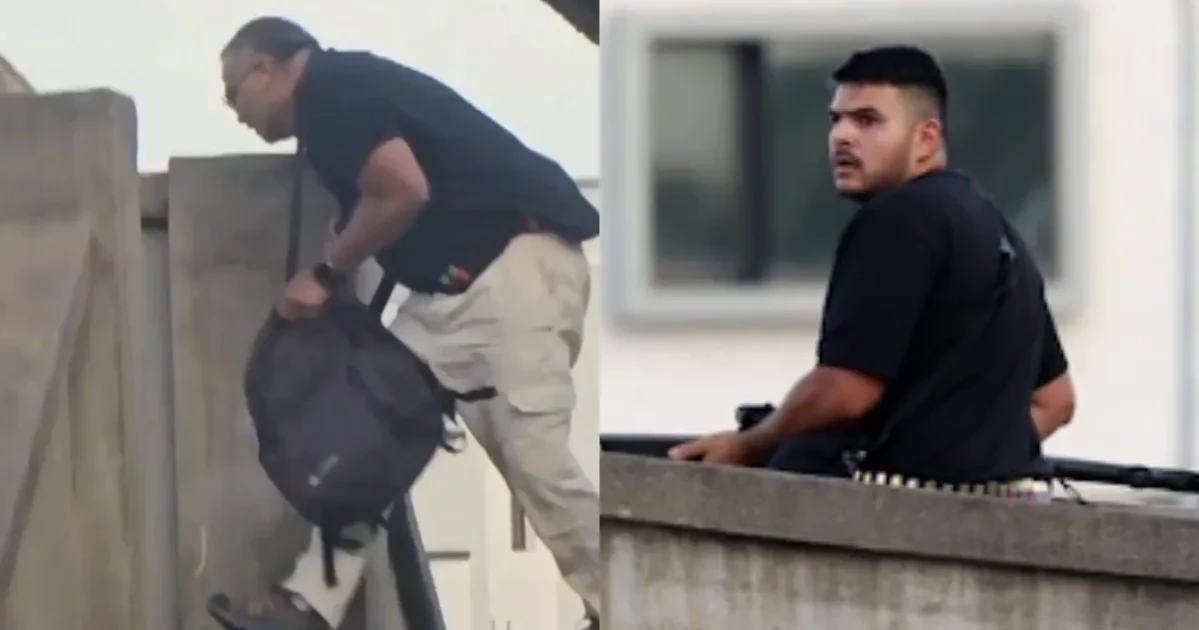
One of the two attackers behind the deadly mass shooting at Sydney’s Bondi Beach, which left 15 people dead during a Jewish Hanukkah celebration, was originally from Hyderabad and had been living in Australia for nearly three decades, Indian police said on Tuesday.
The suspect, identified as 50-year-old Sajid Akram, was shot dead by Australian police during the attack. His son, Naveed Akram, 24, who authorities say carried out the assault alongside him, survived and is currently hospitalised under police guard. Australian investigators have described the incident as a terrorist attack inspired by the so-called Islamic State group.
The Director General of Police of India’s Telangana state said Sajid Akram was a native of Hyderabad and migrated to Australia in November 1998 on a student visa. He had completed a Bachelor of Commerce degree in Hyderabad before leaving India in search of work.
Police said Akram lived in Australia for about 27 years and maintained limited contact with his family in Hyderabad during that time. Senior Telangana police officials said there was no evidence of any operational or ideological link between Akram’s alleged radicalisation and India.
Akram last visited Hyderabad in 2022 and continued to hold an Indian passport. His two children, a son and a daughter, were born in Australia and are Australian citizens.
According to investigators, Akram’s relationship with his extended family in Hyderabad had deteriorated years ago due to family disputes, and relatives had cut ties with him long before the attack. Police said he did not attend his father’s funeral in 2017.
After moving to Australia, Akram married Venera Grosso, described by police as a woman of European origin. The family settled permanently in Australia.
The shooting occurred on Sunday at Bondi Beach, one of Australia’s most popular public locations, where families and community members had gathered for a Hanukkah event. Fifteen people were killed when gunfire broke out.
Australia’s federal police commissioner, Krissy Barrett, said on Tuesday the attack was “a terrorist attack inspired by Islamic State,” adding that the alleged attackers appeared focused solely on causing mass casualties without regard for the victims’ age or condition.
Authorities said the attackers were a father and son. Sajid Akram was killed at the scene, while Naveed Akram was injured.
Police seized a vehicle registered to the younger suspect and said they recovered improvised explosive devices and two homemade flags linked to the so-called Islamic State group.
Australian police are also probing a trip the two suspects made to the Philippines in the month before the attack. The Philippine Bureau of Immigration confirmed that Sajid Akram and his son entered the country on November 1 and left on November 28.
According to the BBC, Sajid Akram travelled using an Indian passport, while his son used an Australian passport. They declared Davao city as their destination and booked return flights to Sydney.
Davao is located on the island of Mindanao, a region that has previously seen activity by Islamist groups such as Abu Sayyaf, which had pledged allegiance to the Islamic State in the past. However, the Philippine military said it could not immediately verify reports that the suspects received any military-style training during their stay.
Philippine security officials said militant groups in the region have been significantly weakened by long-running military operations and that there has been no recent evidence of foreign militants operating there.
Australian authorities said the purpose of the Philippines trip and the locations visited by the suspects remain under investigation.
With inputs from NDTV