
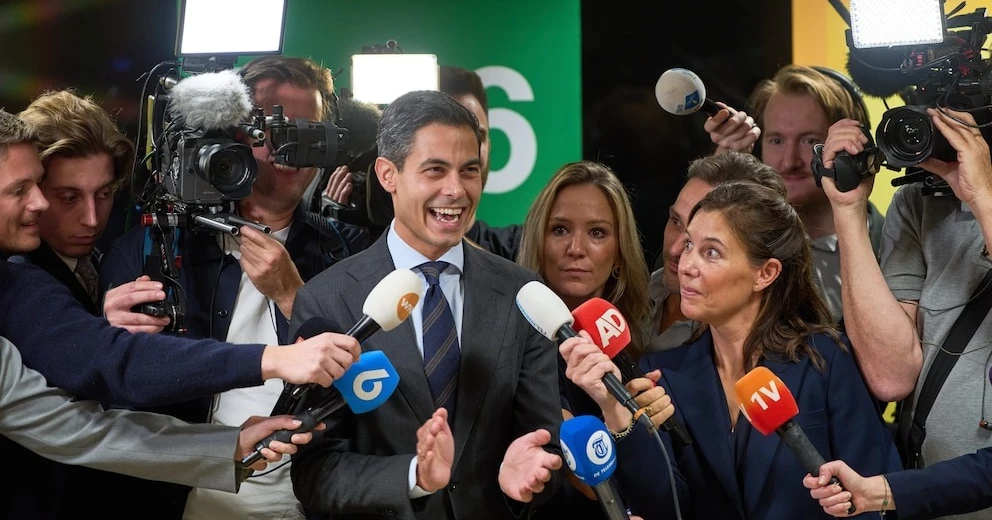
The centrist D66 party narrowly defeated far-right leader Geert Wilders’ Party for Freedom (PVV) in a tight Dutch national election that came down to ballots cast by citizens living abroad, according to final results released Tuesday by national news agency ANP.
Both parties secured 26 seats in parliament, but D66 held an advantage of roughly 28,000 votes, not enough to gain an extra seat under the country’s proportional voting system.
ANP projections based on nearly complete results had predicted a D66 victory, though confirmation came only late Monday night when overseas votes were tallied.
D66 leader Rob Jetten, 38, hailed the outcome as a “historic result,” saying he was proud but recognized the “great responsibility” that came with the win. Jetten is set to become the Netherlands’ youngest and first openly gay prime minister if he succeeds in forming a coalition government.
For Wilders, the result marks a major setback. His PVV lost 11 seats compared to its previous showing, a sharp decline from its shock victory two years ago that shifted Dutch politics dramatically to the right. Wilders’ party had helped form — and later collapse — a four-party coalition mired in internal disputes and unable to push through tough new migration measures.
After the results, Wilders hinted on social media that there may have been irregularities in the vote count, but local election officials and the independent Electoral Council quickly dismissed the allegations as baseless. The council is set to certify the final results on Friday.
With no single party near a majority, coalition talks are expected to take weeks or even months in the Netherlands’ fragmented political system. As the largest party, D66 will take the lead in forming the next government.
Jetten and other party leaders are scheduled to meet later Tuesday to begin preliminary coalition discussions.