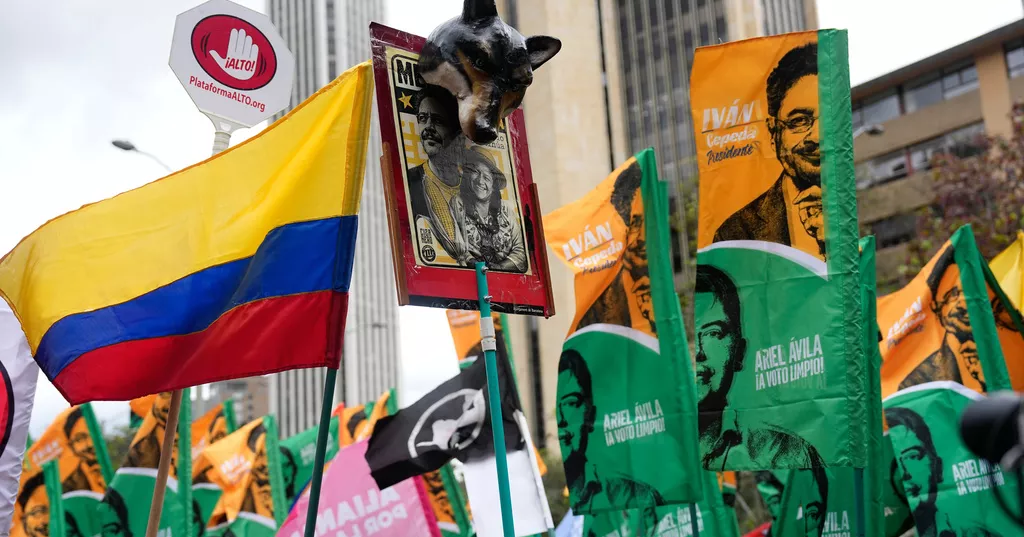
Colombians headed to the polls on Sunday to elect their next president in a closely contested runoff between conservative outsider Abelardo de la Espriella and leftist candidate Iván Cepeda, with both contenders pledging to tackle rising violence and political polarization.
The election pits businessman and lawyer de la Espriella against Cepeda, a senator and political ally of outgoing President Gustavo Petro, Colombia's first leftist president. The two candidates advanced to the runoff after defeating nine rivals in the first round held on May 31.
Security has dominated the campaign, with both candidates warning of a resurgence of the violence that plagued Colombia for decades, including bombings, kidnappings, disappearances and forced displacement.
De la Espriella, a political newcomer nicknamed "The Tiger," has proposed a hardline security strategy inspired by the policies of El Salvador's President Nayib Bukele and has received the endorsement of U.S. President Donald Trump. He has pledged to crack down on crime and build 10 mega-prisons.
Cepeda, meanwhile, has vowed to continue Petro's efforts to achieve "total peace" through negotiations with guerrilla groups and criminal organizations, despite limited success so far.
The candidates also differ sharply on how to address Colombia's economic challenges, including a struggling healthcare system, rising public debt and entrenched corruption.
More than 41 million Colombians are eligible to vote in the runoff.
Official results from the first round showed de la Espriella winning 44 percent of the vote, while Cepeda secured 41 percent.
The election comes a decade after Colombia signed a landmark peace agreement with the Revolutionary Armed Forces of Colombia (FARC), but violence has since resurged as armed groups increasingly turned to drug trafficking and other criminal activities.
Authorities recorded 14,780 homicides last year, the highest number since at least 2015, while extortion cases have more than doubled compared with a decade ago.
The campaign has also been marked by growing tensions, with both candidates trading accusations of fraud, intimidation and vote-buying.
Cepeda recently filed a complaint with Colombia's Attorney General's Office and the International Criminal Court, accusing de la Espriella of having links to paramilitary groups. The conservative candidate has denied the allegations.
Analysts say Sunday's vote will determine whether Colombia continues Petro's leftist agenda or shifts toward a more conservative and security-focused approach amid growing concerns over violence and political divisions.