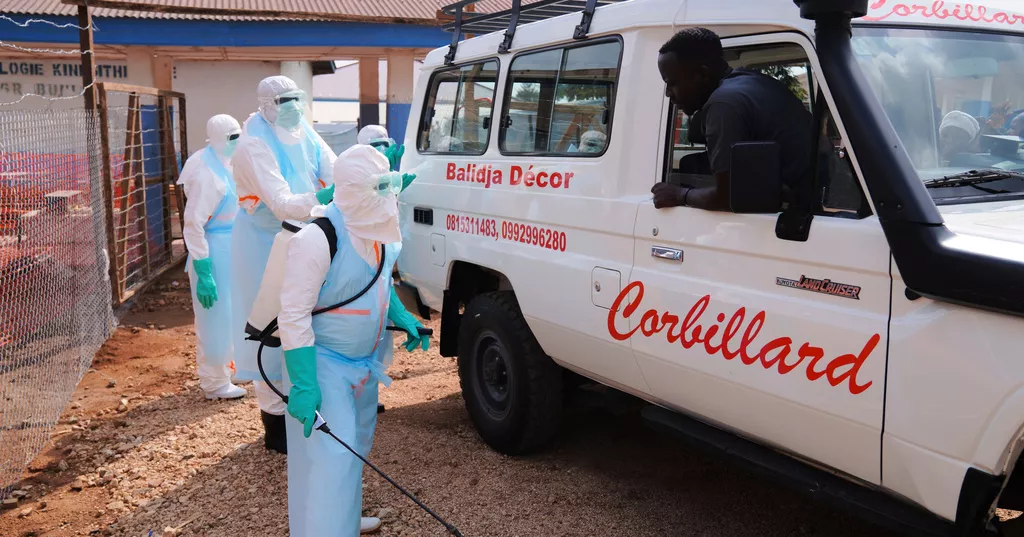
The death toll from the Democratic Republic of Congo's rapidly expanding Ebola outbreak has surpassed 1,500, according to official figures released Thursday, underscoring the growing challenge facing health authorities.
Government data showed that as of Tuesday, the country had recorded 3,442 confirmed cases and 1,521 deaths since the outbreak was declared on May 15.
The outbreak has been linked to the Bundibugyo strain of the Ebola virus, for which no approved vaccine or specific treatment is currently available.
Health officials said 797 patients remain in isolation or are receiving hospital treatment, while 615 people have recovered. However, contact tracing remains below target, with only about 78 percent of identified contacts under monitoring, short of the 95 percent level considered necessary to contain the disease.
Ongoing armed conflict and illegal mining activities in eastern Congo have complicated efforts to identify and monitor people exposed to the virus.
Nearly 90 percent of infections have been reported in Ituri province, although cases have also been confirmed in five provinces, including the major city of Kisangani.
Neighbouring Uganda, meanwhile, declared an end to its Ebola outbreak earlier this week after the country's last patient was discharged in June.
Ebola is a highly infectious viral disease transmitted through direct contact with bodily fluids, including blood, vomit and semen. Although relatively rare, it can be fatal if not treated promptly.
According to the World Health Organization (WHO), the current outbreak is spreading faster than previous Ebola epidemics. The 2014–16 West Africa outbreak, the deadliest on record, took around eight months to surpass 1,000 deaths, whereas the current outbreak has reached more than 1,500 fatalities within a much shorter period.
The WHO said the global risk of international spread remains low because Ebola is not airborne and requires direct contact for transmission. However, it continues to classify the risk within Congo as "very high."
Health officials have also warned that attacks on medical facilities, misinformation about the virus and insecurity have disrupted response efforts. Several international aid organisations temporarily withdrew staff from Ituri's Nyakunde health zone after an attack on a hospital and treatment centre earlier this month.
Authorities said the withdrawal of aid partners has affected disease surveillance, contact tracing and the delivery of essential medical supplies, although security conditions have since improved and officials are urging humanitarian teams to resume operations.