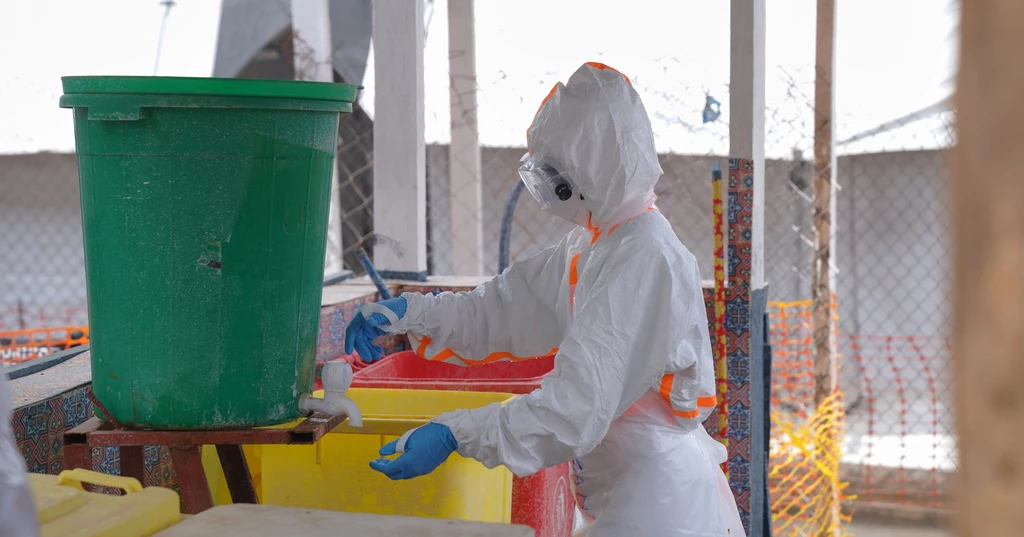
More than 2,000 people have died in the Ebola outbreak in Congo, which is spreading at the fastest rate recorded in the country, according to the latest government data.
The data released early Tuesday showed that the outbreak has so far recorded 4,381 confirmed cases, including 2,011 deaths.
The outbreak was officially declared on May 15, although health authorities said genetic sequencing indicated that it had begun months earlier, in February.
The death toll reached 1,000 within about nine weeks, but doubled in only around three more weeks, highlighting how rapidly the disease is spreading and outpacing efforts to contain it.
Dr. Jean-Marie Akandabo, who is involved in treating patients at a clinic in Ituri province, described the death toll as alarming and called for intensified response efforts in affected areas.
The outbreak is already the second-largest Ebola outbreak on record, after the 2014-16 epidemic in West Africa, which infected more than 28,000 people and killed over 11,000.
The current outbreak is caused by the relatively rare Bundibugyo strain of Ebola, for which there are no approved vaccines or treatments. Clinical trials for potential vaccines and treatments have begun in Ituri, the epicenter of the outbreak in eastern Congo.
Aid workers said response efforts have struggled to keep pace with the spread of the virus across five affected eastern provinces. Rebel conflict, poor roads, disrupted communications and work stoppages by health workers over unpaid wages have hampered efforts to reach patients and monitor the spread.
The World Health Organization (WHO) said most new cases are still being detected among people who were not being monitored as contacts, suggesting that transmission remains largely beyond the control of health authorities.
The outbreak has so far recorded a case fatality rate of 45.9%, higher than the 39.6% rate recorded during the 2014-16 West Africa outbreak.
Paul Hunter, a professor of medicine at the University of East Anglia in the United Kingdom, said that without an effective vaccine, controlling Ebola depends heavily on identifying patients early and treating them in secure facilities.
He said ongoing conflict and poor communications in remote areas make disease surveillance extremely difficult and can prevent cases from being identified early enough to stop further transmission.
Dr. Akandabo said limited access to medical care and poor community engagement remain major challenges.
The WHO said some cases were initially misdiagnosed as malaria or typhoid, while early testing focused on a more common Ebola strain.
WHO Africa Regional Director Dr. Mohamed Yakub Janabi said health workers were struggling to keep up with the virus, noting that they were effectively “chasing” an outbreak that was staying ahead of them.
The first Ebola virus was identified in 1976 near the Ebola River in what is now Congo. The current outbreak is the country’s 17th and its largest.