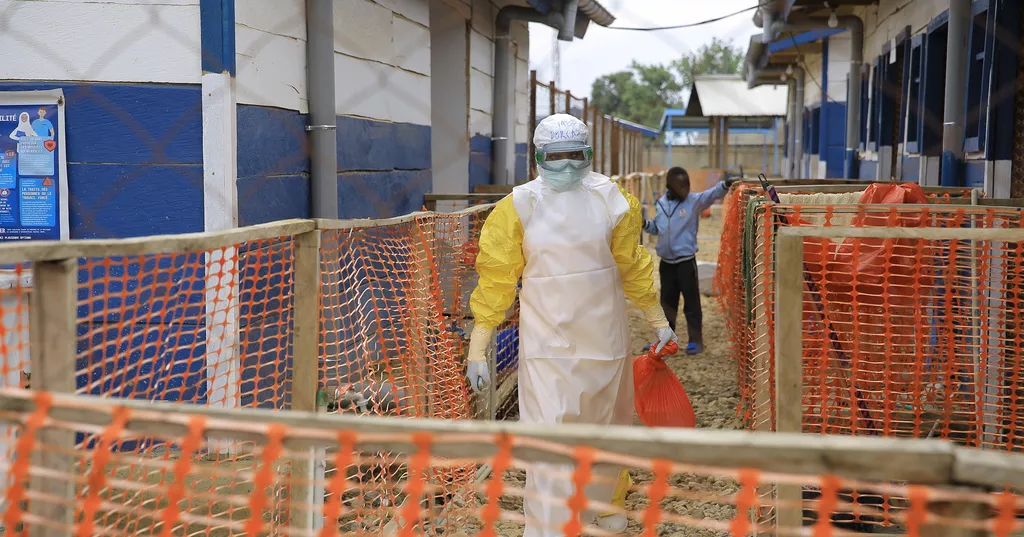
The Ebola outbreak in the Democratic Republic of Congo has spread to an eighth province in the country’s north, authorities said on Sunday.
The Health Ministry has recorded two cases, including one death, in Nord-Ubangi province, which borders the Central African Republic. Both patients are men in their 20s living in the Wapinda health zone, which borders Bas-Uele province, where Ebola cases have previously been reported, the ministry said.
Authorities have recorded at least 9,400 cases, including more than 4,500 deaths, since the outbreak was declared in mid-May, making it the deadliest in Congo’s history.
The virus has spread to other countries, including neighbouring Uganda, which has since declared itself free of the disease, and Kenya, which recorded its seventh case on Saturday. The Central African Republic has not reported any confirmed cases.
Ituri province in eastern Congo remains the epicentre of the outbreak, accounting for nearly three-quarters of confirmed cases, according to the government’s latest data. The outbreak has affected 66 health zones since it began.
“We see pockets of Ebola generally going down, but unfortunately geographically it’s spreading out,” World Health Organization Regional Director for Africa Mohamed Yakub Janabi told The Associated Press in an interview in Beni, eastern Congo, on Friday.
Janabi said one of the biggest challenges has been persuading infected people to seek medical care, adding that some deaths occur in communities outside health facilities.
Nord-Ubangi lies between Sud-Ubangi and Bas-Uele, the two provinces the disease had most recently reached along the border with the Central African Republic. Recurring armed violence in the area has forced thousands of people to flee and seek refuge in Congolese border communities.
Access to the region is difficult due to poor roads and limited communication networks.
The outbreak is caused by the rare Bundibugyo virus, for which no approved vaccine or treatment is available. Its spread has been driven by large population movements, rebel violence, mistrust and poor working conditions for frontline workers.