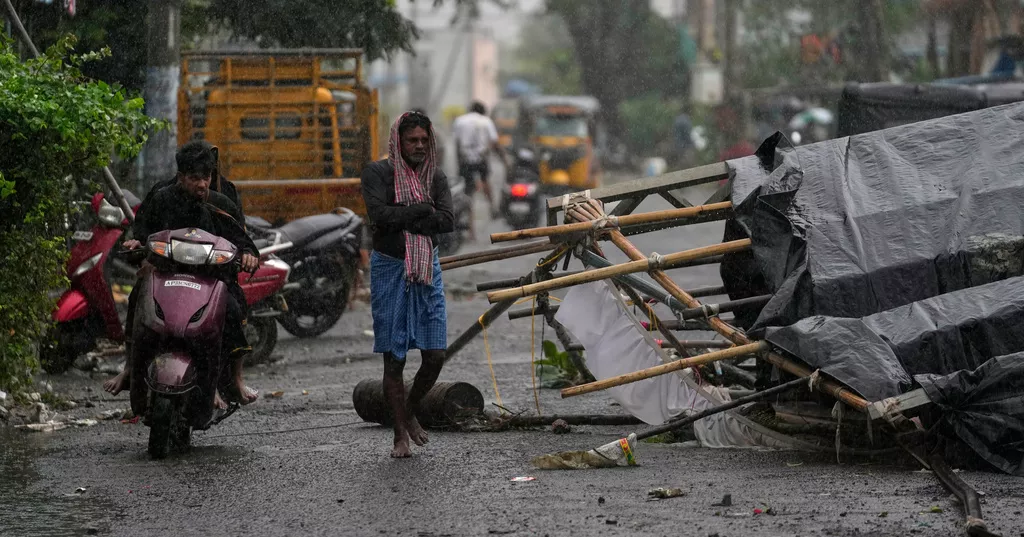
At least three people were killed as Cyclone Arnab battered India’s eastern state of Andhra Pradesh on Wednesday, damaging homes, farmland and power infrastructure after authorities evacuated around 180,000 people, officials said.
The cyclone made landfall early Wednesday as a very severe cyclonic storm before weakening as it moved inland, according to the India Meteorological Department.
Two women died from electrocution in separate incidents in the port city of Visakhapatnam, while another person was killed by a falling tree in East Godavari district.
Wind speeds reached 135 kilometres per hour, or 84 miles per hour, late Wednesday morning, state disaster management officials said. The storm was expected to weaken further as it moved inland.
Andhra Pradesh Chief Minister N Chandrababu Naidu said 14 coastal districts had been badly affected by strong winds and heavy rainfall, which damaged houses, roads, electricity poles and power supply infrastructure. He sought urgent assistance from the central government.
The cyclone damaged crops across 79,000 acres and dozens of homes, with the fertile Konaseema district among the worst-hit areas. Banana and coconut plantations suffered extensive damage, while uprooted trees and electricity poles disrupted power supplies.
The meteorological department said heavy rain and strong winds would continue in coastal Andhra Pradesh and parts of neighbouring Odisha. Rainfall also flooded several low-lying areas in Visakhapatnam.
Authorities had evacuated people from vulnerable coastal and flood-prone areas ahead of landfall and cancelled some train services as the storm approached. More than 12 million people live along the cyclone’s expected path, according to the state disaster management authority.
Officials established more than 2,000 cyclone shelters across 20 districts and sent emergency alerts to millions of mobile phone users, Press Trust of India reported, citing state disaster management authority chief Prakhar Jain.
More than 30,000 fishing boats were secured along the coast, while nearly 1,100 medical teams were deployed to provide emergency assistance, Jain said.
In neighbouring Odisha, authorities planned to evacuate around 48,000 people from areas expected to be affected by the storm.
Meanwhile, Nepal’s disaster agency warned of heavy rain, lightning and thunderstorms across much of the country, advising tourists to avoid high-altitude and Himalayan areas and cautioning about possible road and air travel disruptions.
Nepal is still recovering from devastating flash floods in August that killed more than 1,400 people and left thousands missing. Further flooding was reported in northern Nepal earlier this month.