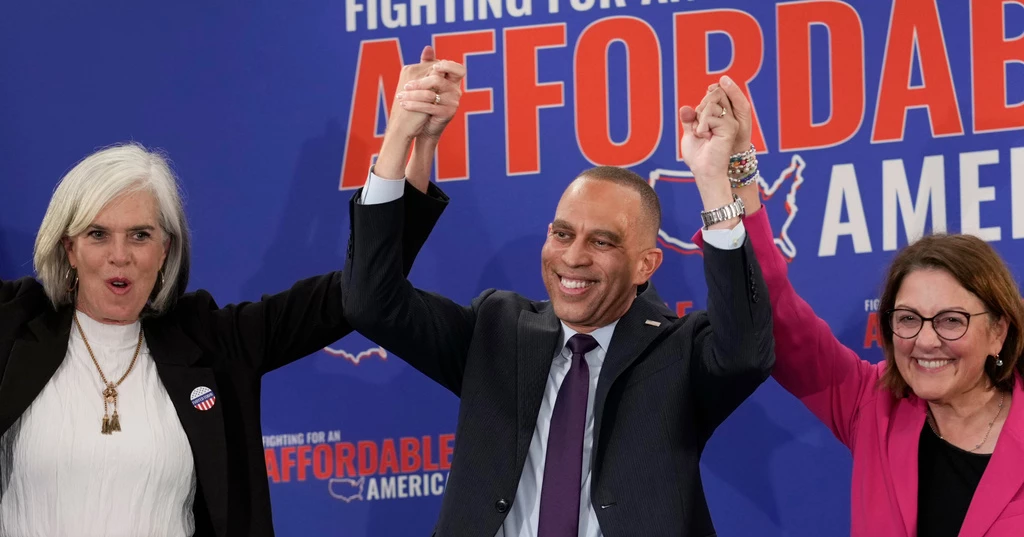
Democrats are preparing to take control of both chambers of the US Congress after a sweeping election victory, promising to address rising living costs and challenge President Donald Trump during his final two years in the White House.
Democrats defeated Republican candidates across the country, securing comfortable majorities in both the House of Representatives and the Senate and ending two years of unified Republican control.
The results will create a divided government, with Congress expected to play a stronger role in checking Trump's administration and challenging its policies.
"We hear you," House Democratic Leader Hakeem Jeffries said, promising to deliver the changes voters had demanded. He could become the first Black speaker of the House when the new Congress begins on January 3, 2027.
Trump struck a conciliatory tone, saying he was willing to work with Democrats, but warned of political gridlock and threatened to veto their legislative agenda.
"I don't want to be just sitting there for two years vetoing everything," he told Politico.
House Democrats have pledged a 100-day agenda focused on reducing the cost of fuel, groceries and other essential goods, reversing cuts to the Affordable Care Act and Medicaid, and launching investigations into the Trump administration.
Impeachment of the president or members of his Cabinet could also be considered.
Democrats will face pressure to deliver solutions to high living costs, the war in Iran and growing concerns over the country's direction.
With a majority well above the 218 seats needed in the 435-member House and at least 54 seats in the 100-member Senate, Democratic leaders Jeffries and Chuck Schumer are expected to have considerable room to pursue their agenda.
"Relief is on the way," Schumer said.
The election defeat has left Republicans facing questions about their leadership and political future.
House Speaker Mike Johnson's position is likely to come under scrutiny as party members consider possible replacements.
Republicans are also expected to face difficulties passing further legislation during the remaining weeks of their control, while Congress must approve a funding bill to prevent a possible federal government shutdown next month.
Both parties will hold internal leadership elections in the coming weeks before the new Congress convenes.
The incoming Congress will also include several historic firsts.
With the election of Democrat Julia Stratton of Illinois, the Senate will have three Black women serving for the first time.
Democrat Peggy Flanagan of Minnesota will become the first Native American woman in the Senate, while Chris Pappas of New Hampshire will be the first openly gay man to serve in the chamber.
Abdul El-Sayed of Michigan will become the first Muslim US senator.