The European Union on Wednesday introduced new measures to protect its steel industry and curb the growing number of low-cost online parcels entering the bloc, as it seeks to address its widening trade imbalance with China.
The European Commission announced a new customs duty of 3 euros ($3.42) on low-value parcels and stricter rules on steel imports, saying the measures are aimed at ensuring fair competition for European businesses and improving consumer protection.
European Commission President Ursula von der Leyen said the rapid increase in cheap online imports has put European retailers at a disadvantage and raised concerns over product safety.
"Today's change is about restoring fairness for European businesses and better protecting our consumers," she said in a post on social media.
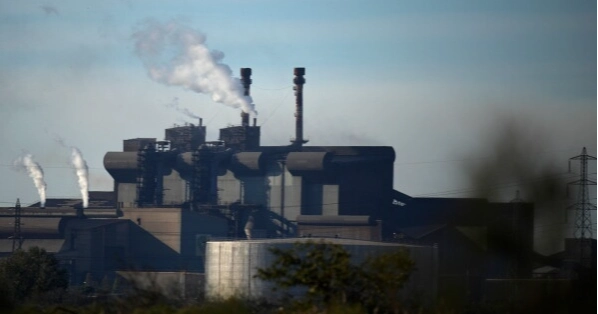
The Commission also said the updated steel import rules are intended to protect European factories and jobs from the effects of excess global steel production, particularly as subsidised steel from China continues to put pressure on manufacturers worldwide.
The EU's trade deficit with China reached about 360 billion euros ($410 billion) in 2025 and has continued to grow this year.
Under the new rules, the EU will end the customs exemption for parcels worth less than 150 euros. The Commission said Chinese online shopping platforms Temu and Shein account for around 90% of these shipments.
According to the Commission, about 5.9 billion low-value parcels entered the EU in 2025, up sharply from 1.4 billion in 2022. While these parcels represented just 2% of the total value of imports, they accounted for 97% of all imported packages. Many were found to fail EU safety standards, while others raised environmental concerns because of excessive plastic packaging.
Bernd Lange, chairman of the European Parliament's trade committee, welcomed the move, saying Europe was finally taking action against the flood of cheap imported goods.
However, Gary Ng, a research fellow at the Central European Institute of Asian Studies, said the new 3-euro charge is relatively small and may have only a limited impact because the price difference between European and Chinese products remains large. He said shoppers and online retailers could also reduce the impact by combining orders.
The EU has also introduced tighter steel import controls by setting annual tariff-free quotas of 18.3 million metric tons. Imports exceeding those limits will face a 50% tariff across 26 categories of steel products.
Importers will also be required to provide more information about where the steel was originally produced to prevent companies from avoiding EU rules by shipping Chinese steel through third countries.
The European Steel Association has warned that Europe's steel industry is facing a serious downturn, with production falling to its lowest level in decades.
Although China produces more than half of the world's steel, most EU steel imports come from countries including the United Kingdom, Ukraine, India, Taiwan, Türkiye, Japan and South Korea. Some exemptions have been granted to Ukraine because of the war with Russia.
An EU official said the bloc remains willing to cooperate with like-minded partners to address global overcapacity in the steel market, while stressing the need for fair competition.
Analysts expect Beijing to oppose the new measures even though they are not aimed exclusively at China.
China's Ministry of Commerce warned in May that it would respond firmly to any discriminatory actions targeting Chinese companies or products.
Chinese researchers have also cautioned that growing trade restrictions by the EU, the United States and other countries could create what they described as a "wolf pack effect," with multiple nations introducing tariffs and investment restrictions against Chinese exports.
Beijing has rejected concerns over what some analysts call "China Shock 2.0," arguing that its exports and technological advances benefit the global economy.
Although the EU has taken a less confrontational approach than the United States, analysts say Brussels is becoming more determined to protect its industries.
Last month, leaders of the Group of Seven (G7) called for stronger supply chains for critical minerals to reduce dependence on China.
Chinese Foreign Ministry spokesperson Guo Jiakun said this week that China and the EU are partners rather than rivals, adding that Europe's economic challenges are not caused by China.
Chinese Commerce Minister Wang Wentao met EU Trade Commissioner Maroš Šefčovič in Brussels on Monday to discuss trade issues.
Šefčovič said the EU remains open to trade but must protect its industrial base and ensure fair competition, adding that meaningful progress in rebalancing trade should be achieved before an October deadline. "The status quo is not an option," he said.