A powerful Haitian gang leader has confirmed that he wrote to the United Nations Secretary-General seeking dialogue and mediation, as escalating clashes involving security forces and armed groups raise fears of further violence in the Caribbean nation.
Wilson Joseph, widely known as Lanmò Sanjou and leader of the 400 Mawozo gang, told The Associated Press on Monday that he had requested the UN to send a delegation to Haiti to facilitate talks.
In his first interview with a major international media outlet, Joseph claimed that four Salvadoran aviation technicians who went missing in an attack on October 18 had been killed while they were in the territory controlled by another gang, Chen Mechan. He, however, provided no evidence to support the claim.
The Haitian government has said the four Salvadorans were abducted, while El Salvador believes they are still alive.
Joseph expressed anger over drone strikes that he said were killing civilians, including children and elderly people, as fighting has intensified in Plaine du Cul-de-Sac, near Port-au-Prince.
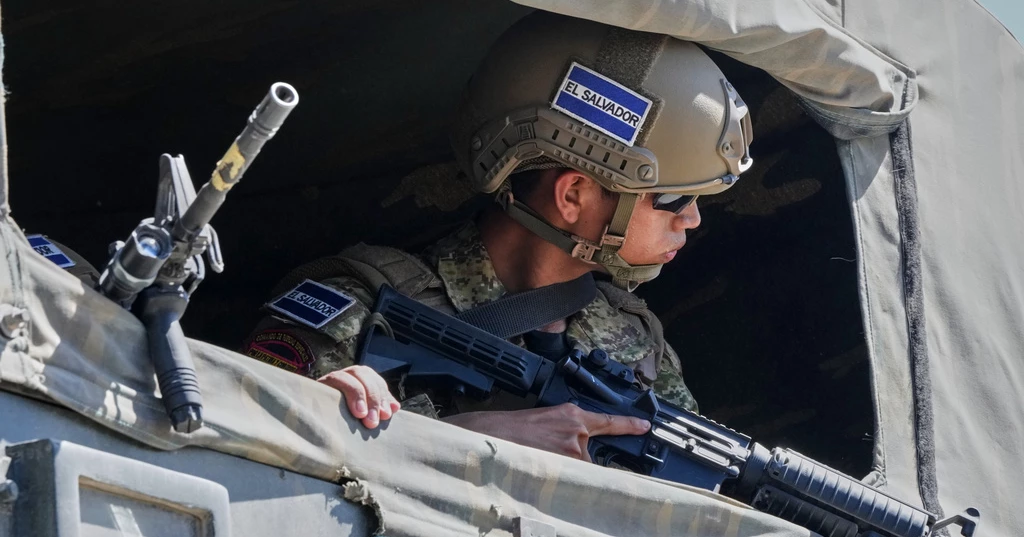
The clashes began after a UN-backed gang-suppression force, working alongside Haitian police and soldiers, and Vectus Global, a private security company founded by former US Navy SEAL and Blackwater founder Erik Prince, launched operations against armed groups following the attack on the Salvadoran technicians.
Joseph accused Haitian politicians, whom he said had armed the gangs, of bringing foreign troops into the country "to destroy us".
He also addressed El Salvador's President Nayib Bukele, who recently deployed 2,000 troops to Haiti, saying, "The Haitian politicians are the father of the gangs and the rebels. ... The politicians don't want this to stop."
In his letter, Joseph warned that Bukele's statements and threats could fuel further bloodshed.
"Given Mr. Nayib Bukele's vengeful remarks, expectations, and threats, I fear this situation will lead to an escalation of violence and a logic of reprisals, of which the Haitian people would be the first victims," he wrote.
Questions raised over oversight of Salvadoran troops
Joseph alleged that politicians were informing him in advance about security operations targeting his group.
He said he had no objection to security forces arresting gang members but accused them of using drones in attacks that killed children and elderly civilians.
Joseph claimed he was willing to engage in dialogue and surrender his weapons. However, when asked what he wanted in return, he declined to disclose his demands, saying he would discuss the matter with a peace commission.
He also rejected allegations that members of 400 Mawozo had killed innocent Haitians.
In a statement late Monday, UN spokesperson Stéphane Dujarric confirmed that the organisation had received a letter bearing Joseph's signature.
"However, receipt of such a letter does not constitute endorsement of its contents, recognition of its author, or a position by the United Nations," he said.
Dujarric noted that the vast majority of Salvadoran military personnel deployed in Haiti were not operating under the UN-backed gang-suppression force and therefore fell outside its mandate and reporting framework.
He stressed that the UN remained concerned about the impact of the violence on local communities, adding that all security operations must comply fully with applicable international law.
Gang leader calls for peaceful solution
In his two-page letter, sent on November 1, Joseph said the recent developments in Plaine du Cul-de-Sac, particularly in areas controlled by the Chen Mechan gang, were a matter of serious concern.
He said he had "officially raised the white flag" on August 20 and was seeking a peaceful resolution to Haiti's national crisis through dialogue between international forces operating in the country and the 400 Mawozo group.
Joseph said he was ready to receive the UN delegation and participate in any meeting aimed at reaching a peaceful settlement, establishing dialogue and ensuring sustainable stability.
"I remain convinced that dialogue must prevail over force," he wrote, stressing that protecting civilians, particularly children and vulnerable families, should be central to any international initiative.
According to the UN, more than 5,700 people were killed or injured across Haiti between January and mid-September.
The 400 Mawozo gang, whose name roughly translates as "400 Simpletons", operates mainly in Croix-des-Bouquets, a community near Port-au-Prince.
A gang spokesperson, who declined to be identified, accused the government of abandoning the area and claimed that Joseph took control of it as a result.
The group is notorious for kidnappings, including the abduction of 17 missionaries in October 2021, 16 of them from the United States and one from Canada. The group included five children, and all the hostages were eventually released.
The spokesperson denied that the incident constituted kidnapping, describing it instead as a measure of "justice" in response to sexual abuse allegations against a former missionary.
The spokesperson also rejected the description of 400 Mawozo as a terrorist organisation, claiming that young people with limited access to education were being exploited by politicians and killed.
The US government has announced a $1 million reward for information leading to Joseph's capture. He was indicted in the United States in 2022 on charges of hostage-taking and conspiracy to commit hostage-taking.