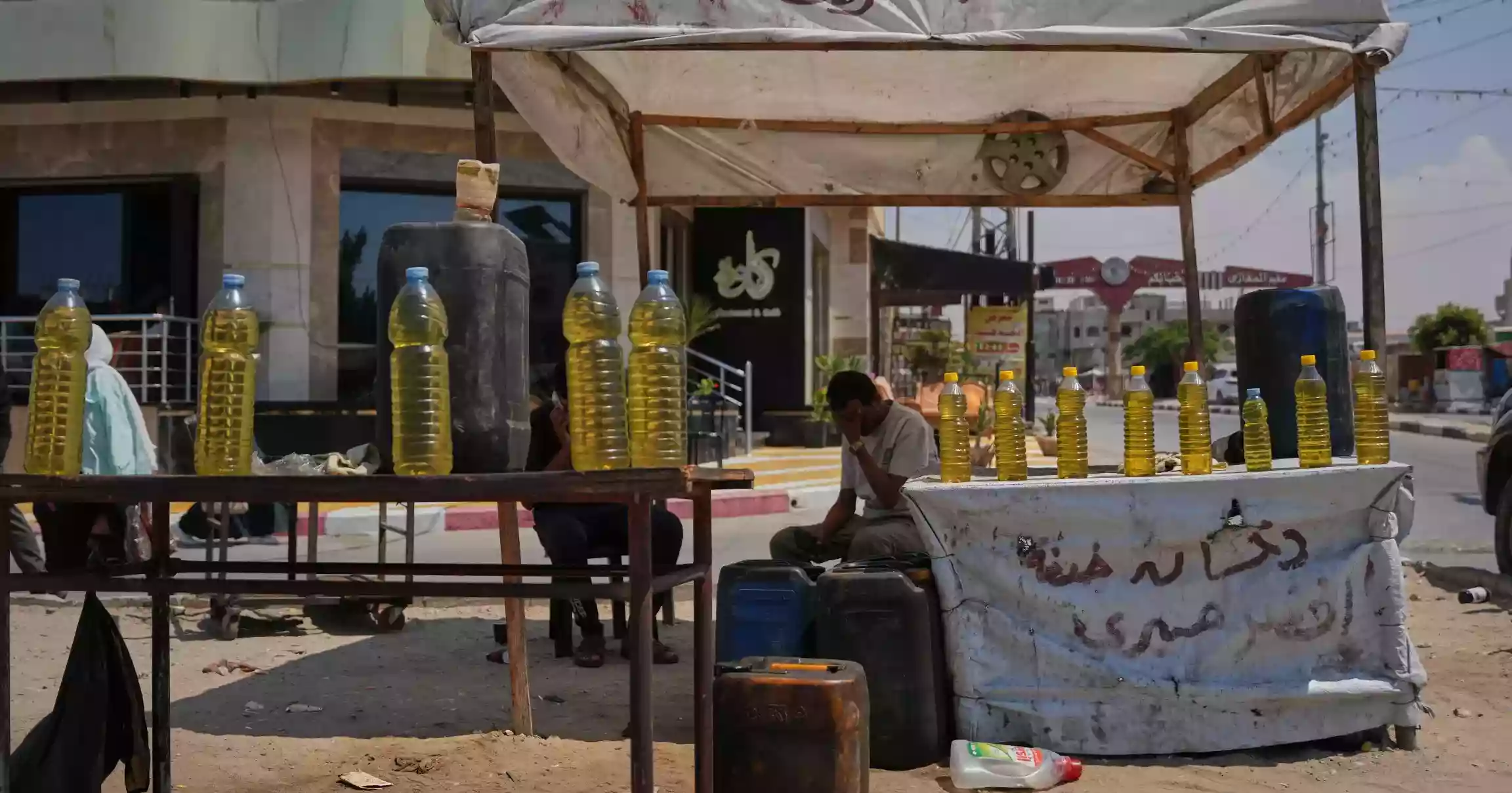
The smuggling of goods restricted or prohibited by Israel into Gaza has expanded significantly, driving up prices, supplying hospitals with scarce medicines and equipment, and generating millions of dollars for smugglers and intermediaries, according to an Associated Press investigation.
The investigation, based on Israeli court records and interviews with traders, merchants, truck drivers, Palestinian officials and residents, found that a wide range of products are entering Gaza through illicit channels. Cigarettes and tobacco are among the most profitable, while other smuggled items include fuel, medicines, solar panels, iPhones and medical equipment.
Israel limits the entry of some products and completely prohibits others, including items it classifies as “dual use.” The category includes materials such as concrete, vehicle parts and X-ray equipment, which Israeli authorities say could potentially be used for military purposes by Hamas.
AP spoke with several people involved in the trade who requested anonymity because of the risks associated with illegal smuggling. The investigation found that smuggling networks have become an important part of Gaza’s wartime economy, with payments allegedly reaching Israeli soldiers, drivers, warehouse workers and other intermediaries on both sides of the border.
“The occupation has left no other option before us. Smuggling has become routine,” one trader told AP, saying some Israeli military personnel are prepared to assist in exchange for money.
The Israeli military said it takes allegations of smuggling seriously and investigates suspected involvement by its personnel in accordance with the law. However, it did not respond to detailed questions about the alleged role of soldiers or Gaza authorities in the trade.
Gaza’s Hamas-led administration also receives a share of the proceeds from some smuggled goods, according to merchants and Palestinian officials. Mohammad Barbakh of Gaza’s Economy Ministry said authorities can collect up to 20% of the value of goods when merchants declare them, while the amount can rise to 80% if authorities discover undeclared shipments.
How the smuggling networks operate
Since the beginning of the Israel-Hamas war in October 2023, Israel has maintained strict controls over the movement of commercial goods, humanitarian supplies and food into Gaza. A total blockade last year halted deliveries for nearly three months, contributing to severe shortages and famine conditions in parts of the territory.
Although the flow of goods has increased since a fragile ceasefire took effect in October, it remains far below prewar levels.
Israel has authorized 12 senior Gaza traders to bring in commercial shipments, but Israeli authorities must approve the contents. Traders and aid workers say the approval process can be unpredictable, with some shipments rejected because they contain items considered dual use.
According to documents from COGAT, the Israeli military body overseeing the movement of goods into Gaza, about 150 broad categories are classified as dual use. These include concrete, steel pipes, asphalt and wooden planks. COGAT said some such goods, including generators and X-ray machines, have been permitted in specific cases under strict supervision.
When legal imports cannot meet demand, some traders turn to established smuggling networks. Merchants then sell the products inside Gaza.
People interviewed by AP said Gaza government agencies, hospitals and tribal communities sometimes rely on smugglers to obtain essential supplies, including fuel, spare parts, medicines and medical equipment.
Major traders said they send orders to intermediaries operating in Israel and the West Bank, who arrange the purchase and movement of the goods. Trucks entering through the Kerem Shalom crossing are inspected, but smugglers allegedly use both commercial routes and Israeli military vehicles to move contraband, sometimes paying soldiers to facilitate passage.
Humanitarian vehicles have also occasionally been used, according to merchants and Israeli government statements.
Smuggling becomes a major source of income
With much of Gaza’s economy devastated by the war and millions displaced, smuggling has become an important source of revenue. Several major traders told AP that illicit goods now account for more than half of their business and can generate over 70% of their profits.
The costs of bribes and payments at different stages are ultimately passed on to consumers.
Residents reported extraordinary price increases. A vehicle battery that once sold for about $140 can now cost more than $2,300, while solar panels have risen from around 16 cents per watt to $3.25.
Smuggled food has also become common, including chicken, meat, baby formula and pet food.
Cigarettes and tobacco command particularly high prices. Residents said a pack can cost as much as $140, while prices climbed above $1,000 during the complete blockade.
According to traders, court records and Israeli statements, cigarette shipments have been concealed in military vehicles, commercial trucks, aid deliveries and even hollowed-out pineapples.
Hamas administration accused of collecting revenue
Merchants said Gaza’s authorities do not directly operate smuggling businesses but collect money from goods brought in illegally.
Two major traders told AP they were summoned by Hamas authorities over shipments they had brought into Gaza. One said he eventually paid $3.5 million, while another reported paying about $3.75 million.
Two senior officials in the Hamas administration estimated that as much as $100 million had been collected from smuggled goods since the ceasefire. They said the money helps pay public-sector workers and support social services.
Barbakh said authorities do not have precise figures because smuggling operations are conducted secretly.
Ismail al-Thawabta, a government media official, said none of the money collected is transferred to Hamas’ military wing and that the funds are used to maintain public services and facilities.
However, several merchants and officials alleged that confiscated cigarettes are sometimes resold by the authorities. Al-Thawabta did not respond to AP questions about that claim.
Smuggling coordinators wield influence
The investigation also identified powerful intermediaries who allegedly coordinate large-scale smuggling operations.
Israeli court records refer to a figure known as Abu Bassel, whom prosecutors described as having extensive contacts within the Israel Police. Traders and officials interviewed by AP described him as one of the most influential coordinators in the trade, although his identity remains unknown.
Court records describe an incident in which Israeli police raided a warehouse in a West Bank settlement where cellphones and cigarettes were being prepared for shipment to Gaza. One alleged smuggler contacted Abu Bassel, after which police abandoned the raid without making arrests or confiscating the goods.
A senior Gaza Chamber of Commerce official described Abu Bassel as a key figure whose approval is needed for many shipments to enter Gaza.
Israeli court documents allege that he used a Palestinian aid organization as a cover, though the organization denied any involvement in smuggling.
Israeli cases reveal scale of illegal trade
Israeli authorities have dismantled several alleged smuggling networks since late 2025 and charged more than a dozen suspects, including reserve soldiers serving in Gaza.
One major case involves Israeli brothers Eliran and Avi Algarabli, business associate Yaron Peretz and another Israeli. Prosecutors accuse them of paying reserve soldiers to transport contraband into Gaza.
According to indictments, the group allegedly paid reserve soldier Bezalel Zini about $120,000 to move three shipments containing roughly 6,000 cigarette packs in his vehicle. Other reservists allegedly made four trips into Gaza in a single day, transporting about 20,000 cigarette packs, hundreds of iPhones and medical equipment.
Court records indicate that millions of dollars can be made from such operations. The Algarabli brothers allegedly earned around $2.2 million from smuggling trips between October and December, when they were arrested. Other suspects have been accused of making between $1 million and $3 million.
Gaza residents struggle with shortages and high prices
For ordinary Palestinians, the consequences are reflected in shortages and soaring costs.
Residents said products such as electric fans, which previously cost around $100, can now sell for $500. Some merchants say Israeli authorities block the import of fans because they are classified as dual-use items.
Mohamed Abu Olwan, a Gaza resident, questioned why such basic products should be restricted.
Mohamed Abuel-Enein, a displaced resident of Rafah, said residents living in tents desperately need fans and other basic goods amid the intense summer heat.
“I don't understand the harm in allowing fans through the crossings,” he said, describing how families struggle to cope with the heat and limited access to basic necessities.