
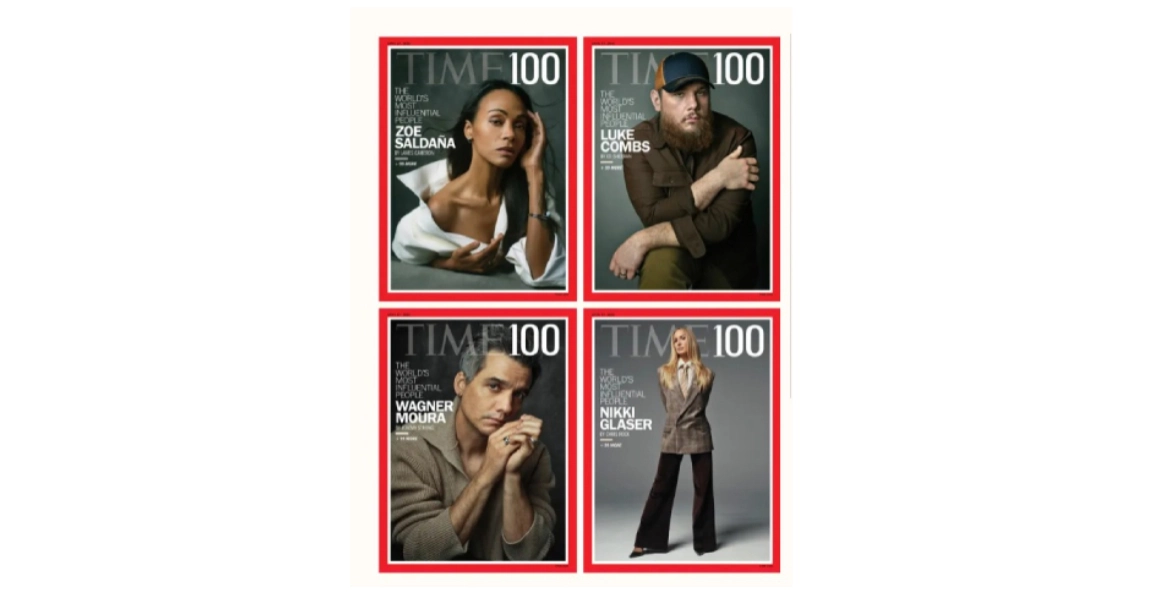
TIME magazine has explained how it compiles its annual list of the 100 most influential people, highlighting that influence is not measured by a single standard but by impact on the world.
In July 1969, TIME published a detailed report on “la causa,” the protest movement ignited by California’s Mexican American farmworkers. Its cover featured the cause’s leader, Cesar Chavez, and the story inside described a “tiny, tough assistant” named Dolores Huerta. Just a few weeks ago, we learned, yet again, how tough Huerta is when she came forward to join other women in claiming that they had been sexually assaulted by Chavez, a lion of America’s left. “I have kept this secret long enough. My silence ends here,” said Huerta, a fierce advocate for women and workers. Fifty-seven years after first appearing in these pages, Huerta joins the 2026 TIME100, which recognizes the world’s most influential people.
Editor-in-Chief of Time Sam Jacobs said the selection process involves year-round discussions. “There is no single metric that defines influence. Our selections are led by the stories shaping the world each year and the people behind them,” he said.
He noted that while some individuals on the list are widely known, others are recognised mainly within their fields. Selections are made through input from editors, reporters and global sources, along with daily recommendations.
Jacobs said the diversity of the list is part of its appeal, adding that TIME has expanded its focus in recent years to areas shaping the future, including artificial intelligence, climate, health, philanthropy and emerging fields such as digital content creation.
He also highlighted TIME’s efforts to build a global community through events such as the TIME100 Summit and Gala in New York, with a new TIME100 Sports list set to be launched in June.
According to TIME, influence takes many forms—from literature and cuisine to photography and sport. The 2026 list includes figures from diverse backgrounds, ranging from athletes and doctors to political leaders and cultural icons.
Jacobs said the list reflects a changing world shaped by politics, culture and global events, noting that leaders such as Donald Trump, Mark Carney and Mette Frederiksen have played significant roles in recent global developments.
The 2026 covers feature personalities from entertainment and culture, including comedian Nikki Glaser, actors Zoe Saldaña and Wagner Moura, and singer Luke Combs.
Jacobs said the enduring relevance of the TIME100 lies in its ability to capture influence in its many forms, adding that it remains to be seen which of this year’s figures will continue to shape the world decades from now.