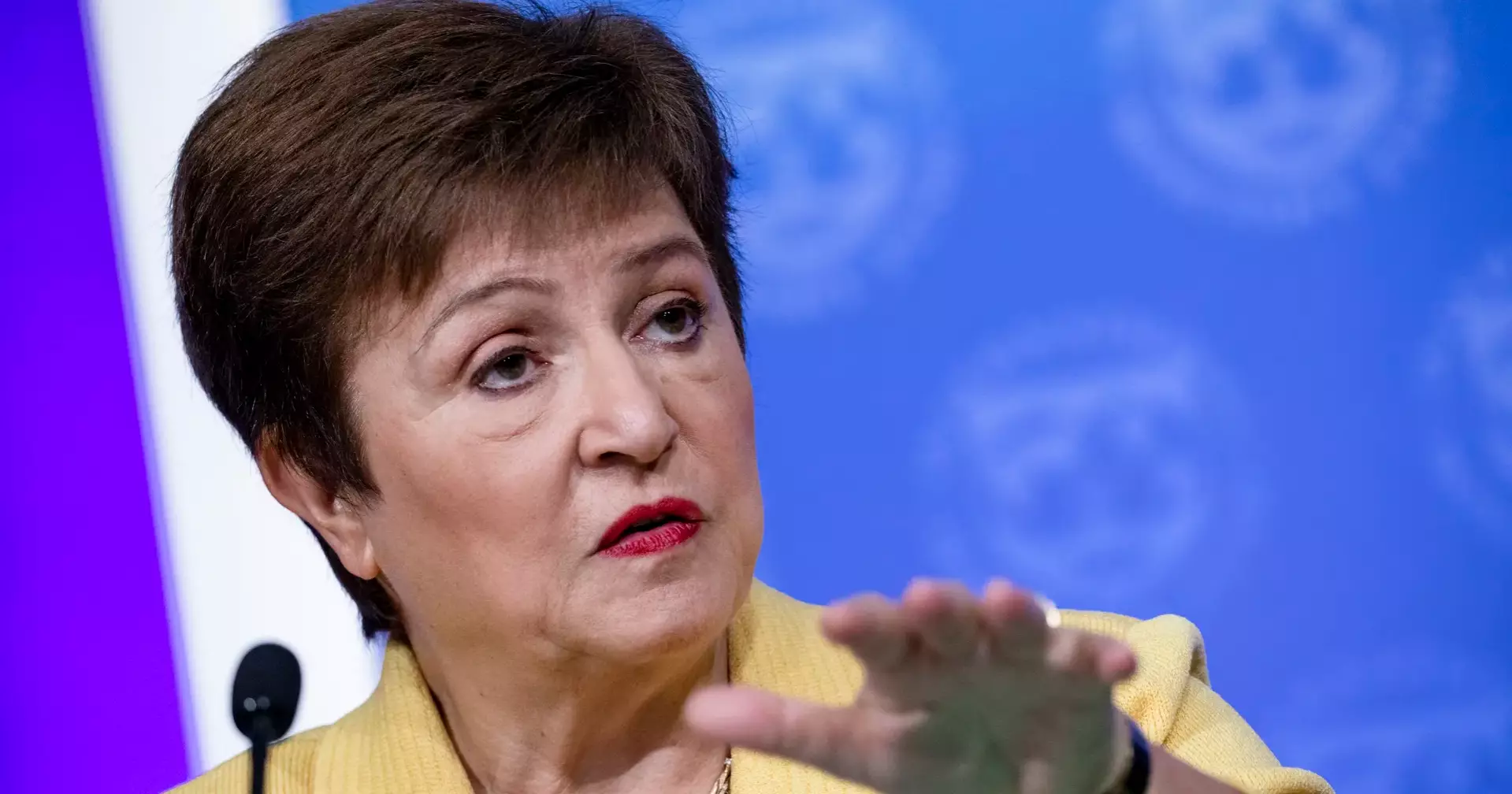
Countries, both rich and poor, need to take faster steps to reduce debt and address widening inequality as their economies face a triple challenge from the artificial intelligence boom, heavy borrowing and shocks caused by wars in the Middle East and Ukraine, IMF Managing Director Kristalina Georgieva said Wednesday.
"Some very tough political choices stare us in the face," Georgieva said in a speech in Singapore ahead of the IMF-World Bank autumn meetings in Bangkok next week.
"My message to the world's economic policymakers next week will be this: we cannot keep delaying necessary policy action — you have the tools, now have the wisdom to use them," she said.
At the Bangkok meetings, finance ministers and central bank governors from 191 IMF-World Bank member countries will review the global economy and discuss measures to maintain financial stability and support sustained growth.
Georgieva said conflicts in the Middle East, Ukraine and elsewhere have so far delivered the most severe recent shocks to global well-being.
However, excessive debt is increasingly weighing on wealthy economies such as the United States, Japan and Germany, while low-income countries face difficult choices between funding public welfare and servicing costly loans amid high interest rates, she said.
Georgieva also highlighted risks stemming from the rapid expansion of data center capacity to support AI, which has helped drive stock markets to record highs in many countries and contributed to strong economic growth despite elevated energy costs caused by the Iran war.
Investment in AI is expected to surpass, in relative scale, spending on the construction of railroads, electricity grids and telecommunications networks.
"Love it, hate it or fear it, AI is here, rapidly becoming a key driver of countries' relative fortunes in the world economy," she said.
The AI investment boom is supporting strong corporate earnings as well as higher inflation. But there is a time lag between the large investments being made and the realization of AI's economic benefits, Georgieva said.
"Should earnings fall short," she warned, "hyperscaler leverage and large and growing global holdings of U.S. equities could turn a disappointment into a far-reaching shock."
Seven of the world's top 10 countries in AI-related trade are in the Asia-Pacific region, whose share of global economic activity has increased to 43% from 25% in 1991, when the IMF-World Bank meetings were last held in Bangkok.
China, India, Japan, South Korea, Taiwan and other technology-intensive economies are benefiting from the AI boom, while most other countries are being left behind, widening economic inequality, Georgieva said.
AI is also increasing energy demand, further pushing up prices of fuel, fertilizer, food and other essential commodities, she added.
Georgieva called on countries to contain public spending and raise borrowing costs when necessary to curb inflation, while protecting their most vulnerable populations.
She also stressed the need for policies to ensure proper regulation of AI, retrain workers, make labor markets more flexible, encourage entrepreneurship and strengthen energy security.