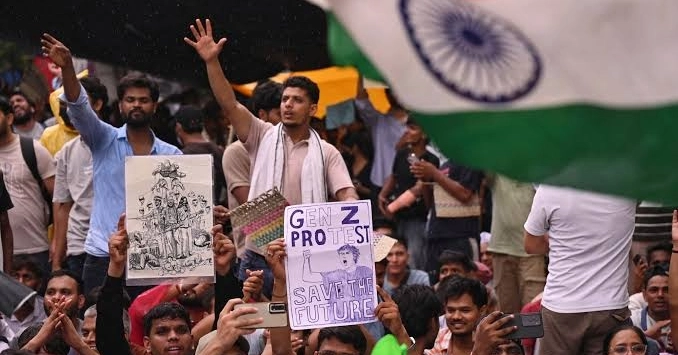
Indian activist Sonam Wangchuk ended his 26-day hunger strike on Friday, but protesters said their nationwide campaign over alleged exam paper leaks and education reforms will continue until Education Minister Dharmendra Pradhan resigns.
Wangchuk's fast became a symbol of the "Cockroach" protest movement, which began more than a month ago after allegations of leaks in some of India's most competitive entrance examinations.
The movement has since grown beyond education issues, attracting students, professionals, families and activists who are also protesting unemployment, government accountability and limited economic opportunities.
The demonstrations have become one of the largest and longest-running protest movements against Prime Minister Narendra Modi's government in recent years. Thousands of protesters have continued to take to the streets despite police using tear gas and batons earlier this week to stop marchers trying to reach Parliament.
In a post on X, Wangchuk said he ended his fast after meeting two federal ministers. He said the decision followed appeals from dozens of lawmakers and lengthy discussions, as well as concerns about possible violence, but did not provide further details.
Despite Wangchuk ending his protest, organisers said demonstrations would continue until the education minister steps down.
Protest groups also called for nationwide demonstrations on Friday to show support for students who were injured when police dispersed thousands of marchers heading to Parliament on Monday.
"We won't let Sonam sir's sacrifice go in vain," said Abhijeet Dipke, founder of the satirical Cockroach Janta Party, which has helped lead the movement. The group's name refers to a comment by India's chief justice comparing some unemployed young people to cockroaches.
The protests continued a day after Modi addressed the issue publicly for the first time. He announced that fast-track courts would handle cases involving exam paper leaks and said his government would introduce legislation in Parliament to crack down on such crimes.
However, protesters said the announcements did not meet their key demands, including greater government accountability, reforms to the examination system and compensation for families of students who died by suicide following the alleged paper leaks.
Fabeha Sayyed, a 23-year-old protester, said Modi's statement showed the government was finally paying attention to the issue, but questioned why the education minister had not been asked to resign.
"If he is truly concerned about the students and the families who lost loved ones, asking one minister to resign should not be difficult," she said.