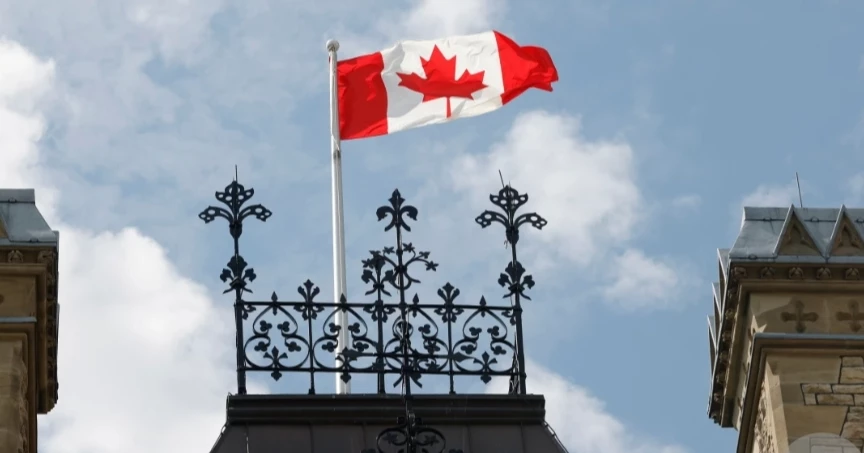
After trade negotiations crumbled at the eleventh hour, U.S. President Donald Trump’s 50% tariffs on scores of Canadian imports kicked in Saturday.
The new levies are expected to affect about 5% of Canada’s annual exports to the U.S., roughly $20 billion in goods ranging from hockey sticks to agricultural products. Canada’s Prime Minister Mark Carney quickly promised Saturday that his government would roll out “dollar for dollar” retaliatory measures starting Sept. 8.
No further talks are scheduled. The latest escalation between the two countries — which once held one of the world’s most durable trade alliances — plunges them deeper into a trade war that has kept both sides of the border on edge throughout Trump’s second term in office. Experts warn steeper tariffs raise costs for businesses and almost always trickle down to households in the form of higher prices.
“Nearly all industries and professions are likely to see downstream effects from this spiraling trade dispute,” said Augustine Lo, of law firm Dorsey & Whitney, whose work includes advising clients on international trade.
Here’s what we know.
Which goods are affected?
Again, the 50% tariffs from the U.S. are set to affect $20 billion of Canadian goods.
Canada sends the vast majority of its goods exports to the U.S. (72% last year), and Trump administration says the new taxes will be levied on products ranging from hockey sticks to wine and cement. The list is long. According to documents published by the White House, other goods subject to the tax include honey, seeds and agricultural products — as well as select makeup, perfumes, clothing, jewelry, furniture, cameras, fabric and more.
The 50% levy also applies to some products that were previously protected under the US-Mexico-Canada Agreement, a trade pact from Trump’s first term. That marks a shift from past levies — and further underlines questions around the future of the USMCA overall.
How is Trump imposing these tariffs?
To impose these 50% tariffs, Trump reached back to a long-dormant Great Depression-era law: Section 338 of the Tariff Act of 1930.
When the U.S. and world economies were in collapse nearly a century ago, Congress passed the 1930 law as part of broader “Smoot-Hawley” legislation (named after its congressional sponsors). The act raised tariffs more generally across the board, and became notorious among economists for limiting world commerce and making the Great Depression worse. But Section 338 — which authorizes the president to slap import taxes of up to 50% on imports from countries that have discriminated against U.S. businesses — has never been used specifically to raise tariffs until now.
No investigation is required to justify the levies. Nor is there any limit on how long they can stay in place. Since there’s no precedent, however, the latest tariffs may also see more legal challenges.
When announcing his planned tariffs last month, Trump claimed that Canada was unfairly discriminating against U.S. exports of automobiles, alcohol and dairy products. The president expressed anger over Canada’s retaliation against his own tariffs last year — noting Canadian imports of American alcohol and cars started to fall last spring.