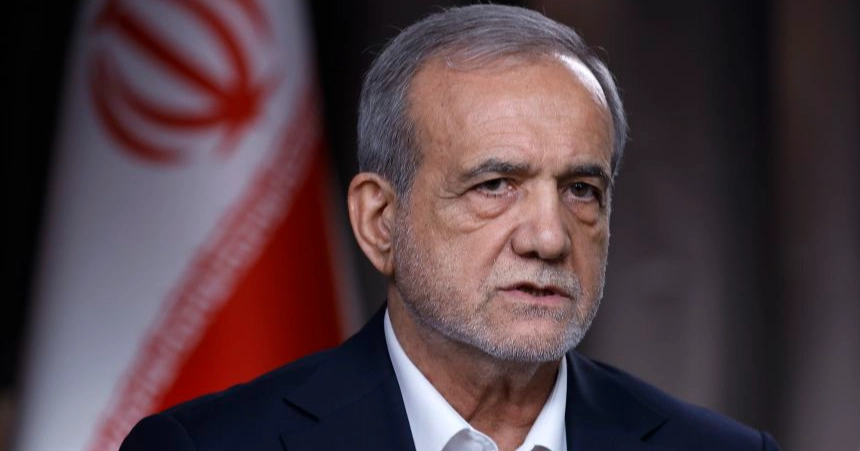
Iranian President Masoud Pezeshkian has defended a memorandum of understanding with the United States as the best way to end the current deadlock in the nearly six-month-old war, while Tehran’s new security chief warned neighboring countries against supporting further US sanctions on Iran.
Meanwhile, Pakistan’s army chief Field Marshal Asim Munir is scheduled to visit Tehran on Monday to discuss bilateral cooperation and regional peace efforts, Iranian state media reported.
In the occupied West Bank, a Palestinian man said an Israeli settler beat him outside his home, while the Israeli military said it was pursuing a suspect following a separate stabbing incident.
Pezeshkian, in remarks published by state-run IRNA on Sunday, described the recent US-Iran memorandum as the best available option for moving the country beyond a situation of “neither war nor peace.”
He said members of Iran’s Supreme National Security Council considered the memorandum the best agreement possible based on national dignity, wisdom and interests.
“There is not a single provision in this agreement that amounts to capitulation,” Pezeshkian said, adding that Iran would follow policies set by Supreme Leader Ayatollah Ali Khamenei.
The memorandum, signed by US President Donald Trump in June, set a 60-day deadline for ending the war and reaching an agreement over Iran’s nuclear programme. The deadline expired last week, but Washington and Tehran remain divided, particularly over reopening the Strait of Hormuz, a vital route for global oil and other shipping.
Pezeshkian said Iran would not surrender to its adversaries but stressed that the prolonged standoff was damaging the economy and discouraging investment.
“Capital and money are extremely sensitive to risk,” he said, stressing the need to remove risks from the country.
Iran’s economy has been under growing pressure from US sanctions and a naval blockade that has made it difficult for Tehran to export oil, its main source of revenue.
Pakistan’s Munir will lead an official delegation to Tehran on Monday, Iranian Foreign Ministry spokesman Esmail Baghaei said, adding that the visit would focus on strengthening bilateral ties and Pakistan’s efforts to promote peace and security in the region.
The announcement followed a phone conversation between Munir and Iranian Foreign Minister Abbas Araghchi. Pakistan has previously undertaken several mediation efforts aimed at ending the Iran war.
Separately, Mohsen Rezaei, the newly appointed head of Iran’s Supreme National Security Council, issued a stronger warning to neighboring countries against joining the latest US campaign to pressure Tehran economically.
“If (Trump) wants to do something, we will retaliate in a seismic manner,” Rezaei said in an interview broadcast by Iranian state television on Saturday.
Rezaei, appointed earlier this month as part of senior leadership changes seen as strengthening Tehran’s hard-line stance, said Iran could target oil-shipping routes outside the Strait of Hormuz if neighboring countries joined what he called the economic war against Iran.
He warned that countries supporting the US campaign would be treated as enemies and that Iran would target their interests.
Trump has vowed to impose an “unprecedented” level of economic pressure and isolation on Iran as Tehran has faced US sanctions for years.