Iran's top diplomat on Tuesday said any agreement to end the war with the United States would require Israel to withdraw from southern Lebanon, a condition already rejected by Israel and one that could jeopardize efforts to secure a lasting ceasefire.
The proposed agreement between Washington and Tehran has not yet been made public, and officials involved have at times offered differing interpretations of its terms. Although Israel is not a party to the deal, it has been directly involved in the conflict after joining US strikes against Iran on Feb. 28. Israel has also been engaged in fighting with the Iran-backed Hezbollah group in Lebanon and has taken control of large areas in the country's south.
Iranian Foreign Minister Abbas Araghchi said Israel's continued presence in southern Lebanon would violate the spirit of the agreement.
"Without the withdrawal of Israeli forces from the territories they occupied during this war, the war has not fully come to an end," Araghchi said.
However, a US official familiar with the framework of the agreement said it does not include any requirement for Israel to leave Lebanon. Israeli Prime Minister Benjamin Netanyahu also reiterated on Monday that Israeli forces would remain there "as long as necessary."
Previous attempts to end the conflict have been hindered by similar disagreements, resulting in a fragile ceasefire that failed to evolve into a permanent peace arrangement. The uncertainty has also affected the Strait of Hormuz, a key route for global energy shipments, which remains effectively closed.
Switzerland's foreign ministry said a signing ceremony for the agreement is scheduled for Friday at the Bürgenstock resort near Luzern.
Lebanon issue adds complexity
Pakistan, which helped facilitate negotiations, has said the agreement calls for an end to military operations, including those in Lebanon, in line with Iran's longstanding position. Araghchi's latest remarks, however, have highlighted fresh differences over the issue.
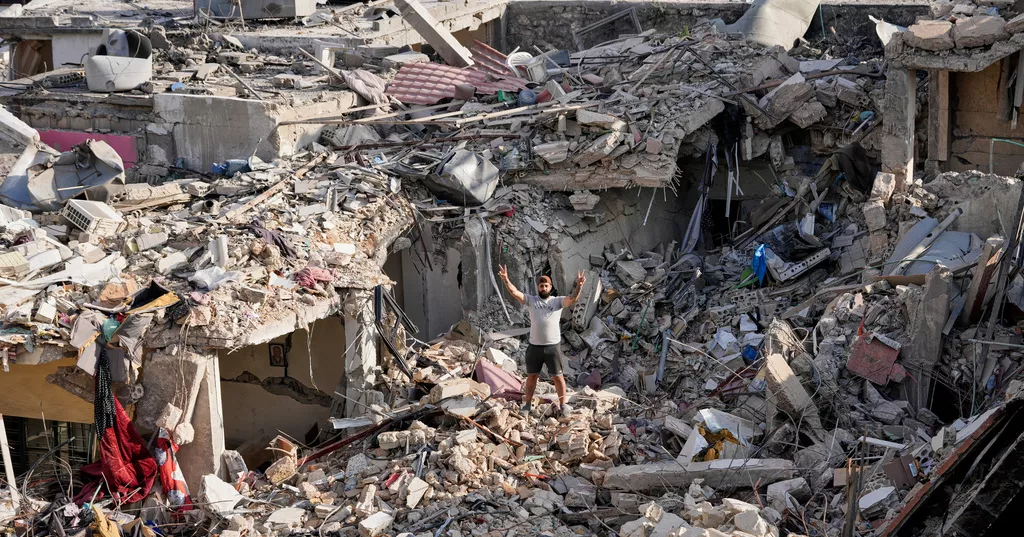
The dispute places Israel in a difficult position as it seeks to weaken Hezbollah's military capabilities while avoiding tensions with its closest ally, the United States. Israel launched its operation in southern Lebanon after Hezbollah fired missiles across the border during the early stages of the war. Since then, Israeli forces have expanded their presence in the area and carried out strikes deep inside Beirut.
Although Hezbollah has suffered significant setbacks, it still retains the ability to launch attacks against Israel, raising questions about the long-term effectiveness of Israel's campaign.
As of Tuesday evening, Netanyahu had not reviewed the memorandum of understanding between the US and Iran, according to a person familiar with the matter who spoke on condition of anonymity. Another source said Israeli officials had not requested a copy of the document from US negotiators.
Netanyahu's office did not immediately comment, while the White House declined to say whether Israeli leaders had been briefed on the agreement.
Israel's ambassador to the United States, Yechiel Leiter, told NPR that while Israel has not seen the details of the agreement, the reported inclusion of Lebanon was "unnecessary and unhelpful."
Differences over Lebanon have also exposed tensions between Washington and Tel Aviv. US President Donald Trump said Tuesday he was dissatisfied with Israel's handling of the conflict with Hezbollah.
"It just goes on forever," Trump said, referring to Israel's strategy.
Israeli military operations in Lebanon have killed nearly 4,000 people, including hundreds of civilians, and displaced more than one million others.
"Israel's fighting Hezbollah too long, and too many people are being killed," Trump said.
Lebanon welcomes ceasefire prospects
Israel and the Lebanese government have held separate US-mediated negotiations that excluded Hezbollah. While several ceasefires were announced during those talks, none were fully implemented.
Lebanese officials initially sought to keep Lebanon separate from the broader US-Iran negotiations but later welcomed indications that a future agreement could include a ceasefire in Lebanon.
Araghchi's comments appear consistent with the understanding of two regional officials familiar with the negotiations. According to them, the draft agreement would require Israel to withdraw from nearly all territory it currently occupies in Lebanon, except for a few strategic hilltop positions along the border.
The officials said Iran pushed for Lebanon to be included in the final phase of negotiations.
The United Nations peacekeeping mission in Lebanon, UNIFIL, reported that exchanges of fire between Israel and Hezbollah continue, though at a significantly reduced level, according to UN spokesman Stephane Dujarric.
Key issues remain unresolved
Several important questions remain ahead of the planned signing ceremony.
The agreement is intended to establish a meaningful truce in a conflict that has killed thousands across the Middle East and contributed to higher prices for fuel, food and other essentials.
According to a senior US official, the deal would provide for the immediate reopening of the Strait of Hormuz and the lifting of the American naval blockade on Iranian ports.
At least two Iranian oil tankers left the country on Tuesday and crossed the US naval blockade without interference, according to shipping-tracking data. The vessels marked Iran's first crude oil exports in two months.
Shipping-monitoring service TankerTrackers.com said the Iranian-flagged tankers Diona and Hero II were carrying a combined 3.8 million barrels of crude oil. US Central Command declined to comment.
Under the agreement, Washington and Tehran are expected to begin a 60-day negotiation process focused on Iran's nuclear programme and the possible easing of sanctions, Pakistani officials involved in mediation said.
The proposed deal also includes the possible release of Iran's frozen assets and the creation of a $300 billion reconstruction fund if Tehran meets certain conditions, according to senior US officials. Trump later clarified that the United States would not directly invest money in Iran.
Questions also remain about how the agreement would address Iran's nuclear activities, including who would verify compliance and what would happen to highly enriched uranium believed to be stored beneath nuclear facilities damaged in US strikes last year.
Regional officials said Iran has agreed to discuss options to dilute or remove the uranium stockpile. However, it remains uncertain whether Tehran's hard-line factions would support such a move.
Trump said he would consider submitting the agreement to the US Congress for review. Some Republican lawmakers have called for more details, while others have expressed doubts that the deal would be sufficient to prevent Iran from pursuing a nuclear weapon.