
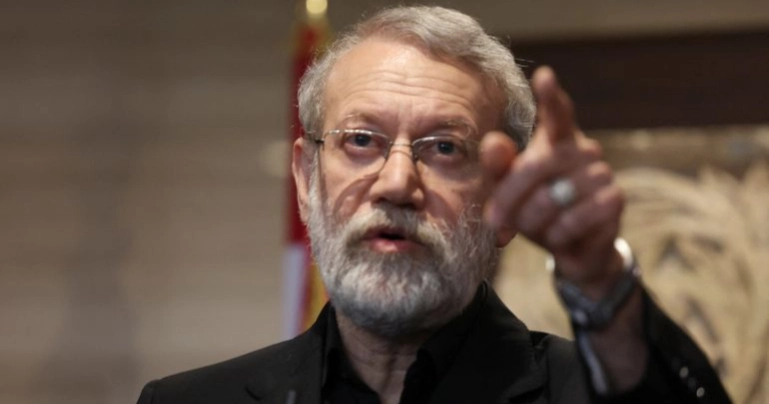
A senior Iranian official has warned that Iran is prepared to confront any potential United States ground invasion, threatening to capture and kill American troops if they enter the country amid the escalating conflict involving the US, Israel and Iran.
Ali Larijani, secretary of Iran’s Supreme National Security Council, said Iran’s forces are ready to respond forcefully if Washington deploys troops inside Iranian territory. His remarks came as US officials, including President Donald Trump, have not ruled out sending ground forces to Iran.
“Some American officials have said they intend to enter Iranian territory with several thousand troops,” Larijani said in a statement, warning that such a move would bring serious consequences.
Referring to Iran’s late supreme leaders Ruhollah Khomeini and Ali Khamenei, Larijani said followers loyal to their legacy are ready to confront invading forces.
“The valiant sons of Imam Khomeini and Imam Khamenei are waiting for you, ready to disgrace corrupt American officials by killing and capturing thousands,” he said.
Larijani, considered one of the most influential figures in Iran and a close adviser to the assassinated supreme leader Khamenei, made the remarks as fighting intensifies following a joint US-Israeli strike that killed Khamenei on Saturday.
Since the latest conflict erupted, the United States and Israel have launched thousands of airstrikes on targets across Iran, while Tehran has retaliated with missile and drone attacks against Israeli and US-linked targets across the Middle East.
President Trump said the war was progressing better than expected for Washington and its allies, claiming US and Israeli forces have gained control of Iranian airspace and are continuing strikes across the country.
Despite the pressure, Iranian leaders have vowed to continue fighting in retaliation for Khamenei’s killing and to resist the US-Israeli military campaign.
“We will not negotiate with the United States,” Larijani said earlier this week, signalling Tehran’s hardline stance.
Meanwhile, Trump has expressed interest in influencing the selection of Iran’s next supreme leader following Khamenei’s death. He said he wanted to be “involved in the appointment” of the successor, citing what he described as a successful US intervention in Venezuela earlier this year.
Trump previously pointed to the January 3 US operation in Venezuela, in which Venezuelan President Nicolas Maduro was detained and taken to the United States for trial. Shortly afterwards,
Vice President Delcy Rodriguez assumed the presidency with Washington’s backing and began cooperating with the US government, including allowing American authorities to sell Venezuelan oil.
“What we did in Venezuela is the perfect scenario,” Trump told The New York Times.
The US president has also voiced opposition to Mojtaba Khamenei, the slain leader’s son and a potential successor.
“Khamenei’s son is unacceptable to me. We want someone that will bring harmony and peace to Iran,” Trump told Axios.
Iran’s next supreme leader will ultimately be chosen by the Assembly of Experts, a body of senior Islamic scholars responsible for selecting and supervising the country’s highest authority.
With inputs from ALJAZEERA