
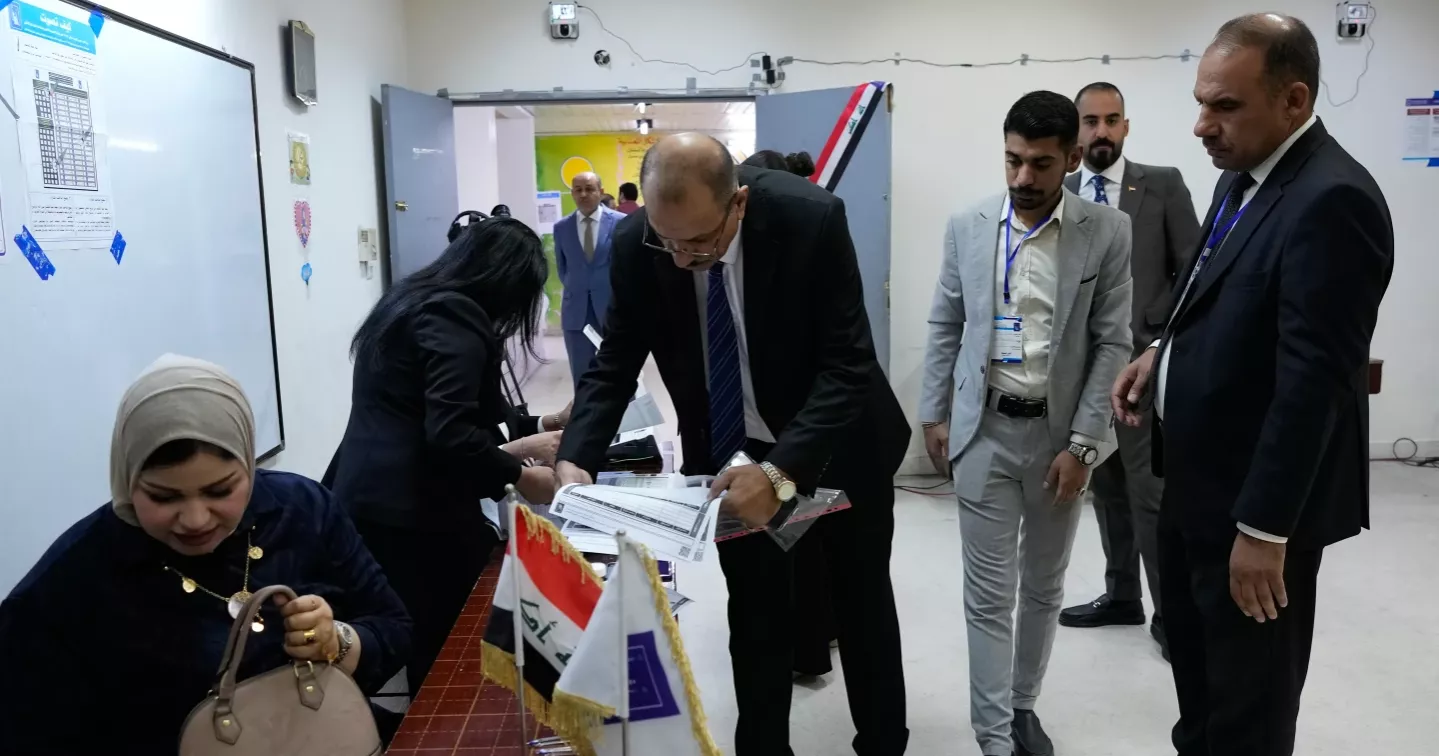
Iraqis went to the polls Tuesday for a parliamentary election marked by heavy security and a boycott by the influential Sadrist Movement.
A total of 8,703 polling stations were open nationwide, following early voting on Sunday for security personnel and displaced residents in camps. Turnout was low in the initial hours, with first results expected on Wednesday. Only 21.4 million of the country’s 32 million eligible voters registered this year, down from around 24 million in the 2021 election.
The election takes place amid major regional upheavals, including wars in Gaza and Lebanon since the October 2023 Hamas attacks on Israel, the Israel-Iran conflict in June, and last year’s fall of Syrian President Bashar Assad. U.S. officials are pressing Iraq to limit the influence of Iran-backed armed groups, some of whose members are contesting Tuesday’s vote.
Prime Minister Mohammad Shia al-Sudani, seeking a second term, cast his vote in Baghdad alongside his mother, emphasizing that the election “asserts the principle of peaceful transfer of power” and reflects citizens’ commitment to democracy.
The Sadrist Movement, led by Shiite cleric Muqtada al-Sadr, boycotted the election. Al-Sadr’s bloc, which won the most seats in 2021, withdrew from politics after failed government negotiations. In Sadr City, his stronghold, security was tight, shops remained closed, and polling stations were nearly empty. “The Sadrist boycott has had a major impact,” said station director Ahmed al-Mousawi.
In Kirkuk, northern Iraq, violence erupted overnight, killing two police officers and injuring two civilians. Authorities said clashes between rival groups led to the shooting, though calm returned by polling hours. Many voters expressed apathy, expecting little change beyond new parliamentary faces.
Ahead of the vote, 46 people were arrested for illegally buying and selling voter cards, and 1,841 cards were seized. Legal challenges are also anticipated, with Iraq’s Supreme Judicial Council noting that Tuesday’s election date was unconstitutional, as the vote was initially scheduled for Nov. 24.
Despite security concerns, political tension, and low expectations, Iraqis turned out to participate in the parliamentary election, underscoring the nation’s continued engagement with democratic processes amid instability.