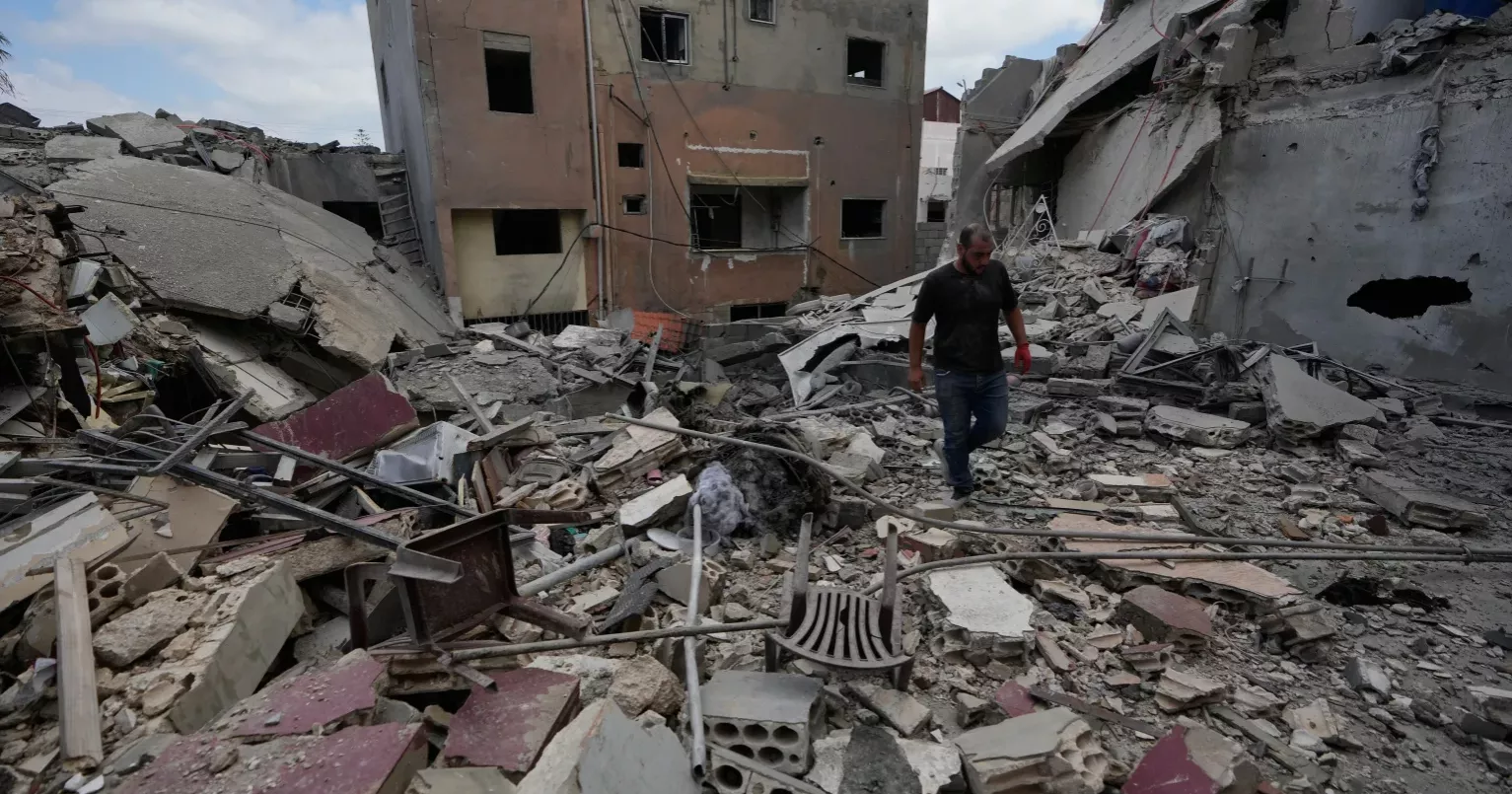
Fierce clashes erupted Tuesday between Israeli forces and the Iran-backed Hezbollah group along Lebanon’s strategic Litani River as Israeli troops attempted to advance farther north, days before Lebanese and Israeli military officials are scheduled to hold direct talks in Washington.
The renewed fighting has further weakened an already fragile ceasefire brokered by Washington more than a month ago. The situation also threatens wider regional peace efforts linked to the ongoing Iran conflict, with Tehran insisting that any broader truce must also include Lebanon.
The Litani River has long served as an unofficial dividing line in southern Lebanon, where Israeli troops still control large areas despite the ceasefire agreement.
Tensions escalated after Israeli Prime Minister Benjamin Netanyahu authorized intensified military operations against Hezbollah targets across Lebanon.
The Israeli military said it carried out overnight strikes on more than 100 Hezbollah positions in southern Lebanon and the eastern Bekaa Valley, targeting what it described as weapons storage facilities, command centers and observation posts used in attacks on Israeli troops and northern Israeli communities.
According to Lebanon’s state-run National News Agency, one Israeli airstrike on the eastern village of Mashghara killed at least 12 people, including several members of the same family.
An Israeli security official, speaking anonymously in line with military regulations, said an additional battalion had been deployed to Lebanon.
Meanwhile, Hezbollah claimed responsibility for multiple rocket, artillery and explosive drone attacks targeting Israeli troops and military vehicles near the Litani River, particularly around the Nabatieh-area villages of Yohmor al-Shaqif and Zawtar al-Sharqieh. Hezbollah-affiliated Al-Manar TV reported that the group had repelled Israeli advances along the riverbanks.
Israel has also intensified strikes in and around Nabatieh city, located north of the Litani River, and on Tuesday warned residents to evacuate the area.
Although Beirut has largely avoided direct strikes since the ceasefire began, the latest escalation has heightened fears among residents.
“Just a few words from Netanyahu on television are enough to make people panic and flee their homes,” said Tony Aboud, a resident of Beirut’s Hamra district. “We don’t know what will happen or how long we can continue living like this.”