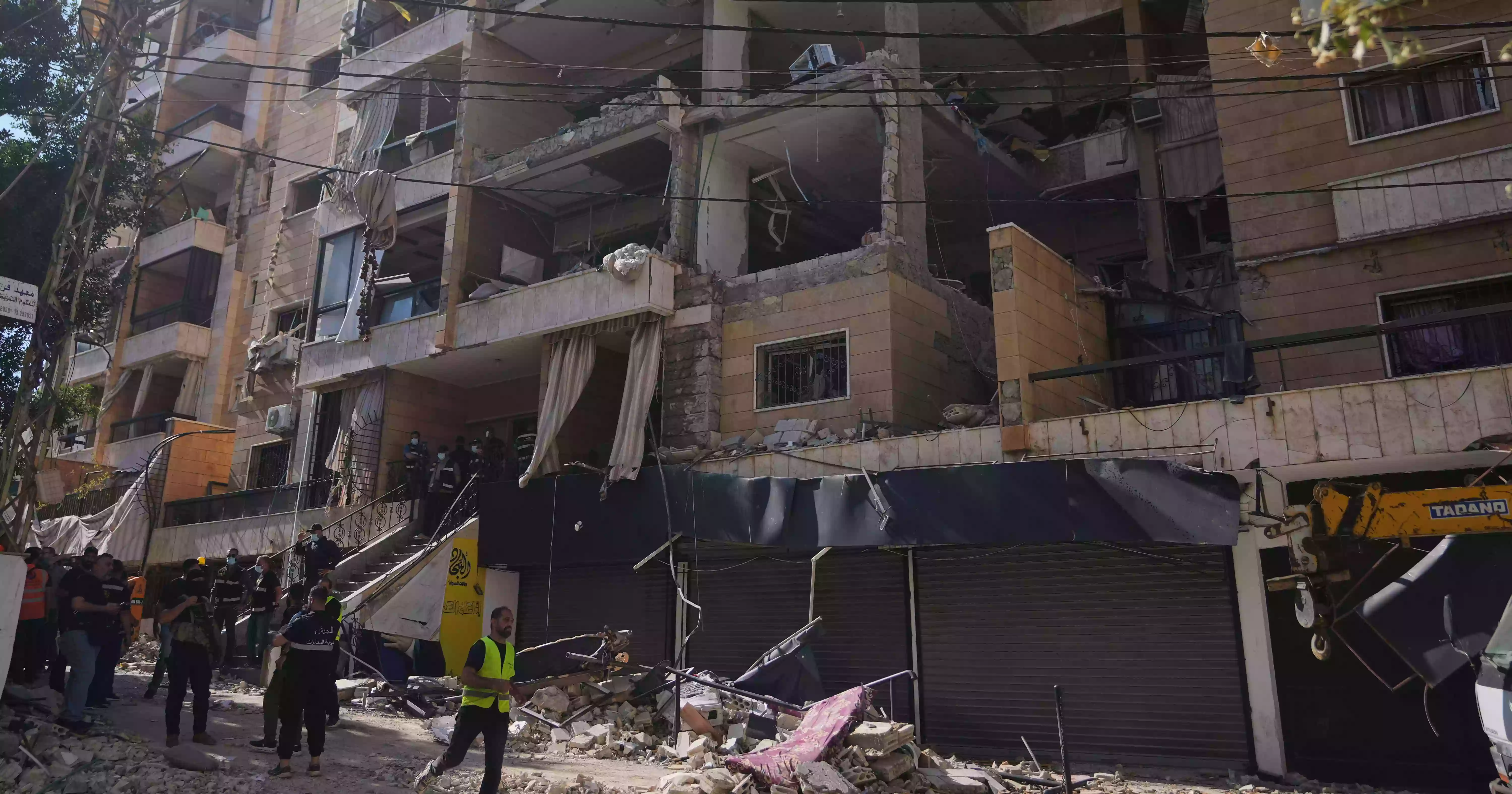
Israeli forces carried out airstrikes on Beirut’s southern suburbs on Sunday, just days after a ceasefire agreement brokered in Washington came into effect, according to Lebanese and Israeli officials.
Lebanon’s state-run National News Agency reported that at least two people were killed and 11 others injured in the strikes, based on preliminary figures.
The attack came despite reported US efforts to prevent strikes on the Lebanese capital and amid renewed diplomatic efforts to revive talks between Iran and the United States.
Israeli Prime Minister Benjamin Netanyahu’s office said the strikes were launched in response to alleged rocket fire from the Iran-backed Hezbollah group into northern Israel earlier in the day.
In a statement, Netanyahu’s office said the attacks targeted Hezbollah “command centers” in the densely populated southern suburbs of Beirut.
“We are striking them very hard, and we know that Hezbollah is on the run,” Netanyahu told his cabinet.
Hezbollah did not immediately claim responsibility for the reported attacks on northern Israel.
The latest escalation occurred only days after Lebanese and Israeli officials met in Washington and renewed discussions aimed at maintaining a ceasefire and ending months of hostilities.
Despite previous ceasefire understandings, Israeli forces have continued near-daily strikes in southern Lebanon, while ground troops remain deployed in parts of the country following military operations against Hezbollah.
Earlier this week, Israel had threatened to strike Beirut’s southern suburbs after Hezbollah claimed attacks on northern Israel. However, urgent diplomatic contacts mediated through Washington reportedly helped avert those strikes after Hezbollah agreed to halt attacks on Israeli border communities.
According to local reports, Sunday’s strike hit a residential building, damaging four of its seven floors. The Lebanese military later cordoned off the area after an unexploded munition was discovered in the rubble.
The latest developments have raised concerns over the stability of the ceasefire and the broader regional security situation.