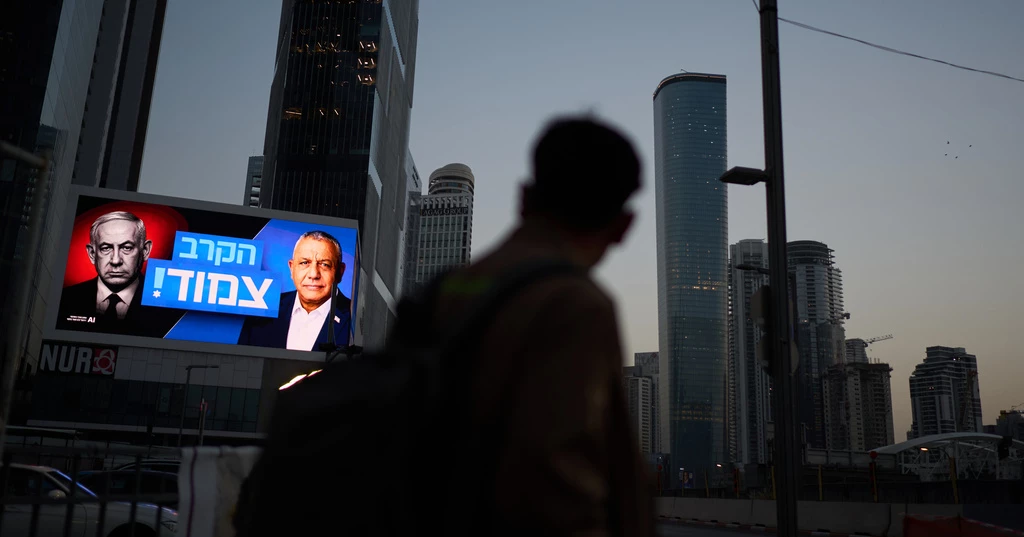
Israelis will vote in a crucial election on Tuesday as the country remains embroiled in unresolved wars, grapples with the aftermath of Hamas' 2023 attack and faces deep divisions over its national identity and leadership.
Prime Minister Benjamin Netanyahu is facing a challenge from a coalition of parties seeking to end his long rule, with opinion polls suggesting a close contest against his main rival, former military chief Gadi Eisenkot.
Israel's fragmented parliamentary system has never produced a single party with an outright majority, forcing political leaders to form coalitions to govern.
With nonaligned Arab parties pushing for higher voter turnout, neither Netanyahu's religious and ultranationalist bloc nor the parties seeking to remove him may secure enough seats to command a parliamentary majority. Such an outcome could lead to weeks of negotiations before a new government is formed.
Arab-led parties could emerge as kingmakers if they agree to support one of the two main contenders.
Tensions with Iran also loom over the election, with Netanyahu intensifying his warnings against Tehran ahead of the vote. In a video released this week, he stood beside a missile-defence battery and warned that Iran would face “a devastating blow” if it attacked Israel.
The election is Israel's first national vote since the Hamas attack on October 7, 2023, which triggered the war in Gaza and related conflicts across the region.
The contest is seen not only as a referendum on Netanyahu's lengthy leadership but also as a choice over the country's future direction — whether Israel will remain strongly influenced by religious and nationalist forces or move towards more liberal and secular values.
The outcome could shape the future of a country whose leadership and policies have faced growing criticism from traditional allies.
Since the 2023 Hamas attack, Israel has become increasingly isolated internationally over its military campaign in Gaza and its policies in the occupied West Bank, where violence by Jewish settlers has intensified. Public support for Israel in the United States has declined sharply, while several longstanding partners in Europe and elsewhere have imposed sanctions on the country in recent months.
For Israeli voters, the election offers an opportunity to determine the country's course after Netanyahu's turbulent four-year term.
His supporters regard him as an experienced statesman who has steered Israel through multiple wars. They believe he is safeguarding the country's Jewish identity while restraining what they consider an overly interventionist judiciary.
His critics, however, portray him as a divisive leader who has prolonged the Gaza war and the crisis over hostages taken during the October 7 attack for political reasons while facing an ongoing corruption trial.
They also accuse him of undermining judicial independence and weakening democratic institutions. In addition, they blame his government for allowing ultra-Orthodox religious Jews to avoid compulsory military service.
Eisenkot's supporters view him as a capable leader with strong security credentials who, alongside his prospective coalition partners, could counter what they see as a growing threat to Israel's liberal values.
His personal experience of the conflict has also shaped his public image. His son and two nephews were killed in Gaza, and supporters believe he understands the deep pain that has gripped Israeli society since the October 2023 attack.
Parties expected to support Eisenkot have pledged to improve Israel's international standing, introduce compulsory military service for ultra-Orthodox men and strengthen the independence of the judiciary.