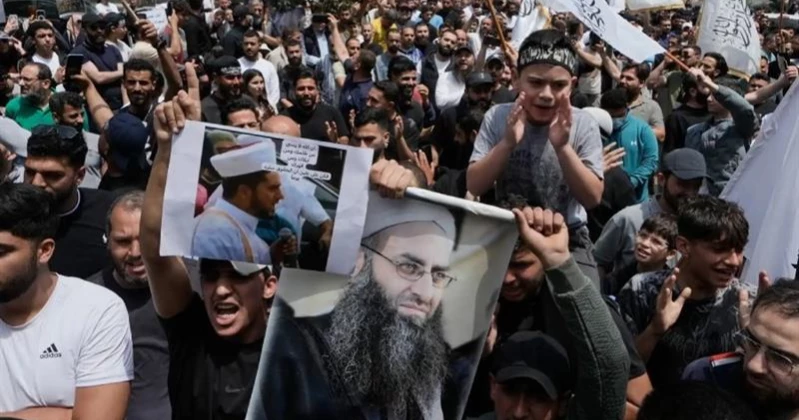
Lebanon is preparing to introduce its largest amnesty in more than three decades, a move that could lead to the release of thousands of prisoners but has also triggered strong opposition from families of victims and exposed the country’s long-standing sectarian divisions.
The draft law, expected to be approved by parliament and signed by the president in the coming weeks, would replace death sentences with reduced prison terms, shorten life sentences and eventually allow the release of convicted militants, drug offenders and thousands of long-term detainees.
However, serious crimes including rape, human trafficking, corruption, financing terrorism and premeditated murder would not be covered by the amnesty. Those convicted of killing Lebanese soldiers could also receive reduced sentences.
Among those opposed to the measure is Samira Bou Saab, whose son George, a Lebanese army first lieutenant, was killed in clashes with supporters of radical Sunni cleric Ahmed al-Assir in the southern city of Sidon in 2013.
Bou Saab said she had hoped to see justice carried out against her son’s killer, who was sentenced to death but could now benefit from the proposed law. She questioned why those convicted of killing soldiers should be allowed to reunite with their families while the families of victims continue to suffer.
Meanwhile, al-Assir’s wife, Amal Shamseddine, criticized the draft law from a different perspective, arguing that her husband is innocent and was targeted through a conspiracy involving Hezbollah. She said detainees such as her husband should have been released long ago.
The proposed legislation comes as Lebanon struggles with overcrowded prisons. More than 3,000 of the country’s nearly 8,600 detainees could be freed, including inmates who have spent at least 14 years in prison without trial.
Families of fallen soldiers have staged protests against the measure, placing dozens of empty military boots outside parliament in Beirut to symbolize their opposition.
Lebanon’s last major amnesty was introduced in 1991 following the end of the country’s 1975-1990 civil war, which killed an estimated 150,000 people. The measure was intended to promote national reconciliation after years of conflict involving militias, Palestinian factions, Syria and Israel.
The current proposal has once again highlighted Lebanon’s sectarian politics. Sunni lawmakers have pushed for the release of Islamist prisoners, Shiite politicians have advocated amnesty for drug-related offenders, while Christian lawmakers have sought leniency for Lebanese citizens who fled to Israel after Israeli forces withdrew from southern Lebanon in 2000.
Lawmaker Nabil Badr, a supporter of the bill, said the legislation has become entangled in political bargaining, with different groups seeking benefits for their constituencies.
One of those closely watching the debate is Maryam Younnes, who fled to Israel with her family as a child in 2000. She hopes the amnesty will allow her to return to Lebanon, visit her father’s grave and reunite with relatives.
However, she said her return would depend on broader political changes, including peace between Lebanon and Israel and the removal of Hezbollah’s weapons.
The draft law states that Lebanese citizens returning from Israel would be treated under a 2011 law requiring former members of the Israeli-backed South Lebanon Army to be detained and given a fair trial upon arrival.
Despite the political and security challenges, Younnes said she remains hopeful that relations between Lebanon and Israel will eventually improve, allowing her to return home.