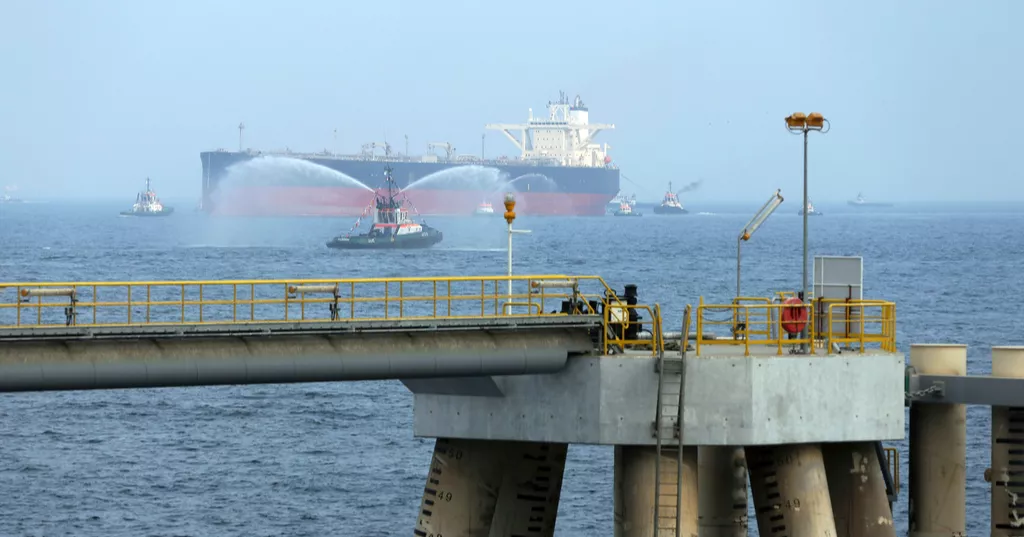
Mediators have made progress in efforts to bring the United States and Iran back to negotiations and prevent an all-out war in the Middle East, two regional officials said Monday, as attacks remained halted after nearly two weeks of rapidly escalating tensions.
The comments came after neither the US nor Iran reported attacks for three consecutive days, offering a brief respite following sustained bombardments that had raised fears of a return to full-scale conflict.
However, Saudi Arabia said it had intercepted drones launched by Iran-backed militias in Iraq that targeted its petroleum facilities, highlighting the risk that tensions could flare up again. The Saudi Defense Ministry, in a social media post, did not report any casualties or damage.
The two regional officials, speaking on condition of anonymity because of the sensitivity of the talks, said mediators led by Qatar and Pakistan were working to narrow differences between Washington and Tehran and revive an interim ceasefire agreement that had been largely undermined by recent exchanges of fire.
No strikes over weekend
The US has paused its attacks after targeting Iranian coastal areas and infrastructure during nearly two weeks of escalation that began after Iran fired on ships attempting to pass through the Strait of Hormuz, a key waterway for global oil shipments.
The Pentagon did not respond to questions about the pause.
US Ambassador to the United Nations Mike Waltz told Fox News that President Donald Trump was “giving talks some space” and allowing them some time.
Waltz also rejected suggestions that the US was running short of interceptor missiles needed to defend against Iranian attacks. However, experts have questioned how long either side can sustain the current level of military operations.
Iran also halted attacks after the US stopped its strikes for two nights, an Iranian army spokesperson said on state television Sunday.
In recent days, Tehran had launched retaliatory attacks against countries in the region that host US military forces, killing at least three service members at a base in Jordan and another in Iraq.
Regional officials cite progress in talks
One of the regional officials told AP Monday that progress in the mediation efforts was “significant.” He said mediators were working with Iran and Oman on a mechanism to manage vessel traffic through the Strait of Hormuz, which has emerged as a major flashpoint in the latest escalation.
Iranian Foreign Ministry spokesperson Esmail Baghaei said at a news conference in Tehran Monday that mediators were passing messages between the two sides, but there were no direct negotiations between Washington and Tehran.
“Mediators may convey messages to us from the American side regarding ongoing developments in the region. But at present, we have no negotiations with the American side,” Baghaei said.
He said Iran and Oman, which lies across the Strait of Hormuz, had already held talks on Friday and Saturday over how to manage shipping through the waterway.
The aim, Baghaei said, was for Iran and Oman, as the two coastal states, to establish mechanisms to ensure safe navigation through the strait while respecting their sovereignty and Iran’s security and national interests.
He stressed, however, that the waterway remained closed.
Tehran has maintained that the interim agreement with the US allows it to manage shipping through the strait for now. Iran has also opposed US efforts to support a shipping route passing close to Oman instead. Before the war, the Strait of Hormuz was regarded as an international waterway.
The US military said Saturday that its recently reinstated naval blockade of Iran remained in place, with 12 commercial ships redirected, two disabled and two boarded.
US forces “remain highly vigilant, focused, lethal, and ready,” it said.
The 60-day period set under the interim agreement in mid-June is now well into its second half. Major issues that were supposed to be discussed, particularly Iran’s nuclear programme, which lies at the centre of the tensions, remain on hold as mediators focus on keeping both sides engaged.
Shipping through Strait of Hormuz hits three-week low
Concerns also remain over shipping through another key regional waterway, the Bab al-Mandeb Strait leading to the Red Sea.
Iran-backed Houthi rebels in Yemen last week threatened to block Saudi shipping there and fired on at least one Saudi tanker, setting it on fire.
Global energy supplies and the broader economy remain at risk as gasoline prices have risen again.
Commercial shipping through the Strait of Hormuz fell to a three-week low, a maritime body overseen by the US Navy said Sunday. It added that no new attacks had been confirmed in the previous 72 hours.
Shipping traffic through the Bab al-Mandeb remained steady, the body said.
Netanyahu backs Trump’s efforts
Meanwhile, Israeli Prime Minister Benjamin Netanyahu is scheduled to travel to the United States and meet with Trump in Washington on Tuesday, his office said.
The two leaders last met in Washington in February, weeks before the US and Israel launched the war against Iran that killed senior Iranian leaders, including Supreme Leader Ayatollah Ali Khamenei.
Iran-backed Hezbollah fired at Israel two days after the war began, prompting Israel to respond with airstrikes and ground operations in southern Lebanon.
Since then, the US has backed landmark direct talks between Lebanon and Israel aimed at easing tensions on that front and finding a way to disarm Hezbollah.
Iran criticizes Ukraine over Caspian Sea strike
Separately, Baghaei criticized Ukrainian President Volodymyr Zelenskyy after he said over the weekend that Ukraine had attacked “vessels used in military cargo shipments involving Iran” in the Caspian Sea.
Iranian Foreign Minister Abbas Araghchi said Sunday that the Ukrainian strike on an Iranian vessel killed a sailor.
In a post on X, Araghchi condemned the attack as a “blatant U.N. Charter violation” carried out at Israel’s behest to draw Europe into the war.
He said he had made clear in phone calls with EU foreign policy chief Kaja Kallas and Russian Foreign Minister Sergey Lavrov that the attack “can’t go unanswered.”
Iran is an ally of Russia in its war against Ukraine and has helped Moscow strengthen its drone capabilities.
At Monday’s news conference in Tehran, Baghaei said that “all parties that consider themselves in some way supporters of the Ukrainian regime must be held accountable.”
He also compared Zelenskyy’s actions to those of anarchists who, before World War I, carried out “theatrical and highly dangerous actions” whose consequences eventually engulfed Europe.