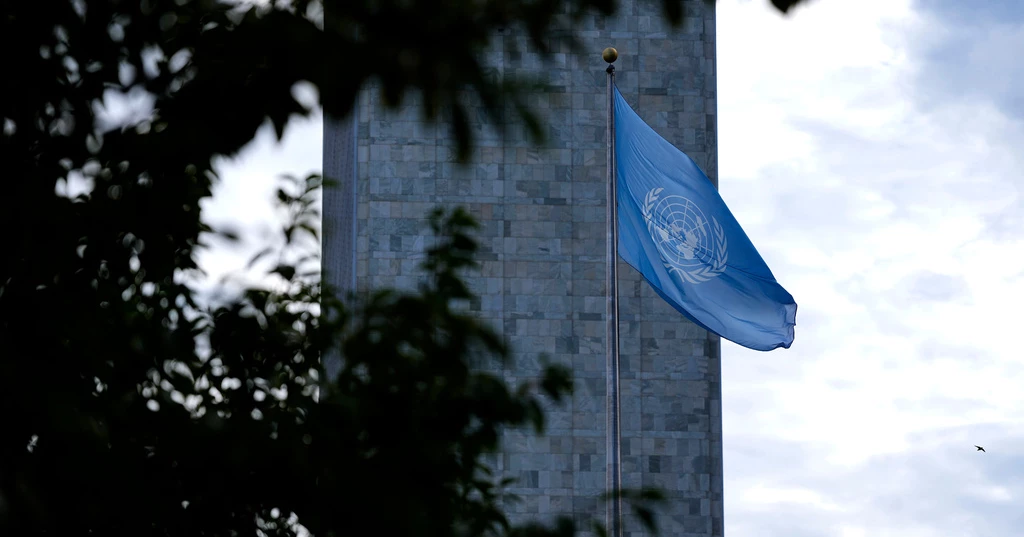
Ongoing wars and escalating tensions across the Middle East are dominating discussions at the UN General Assembly this week, with conflicts involving Iran, Israel, Gaza, Lebanon and Yemen showing little sign of easing.
US President Donald Trump, who has yet to find an end to the more than six-month-old war with Iran, is scheduled to meet Gulf Arab leaders in New York but is not expected to meet Israeli Prime Minister Benjamin Netanyahu.
Iran wary of renewed talks
Iranian President Masoud Pezeshkian, travelling to New York for the General Assembly, accused the United States of blocking diplomatic options and seeking to force Iran to surrender after failing to achieve that through military action.
Pezeshkian said Tehran was reluctant to enter another round of negotiations after Iran was attacked twice by the US and Israel while talks were underway.
Gulf states urge Iran to halt attacks
The Gulf Cooperation Council on Tuesday called on Iran and allied groups to stop attacks on Arab Gulf states and ensure freedom of navigation through the Strait of Hormuz and Bab el-Mandeb Strait.
Jasem Mohamed AlBudaiwi, secretary-general of the council, said disruptions to the two strategic waterways had unsettled global oil markets and supply chains, creating worldwide economic repercussions.
Iran has said its attacks on US bases in the region were carried out in response to US-Israeli strikes against Iran.
AlBudaiwi made the remarks during a meeting with Swiss officials on the sidelines of the UN General Assembly. Trump is expected to meet representatives of the Gulf Cooperation Council in New York.
Netanyahu not expected to meet Trump
Israeli Prime Minister Benjamin Netanyahu is also travelling to New York for a brief visit but is not expected to meet Trump.
Netanyahu, who is due to address the UN General Assembly on Thursday, is expected to face protests inside and outside the UN headquarters.
New York Mayor Zohran Mamdani has renewed calls for the US government to arrest Netanyahu during his visit. Such an arrest is considered unlikely as neither the US nor Israel is a member of the International Criminal Court, while the Trump administration has imposed sanctions on ICC officials.
Netanyahu has accused Mamdani of inciting violence against Jewish New Yorkers.
Six killed in Yemen airstrikes
At least six people, including two children and a woman, were killed in airstrikes Tuesday in Yemen's port city of Mokha, according to the Houthi-run Health Ministry.
The strikes came hours after Yemen's internationally recognised government accused the Houthis of attacking an open market in Lahj province.
Fighting between the Houthis and Saudi-backed forces has intensified Yemen's long-running civil war and triggered attacks on Saudi Arabia.
Foreign ministers from Canada, France, Germany, Italy, Japan, the UK and the US called on Iran to stop supporting the Houthis, warning that the group's actions risk further escalation, disruption of international trade and global economic instability.
US, Iraq discuss militia disarmament
Iraqi Prime Minister Ali al-Zaidi and US Secretary of State Marco Rubio discussed Baghdad's efforts to disarm armed groups in Iraq on the sidelines of the General Assembly.
Al-Zaidi reaffirmed his government's commitment to ensuring that all weapons remain under state control.
The US State Department said the two leaders agreed on the need for Iraq to dismantle terrorist militias, prevent attacks from Iraqi territory and fully exercise its sovereignty.
Al-Zaidi had initially set Sept 30 as the deadline for non-state groups to surrender their weapons, but later extended it after several powerful Iran-backed militias said they had no intention of disarming.