Indian Prime Minister Narendra Modi on Saturday said the country’s decades-old Maoist insurgency was nearing an end, but warned that people supporting the movement’s ideology could continue to pose a threat.
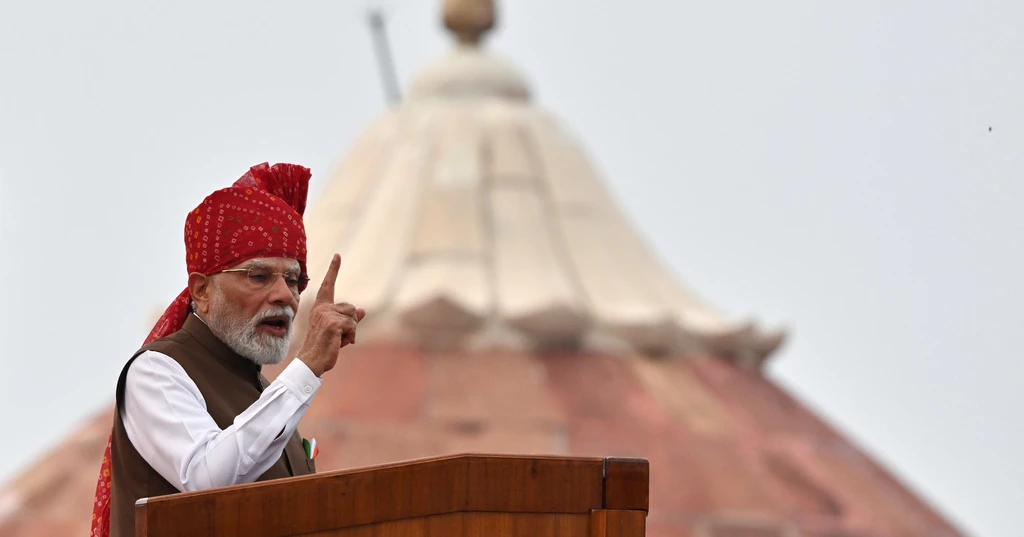
Addressing the nation on India’s 79th Independence Day from the Red Fort in New Delhi, Modi said years of security operations had pushed armed Maoist rebels to the brink of defeat.
He claimed that security forces had succeeded in removing armed Naxalites from forest areas, but warned of what he described as “dimagi Naxals,” or people who support the movement ideologically.
“We have succeeded in getting rid of armed Naxals in the jungles, but ‘dimagi Naxals’ are looking for opportunities to create violence and unrest,” Modi said, urging authorities to identify and isolate them.
The Maoist insurgency, also known as the Naxalite movement, has challenged state authority across parts of central and eastern India for decades. The conflict has claimed the lives of thousands of civilians, rebels and security personnel.
The movement began in 1967 with an uprising in Naxalbari village in eastern India and later developed into an armed rebellion inspired by Chinese revolutionary leader Mao Zedong. It has traditionally claimed to represent landless farmers, poor rural communities and Indigenous people.
Modi said the insurgency had damaged the future of generations of young Indians and credited his government’s security and development measures with reducing Maoist violence significantly since he came to power in 2014.
The prime minister also announced measures aimed at strengthening India’s self-reliance in areas including defence and agriculture, with a particular emphasis on young people.
He highlighted initiatives such as artificial intelligence skills training and free online coaching for competitive examinations, without directly referring to recent youth-led protests that posed a rare challenge to his government.
Modi said India had transformed from a “fragile” economy into the world’s fastest-growing major economy over the past decade. He also reiterated his government’s goal of making India a developed nation by 2047, marking 100 years of independence.
The term “dimagi Naxal” is similar to the politically contentious phrase “urban Naxal,” which Modi and leaders of his Bharatiya Janata Party have previously used for activists, academics, intellectuals and other critics.
Critics have accused the government of using such labels to stigmatise dissent.
International rights organisations, including Amnesty International and Human Rights Watch, have also criticised the Indian government over its use of anti-terror laws, sedition-related provisions and foreign-funding regulations, alleging that they have been used against civil society groups, activists and journalists critical of government policies.