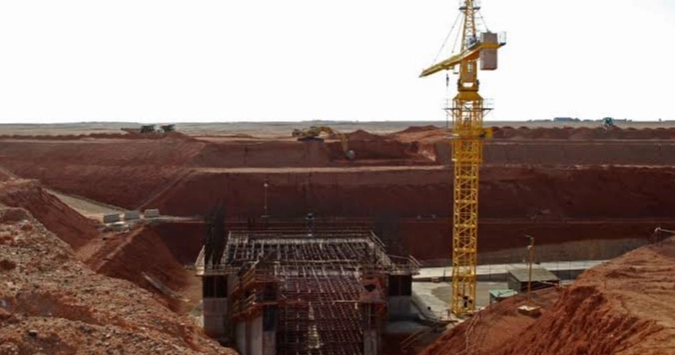
Copper concentrate exports from one of Mongolia's largest mines to China have declined by around 70% over the past two weeks due to restrictions at a border crossing, raising concerns about significant revenue losses and disruptions to the country's mining industry.
Oyu Tolgoi LLC, the operator of one of the world's largest copper mines, said Thursday that the number of truck convoys carrying copper concentrate across the Chinese border had dropped from the usual 13–15 per day to just three or four.
The restrictions affect vehicles crossing through China's Ganqimaodu Border Port, located opposite Mongolia's Gashuunsukhait Border Port.
The decline has resulted in an estimated $300 million reduction in exports compared with normal operating conditions. If the restrictions remain in place until the end of the year, potential lost export revenue could reach $1.2 billion, the company said.
Mongolia is a major supplier of copper and coal to China, the world's largest consumer of both commodities.
Mongolian border officials attributed the slowdown to infrastructure and technology upgrades at Ganqimaodu. Chinese authorities introduced an in-vehicle facial recognition system for truck drivers crossing the border in August, while installation and maintenance work has reduced processing capacity, according to Mongolian officials.
The Mongolian government said the Chinese embassy in Ulaanbaatar had informed it that the work, initially expected to finish by late September, could continue until the end of December, according to Mongolian media reports.
Finance Minister Mendsaikhan Zagdjav said some Cabinet members had been instructed to visit the border crossing and hold discussions with Chinese authorities.
Road and Transport Minister Delgersaikhan Borkhuu said all transport routes on the Mongolian side remained open and the government had no information suggesting the restrictions were politically motivated.
The disruption has also affected coal exports through Gashuunsukhait. Border authorities said the number of vehicles crossing the border had fallen to slightly more than 1,000 a day from around 1,300.
Mongolia's economy depends heavily on mining, which contributes roughly a quarter of its gross domestic product. The country has substantial reserves of coal, copper, gold, uranium and fluorspar, making its economy particularly vulnerable to cross-border trade disruptions and fluctuations in global commodity prices.
Copper concentrate exports reportedly reached 2 million tonnes in the first nine months of 2026.
Coal and copper concentrates accounted for 82.3% of Mongolia's merchandise exports last year, while China received 89.4% of the country's total exports. Mongolia was also China's largest supplier of imported coking coal in 2025, accounting for about 51% of its imports of the commodity.