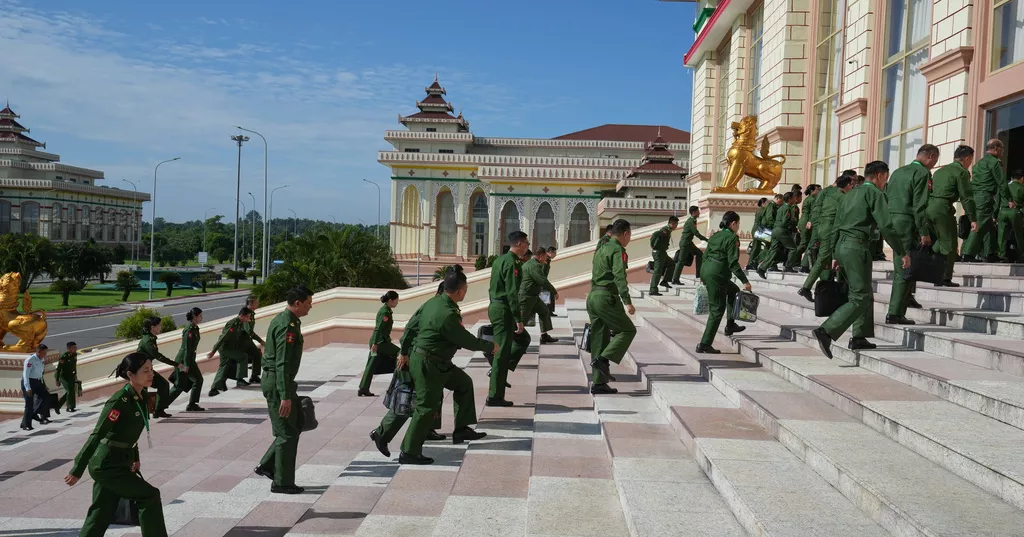
Myanmar will hold by-elections next April to fill vacant parliamentary seats, marking its first electoral exercise since the general election earlier this year, which critics said was intended to strengthen military rule.
The polls will fill seats vacated by elected representatives who assumed ministerial or other government positions. They will also cover areas that could not participate in the general election because of armed conflict.
Although the by-elections are unlikely to alter the balance of power in the national parliament, currently dominated by the military-backed Union Solidarity and Development Party (USDP), they could offer an indication of public support for the participating parties.
Myanmar has remained in turmoil since the military ousted the elected government of Aung San Suu Kyi in 2021, triggering widespread resistance. After security forces used lethal force to suppress peaceful protests, many opponents of military rule took up arms, plunging large parts of the country into conflict.
The Union Election Commission announced that the by-elections would be held on April 4 in 55 constituencies, including 34 seats in the lower house, five in the upper house and 16 in regional and state parliaments. The announcement was published in the state-run Myanma Alinn newspaper on Friday.
At least seven constituencies are located in towns recently recaptured by the military from armed groups opposing it. Others are in seven states and regions where fighting is still underway.
Myanmar's parliament has 440 seats in the lower house and 224 in the upper house, with military-appointed representatives holding 25 percent of the seats in each chamber.
In the general election that concluded in January, the USDP and its allies secured nearly 90 percent of parliamentary seats. Min Aung Hlaing, the former army chief who led the 2021 takeover, was sworn in as president in April.
Several major opposition parties, including Suu Kyi's former ruling National League for Democracy, had been ordered to dissolve after refusing to participate in what they described as a sham election.
The general election faced widespread criticism as an attempt to legitimise military rule. Ongoing conflicts prevented voting in many areas, limiting the polls to 263 of the country's 330 townships.