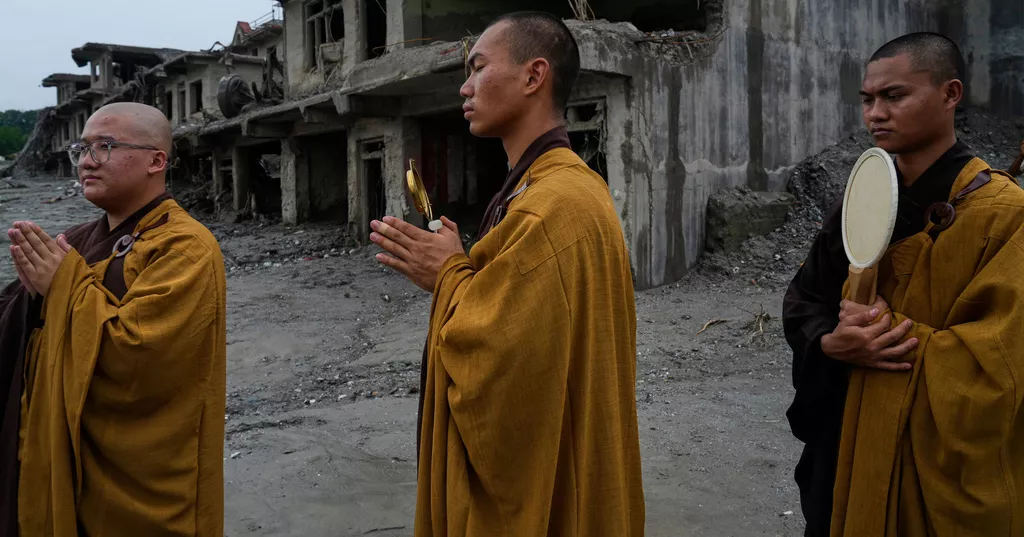
Nepal observed a national day of mourning Monday for those killed in devastating floods that struck the country and Tibet on Aug. 26, with government offices lowering national flags to half-staff as families completed traditional mourning rituals.
The floods have killed more than 1,300 people in Nepal and Tibet and left around 5,000 others missing, including foreign nationals, according to Nepal's disaster management agency.
Monday marked the 13th day since the disaster. In predominantly Hindu Nepal, close family members traditionally observe a 13-day mourning period, culminating in rituals to pray for the souls of the deceased.
Some families whose relatives remain missing have held symbolic funerals. Cremation is an important final rite in Hindu tradition, and conducting the rituals even without recovering a body can provide families with a sense of spiritual closure.
The government had earlier declared Monday an official day of mourning and ordered flags at government offices to be flown at half-staff.
In Kathmandu, relatives of missing people gathered near the prime minister's office and key government ministries, urging authorities to intensify search and rescue operations for hundreds of workers at hydropower plants who were swept away by the Bhotekoshi River or buried under debris.
Search operations continued Monday for hundreds of people still unaccounted for.
Rescuers on Saturday pulled a Chinese national alive from a power plant, while two Nepali workers were rescued from another section of the facility on Friday.
Authorities said rescue teams are increasingly concentrating on 12 hydropower projects where around 900 workers remain missing, with about 500 believed to be trapped inside tunnels.
Specialized teams from India, China, South Korea and the United States have joined the search, combing through debris, damaged structures and tunnels in efforts to locate survivors.