Israeli Prime Minister Benjamin Netanyahu faces weeks of challenging political negotiations after final election results confirmed that his bloc failed to secure a majority in parliament, leaving the country's political future uncertain.
The results, announced early Friday, showed Netanyahu's bloc winning 53 seats in Tuesday's election, while the main opposition secured 48. Arab-led parties claimed the remaining 19 seats, marking a historic performance.
Political parties must now negotiate and explore possible alliances to secure at least 61 seats in the 120-member Knesset, Israel's parliament, to form a government.
Netanyahu, the country's longest-serving prime minister, remains in office for now.
"Now comes the truly hard part," centrist politician Yair Lapid wrote on X, urging Israelis to remain patient.
The main challenge for the opposition will be deciding whether to form an alliance with Arab-led parties, despite the political sensitivities involved, or abandon their campaign promises and join Netanyahu in a potentially unstable unity government.
Friday marks the beginning of the Shabbat weekend in much of Israel, and it remained unclear which political leaders would begin negotiations.
The election results must be formally certified and presented to President Isaac Herzog next Wednesday. Herzog will then nominate a candidate to form the next government. The nominee could be Netanyahu, whose party received the highest number of votes, or another politician considered suitable by party leaders.
If political leaders fail to form a government after several attempts, Israel could face another election early next year. Herzog has said he will make every effort to prevent such an outcome.
Netanyahu's bloc raises unverified allegations
Shortly before the final results were announced, Netanyahu and his Likud party circulated unsubstantiated claims that Arab-led parties had manipulated the election, possibly with foreign involvement.
Opposition leaders accused Netanyahu of targeting and portraying Israel's Arab minority as a threat. Arabs account for around 20% of the country's population, and their participation in Tuesday's election reached an unprecedented level amid public anger over Netanyahu's far-right allies, including National Security Minister Itamar Ben-Gvir. His party lost seats.
In his first public reaction on Friday, Netanyahu wrote on X that forming a coalition with Arab parties was unacceptable.
Supreme Court Justice Noam Sohlberg, who heads Israel's election committee, said serious suspicions of foreign interference had been reported to him. In a letter to the Shin Bet security agency, he acknowledged that he could not independently verify the allegations but requested an investigation.
Israeli media reports suggested that members of Netanyahu's party had accused Qatar, which many Israelis view as a supporter of Hamas, the Palestinian militant group operating in Gaza. Qatar rejected the claims, describing them as "ridiculous and dangerous."
The election commission said its investigation was based on classified intelligence but offered no further details. Acting Director General Dean Livne warned that media reports about the investigation were entirely unfounded.
He stressed that the investigation would not affect the final election results submitted to the president and did not target any particular section of the population.
Opposition politicians argued that Netanyahu was attempting to undermine the possibility of an alliance between his rivals and Arab-led parties by questioning the election's legitimacy. Netanyahu has suggested that his main rival, Gadi Eisenkot, and others would commit an act of betrayal if they joined forces with Arab parties.
The Shin Bet sought to ease tensions, saying its investigation was not intended to cast suspicion on an entire community that had exercised its democratic voting rights lawfully.
The election committee also dismissed allegations of widespread electoral irregularities as baseless in a letter to a concerned member of parliament. It has asked the Shin Bet to submit its findings within a week.
Opposition may gain parliamentary influence
The newly elected Knesset is scheduled to be sworn in on November 10, even as negotiations over forming a government continue.
Once parliament convenes, Eisenkot's bloc could cooperate with Arab-led parties to elect a new parliamentary speaker. Such an alliance could give them control over the legislative agenda and allow them to introduce and pass laws before a new government takes office.
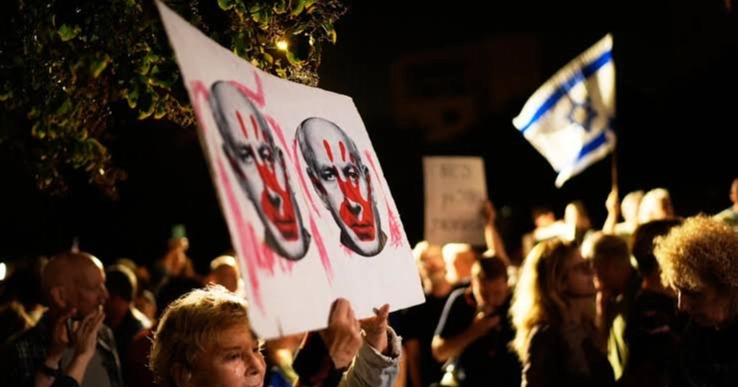
Meanwhile, hundreds of Israelis have taken part in rallies urging Eisenkot and other opposition leaders to cooperate with Arab-led parties. Such an arrangement has occurred only once before, briefly, in 2021.
Netanyahu's possible departure from office could have significant consequences for the veteran leader. His critics say he could face renewed scrutiny over longstanding corruption allegations, while an investigation would likely examine security failures surrounding the Hamas-led October 7, 2023, attack on Israel.