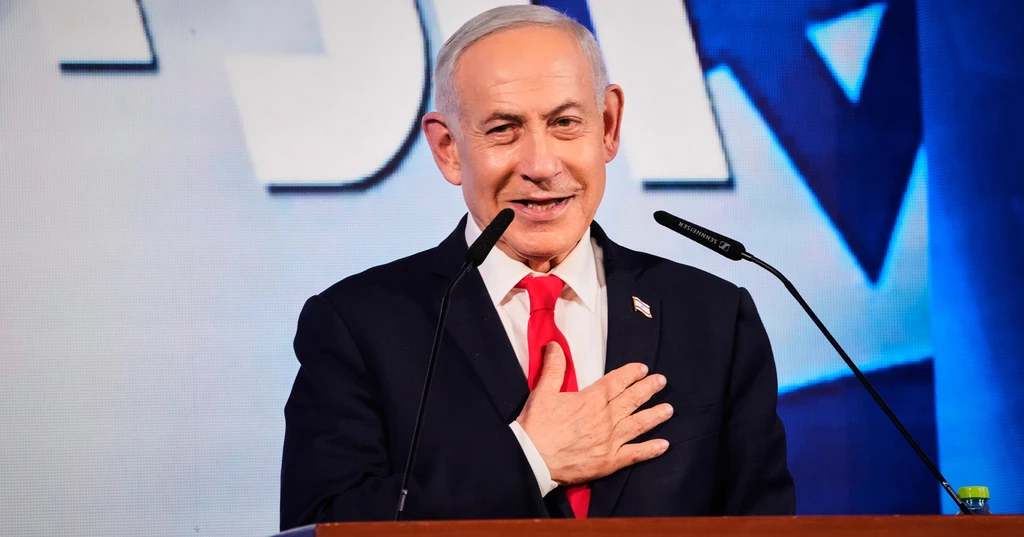
Israeli Prime Minister Benjamin Netanyahu and his rivals faced weeks of negotiations after preliminary election results showed no clear winner, with Arab-led parties potentially holding the key to forming a parliamentary majority.
With 85 percent of votes counted, Netanyahu’s Likud party secured 20.8 percent, while centrist challenger Gadi Eisenkot’s Yashar party received 16.1 percent. Arab-led parties won 14.9 percent of the votes.
Neither bloc appeared likely to secure the 61 seats needed for a majority in the 120-member Knesset. Local media projected 53 seats for Likud and its allies, 48 for Yashar and allied parties, and 19 for Arab-led parties.
Eisenkot has left open the possibility of cooperating with Arab-led parties under certain conditions, including their recognition of Israel as a Jewish state and Hamas as an extremist group. Netanyahu has rejected such an alliance, describing a government involving Arab parties as dangerous.
The election dealt a setback to Netanyahu but did not decisively end his chances of remaining in power. Nearly 78 percent of eligible voters cast ballots, the highest turnout since 1999. Final results were expected after the counting of absentee ballots on Thursday.
If rival parties fail to form a majority coalition, Israel could face another election early next year. President Isaac Herzog has urged political leaders to avoid another vote.
Arab-led parties made a historic showing, reigniting debate over their role in Israeli politics. Their strong performance could prove decisive in determining whether Netanyahu remains prime minister or his opponents manage to form a government.