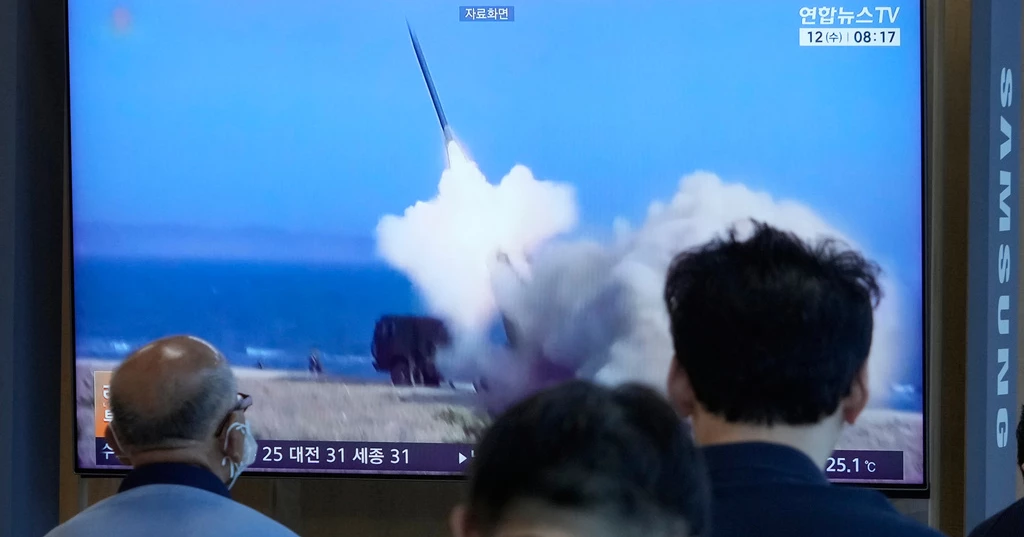
North Korea fired a ballistic missile toward the sea on Wednesday, its second such launch in less than a week, in an apparent protest against upcoming annual military exercises between South Korea and the United States.
South Korea’s Joint Chiefs of Staff said the missile was launched from the Wonsan area on the North’s eastern coast at around 6am and traveled more than 700 kilometers before landing in waters between the Korean Peninsula and Japan.
Japan’s Defense Ministry also detected the launch and said the missile fell outside Japan’s exclusive economic zone.
The launch came two days after South Korea and the United States announced that their annual Ulchi Freedom Shield military exercises would begin on Aug 17. The allies say the drills are defensive and aimed at improving their readiness against North Korean threats.
North Korea has long condemned the joint exercises as rehearsals for an invasion and has frequently responded to them with missile launches and strong rhetoric.
South Korea’s military said it remains prepared to respond to any provocation from Pyongyang while working closely with the United States. Seoul’s National Security Council called the missile launch a provocation and urged North Korea to stop such actions.
Japanese Defense Minister Shinjiro Koizumi said Tokyo had strongly protested the launch through diplomatic channels in Beijing, calling it a serious threat to the safety of Japanese citizens.
The latest launch followed another short-range ballistic missile test detected by South Korea, the United States and Japan on Aug 6. That was North Korea’s first reported ballistic missile activity since late June.
North Korea has continued expanding its missile and nuclear capabilities despite multiple UN Security Council resolutions banning its ballistic missile launches.
Experts say Pyongyang has accelerated its weapons development since diplomatic talks between North Korean leader Kim Jong Un and US President Donald Trump broke down in 2019. They believe Kim may seek to use his growing military capabilities to gain concessions from Washington, including relief from international sanctions.
North Korea has also strengthened its ties with Russia, including through military support for Moscow’s war in Ukraine. At the same time, Pyongyang has sought closer relations with China, its traditional ally and major economic partner.
Chinese President Xi Jinping visited Pyongyang in June, his first visit to the North Korean capital in seven years.