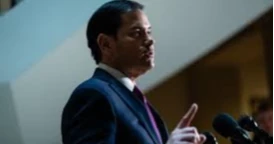
US Secretary of State Marco Rubio is expected to face tough questions from lawmakers on Tuesday about the Trump administration’s foreign policy efforts, particularly the ongoing conflict with Iran, as he appears before Congress for the first time since the war began.
Rubio will testify before both House and Senate committees to present the State Department’s annual budget request. However, much of the discussion is expected to focus on the fragile ceasefire between the United States and Iran, which has come under strain amid recent exchanges of attacks.
Rubio and other senior administration officials have defended President Donald Trump’s decision to enter the conflict, despite Trump's long-standing promises to avoid lengthy military engagements in the Middle East. The administration has also faced criticism over what opponents describe as shifting objectives in the war.
Shortly after the conflict started on February 28, Rubio participated in a classified briefing for lawmakers following the first US and Israeli strikes. At the time, Democrats criticized the administration for acting without congressional approval, while most Republicans supported the military action.
But after two months of fighting, concerns are growing in both parties over the war’s rising costs and its economic impact ahead of this year's midterm elections.
Last month, the Senate advanced a measure that would require Trump to end US involvement in the conflict. The effort gained momentum after Republican Senator Bill Cassidy joined Democrats in supporting the proposal.
A similar resolution was expected to be voted on in the House, but Republican leaders blocked it after realizing they might not have enough votes to defeat it.
The developments highlight increasing divisions within the Republican Party, with some lawmakers becoming more willing to challenge Trump’s handling of the conflict.
After Tuesday’s hearings before the Senate Foreign Relations Committee and a House Appropriations subcommittee, Rubio is scheduled to return to Capitol Hill on Wednesday for additional testimony before the House Foreign Affairs Committee and a Senate appropriations panel.
Lawmakers are also expected to question Rubio about the administration’s increasingly tough stance toward Cuba. Trump has suggested that Cuba could become a future focus of US policy after the situation with Iran is resolved.
Although US and Cuban officials have held several meetings, Trump and Rubio have continued to issue warnings toward the Cuban government. Those tensions intensified after the administration announced criminal charges against former Cuban leader Raúl Castro.
Rubio, whose parents immigrated from Cuba, has long argued that the country poses a security challenge because of its ties with governments viewed by Washington as adversaries. He has repeatedly said the Trump administration remains committed to addressing those concerns.