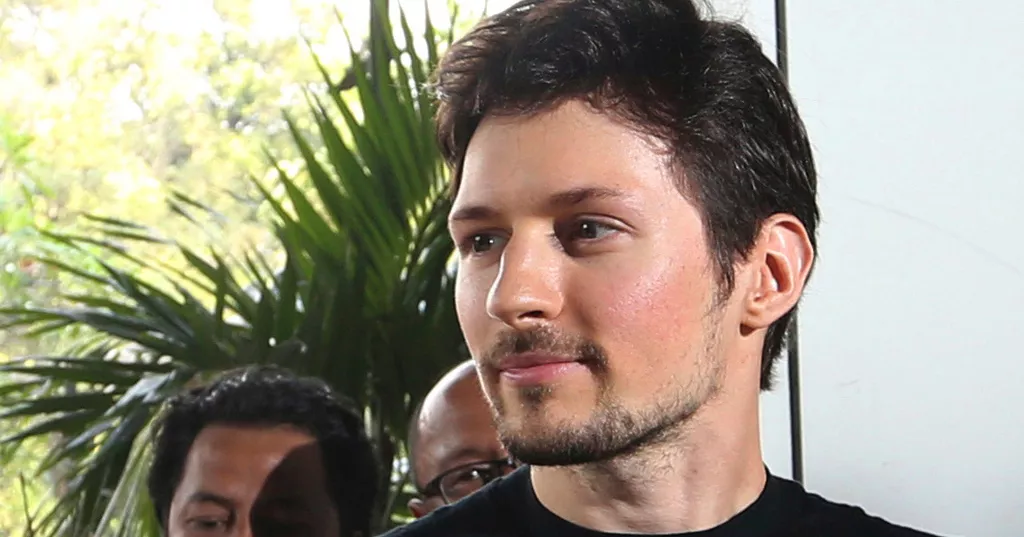
Russia's Federal Security Service (FSB) said Wednesday it has charged Telegram founder Pavel Durov with aiding terrorism and placed him on an international wanted list, escalating Moscow's campaign to tighten control over online platforms.
The move comes as Russian authorities continue to impose restrictions on Telegram, one of the country's most widely used messaging apps, amid a broader effort to strengthen state oversight of the internet since the start of the war in Ukraine in February 2022.
In a statement, the FSB accused Telegram's management of failing to remove numerous channels, chats and bots allegedly used by Ukrainian intelligence agencies and groups designated by Russia as terrorist or extremist organizations to coordinate acts of sabotage, terrorism, cyberfraud and other attacks that resulted in casualties.
The agency also claimed Ukrainian security services had used a Telegram-based dating chatbot to recruit Russians for sabotage and terrorist activities. According to the FSB, 46 users of the chatbot, aged between 12 and 22, have been detained across Russia since July 2025 on allegations including attacks on law enforcement officers and arson.
Earlier this year, Durov disclosed that Russian authorities had opened a criminal case against him, accusing the government of manufacturing grounds to restrict Telegram in an attempt to curb privacy and freedom of expression.
If convicted, Durov could face a maximum sentence of life imprisonment under Russian law.
Telegram did not immediately comment on the latest charges. According to the company's website, Telegram is headquartered in Dubai, where Durov—who holds French and United Arab Emirates citizenship—also resides.
Under President Vladimir Putin, Russia has steadily tightened control over the internet through restrictive legislation, website bans and technological measures aimed at monitoring online traffic. Popular platforms including Facebook, Instagram and X have been blocked, YouTube has been slowed, while Signal and Viber have been banned. Access to WhatsApp and Telegram has also been restricted.
Durov previously founded the Russian social media platform VK before launching Telegram. Russia unsuccessfully attempted to block Telegram between 2018 and 2020.
Although many users continue to bypass internet restrictions through virtual private networks (VPNs), Russian authorities have also sought to block many VPN services.
At the same time, Moscow has been promoting a state-backed messaging platform known as MAX, which officials describe as an all-in-one service for messaging, government services and digital payments. Critics, however, say the platform could facilitate government surveillance, noting that it shares user data with authorities upon request and does not provide end-to-end encryption.
Durov has also faced legal scrutiny outside Russia. In 2024, he was arrested in Paris over allegations that Telegram had been used for criminal activities, including drug trafficking and the distribution of child sexual abuse material. He later said he returned to Dubai in March 2025 after spending several months in France.
Following Durov's arrest in France, the Kremlin criticized the French authorities, describing their actions as "selective" while questioning why similar action had not been taken against other technology platform operators facing comparable allegations.