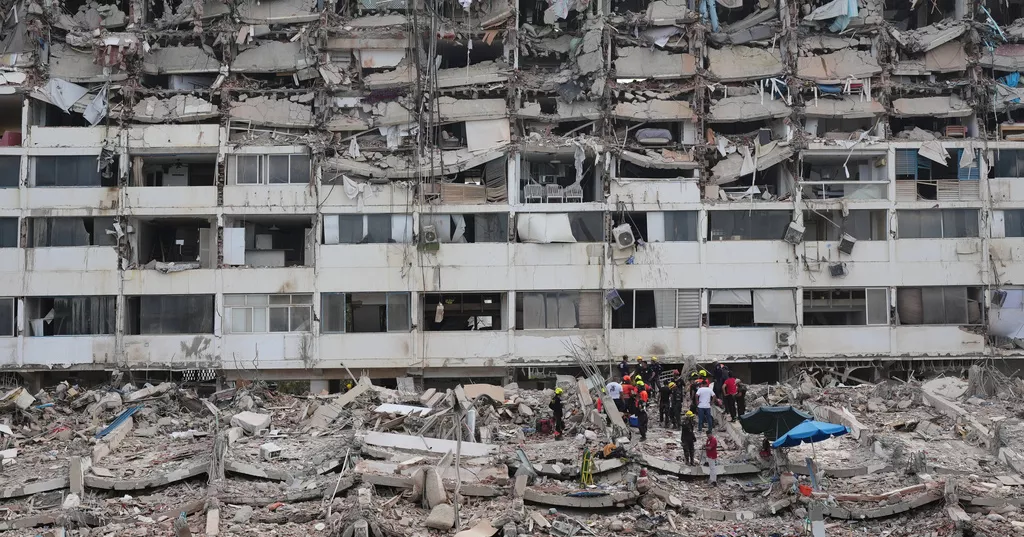
Rescue teams and volunteers continued searching through the rubble of collapsed buildings in Venezuela on Monday as hopes of finding more survivors from last week's devastating twin earthquakes diminished and concerns mounted over a prolonged humanitarian crisis.
Five days after the disaster, relief agencies warned that the critical window for rescuing survivors was rapidly closing, although people trapped beneath the debris could still survive if they had access to food and water.
The earthquakes have left thousands homeless, raising questions over whether the cash-strapped government can effectively coordinate long-term relief and recovery efforts.
The official death toll has surpassed 1,700, according to government figures.
Meanwhile, a magnitude 4.6 aftershock struck the northern state of La Guaira on Monday, adding to the anxiety of residents and rescue workers. Authorities said there were no immediate reports of additional damage.
Government officials, facing criticism over the pace of the response, highlighted ongoing rescue and relief efforts. Police and military personnel distributed food to displaced residents, while authorities said electricity had been restored to 90 percent of La Guaira, one of the worst-hit regions.
Jorge Rodríguez, head of the National Assembly, said engineers were assessing structurally damaged buildings and that 15 temporary camps had been established to shelter displaced families.
Acting President Delcy Rodríguez also praised emergency responders after rescue workers pulled a survivor from the rubble following a 43-hour operation, describing every successful rescue as "a victory for hope."
Despite occasional rescue successes, many families remained waiting near collapsed buildings for news of missing relatives.
Residents were again shaken after Monday's aftershock, one of more than 600 recorded since the twin earthquakes struck last Wednesday. The tremor was felt in Caracas, where many people rushed out of buildings in fear.
Rescue and recovery operations are continuing as authorities and humanitarian agencies race against time to assist survivors and address the growing needs of those displaced by one of the country's deadliest natural disasters.