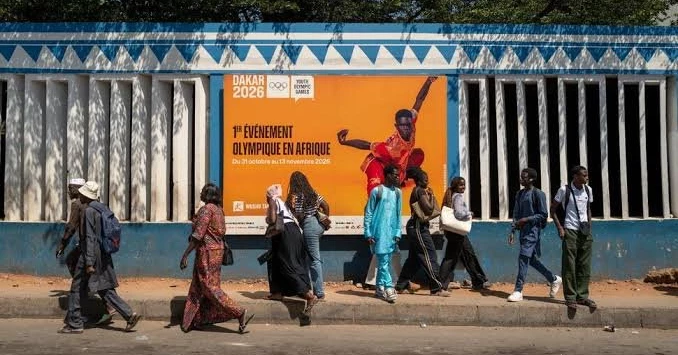
Senegal is making history by hosting Africa's first Olympic event, the Youth Olympic Games, but rising living costs, unemployment and financial hardship have left many citizens struggling to share the excitement.
Paulina Netinan Nodjibougada, a 26-year-old accounting student, said finding employment and managing family expenses in Dakar were her main concerns.
"I'm not very enthusiastic because there are too many problems," she said, adding that her family had too many financial worries.
The Games, featuring around 2,700 athletes aged 14 to 17, began Saturday and will continue until November 13. Organisers have highlighted opportunities for young people through training and volunteering programmes.
However, around 75 percent of Senegal's population is under 35, while youth unemployment stands at approximately 23 percent.
Entrepreneur Momar Assane Diouf, 33, said rising electricity, food and education costs had forced him to take several jobs to support his family. Meat prices have increased from 3,000 CFA francs ($5) to 5,500 CFA francs ($9) per kilogramme in recent months.
Senegal's financial difficulties have limited government support for struggling households. Following revelations of billions of dollars in previously undisclosed borrowing, the country is seeking a $2.2 billion IMF loan that would require spending cuts.
The government has allocated 36 billion CFA francs ($60 million) to organise the Games, including 11.3 billion CFA francs for sports venue renovations. The spending has sparked debate over whether public resources should prioritise urgent economic needs.
President Bassirou Diomaye Faye has defended the event, citing infrastructure improvements, local business contracts and youth training opportunities.
However, preparations have disrupted some livelihoods. Mamadou Wadji, 37, a shoemakers' cooperative leader in Dakar's Medina neighbourhood, said members were relocated from a busy market to an unfinished school building, causing sales to decline.
His family's daily expenses have also doubled to 10,000 CFA francs.
"We can't go to the stadium to watch the events while our families are waiting for us to put food on the table," he said.
Diouf hopes the Games will succeed but warned that the celebrations would not solve the country's economic problems.
"Life is expensive. Life will be expensive during the Games, and life will be expensive after the Games," he said.