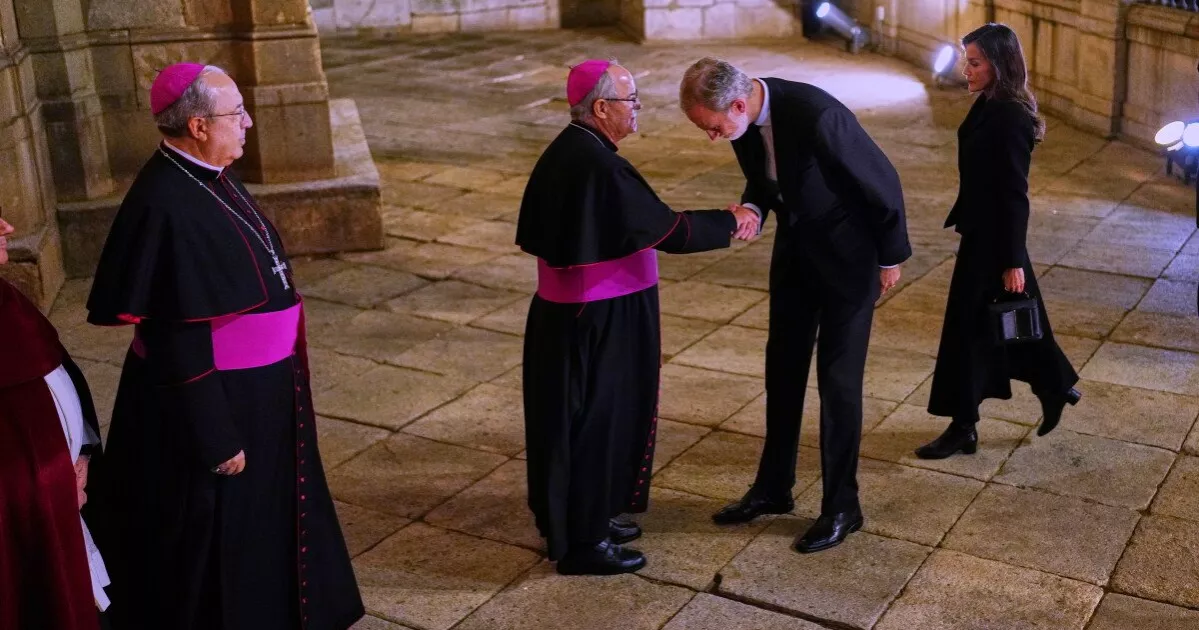
Families of the 69 people killed in a high-speed train collision in Spain last month joined the country's royal family at a state funeral on Tuesday, nearly two weeks after the disaster.
The memorial service was held at the towering 13th-century Toledo Cathedral in central Spain.
The collision occurred on October 28 when a high-speed train crashed into another stationary train on the Madrid-Seville line near Urda, about 140 kilometres (87 miles) south of the capital.
It was the second fatal collision this year involving Spain's extensive high-speed rail network, dealing a major blow to public confidence in a transport system widely regarded as one of the country's greatest achievements.
Amid mounting pressure following the disaster, Transport Minister Óscar Puente resigned last week. His departure was followed by the resignation of Luis Pedro Marco, head of Spain's railway infrastructure operator.
Spain is scheduled to hold a general election on November 29, with progressive Prime Minister Pedro Sánchez seeking another term in office. Sánchez, however, did not attend Tuesday's funeral.
For the ceremony, a 16th-century sculpture of Christ was brought from Urda to Toledo Cathedral. Residents of Urda also placed 69 candles near the altar in memory of the victims.
King Felipe VI and Queen Letizia attended the service and sat alongside the victims' families.
Sánchez has promised a thorough investigation into the crashes and measures to improve railway safety and restore public confidence in a network that carried 45 million passengers last year, including millions of tourists.
Meanwhile, the European Union's independent prosecutor opened an investigation last week into possible fraud involving European funds allocated for safety improvements and renovations on the same high-speed railway line where both fatal collisions occurred this year.
Rail services across Spain faced disruptions on Tuesday due to a train drivers' strike. A nationwide general strike scheduled for Wednesday is expected to cause further interruptions to public transport and disrupt businesses, factories and shops across the country.