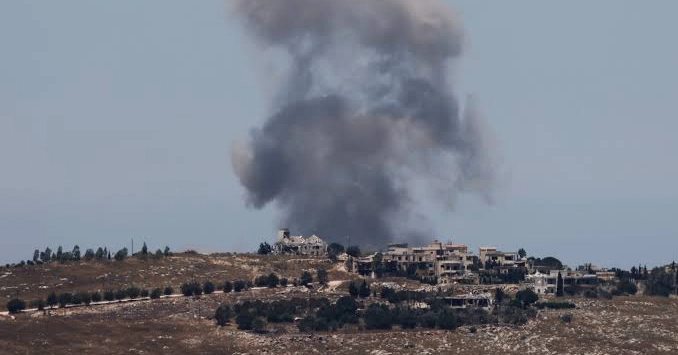
Israel and the Hezbollah militant group, which is backed by Iran, have reportedly agreed to stop the intense fighting in southern Lebanon, according to regional and U.S. officials. However, neither side has officially confirmed the ceasefire. The development comes as ongoing tensions threaten a broader U.S.-Iran agreement aimed at ending their conflict and restarting nuclear negotiations.
The reported truce followed a deadly exchange of attacks that left 47 people dead in Lebanon and four Israeli soldiers killed. Since the wider regional conflict began, Hezbollah has launched rockets and drones into northern Israel, while Israeli forces have carried out operations across large areas of southern Lebanon.
The broader U.S.-Iran agreement has already led to the reopening of the Strait of Hormuz, restoring a critical route for global oil and natural gas supplies. It is also intended to revive negotiations over Iran’s nuclear program, a central issue behind the conflict that began on February 28. However, renewed violence in Lebanon has complicated these efforts and delayed planned talks in Switzerland.
Under the agreement, military activity in Lebanon is supposed to cease and the country’s sovereignty should be respected, although neither Israel nor Hezbollah is directly involved in the deal. Israeli Prime Minister Benjamin Netanyahu has stated that Israeli troops will remain in southern Lebanon until security threats are eliminated, while Hezbollah insists it will continue its attacks unless Israel commits to withdrawing from Lebanese territory.
Despite reports of a ceasefire, clashes appeared to continue along the border. Journalists reported hearing Israeli artillery fire and witnessing explosions inside Lebanon after the supposed start time of the truce.
The ceasefire effort was reportedly brokered by Qatar, the United States, and Iran. A Hezbollah representative suggested that an announcement could be made soon but stopped short of confirming that an agreement had already taken effect. Israeli officials also indicated that military operations would continue until they received different instructions from the government.
Meanwhile, planned nuclear discussions in Switzerland faced setbacks. Iranian officials refused to attend while fighting in Lebanon continued, and U.S. Vice President JD Vance postponed his trip as well. According to Iranian officials, negotiations toward a final agreement are still ongoing through mediators, and a meeting may be rescheduled in the coming days.
On the battlefield, four Israeli soldiers, including a lieutenant colonel, were killed in an attack on a tank near Nabatiyeh in southern Lebanon. Israel responded with airstrikes targeting what it described as Hezbollah infrastructure. Hezbollah claimed responsibility for attacks on Israeli tanks, saying they were a response to Israeli actions that violated the ceasefire.
The violence has displaced many residents in southern Lebanon, forcing families to flee their homes. The ongoing conflict has also strained relations between Israel and the United States, with President Donald Trump reportedly becoming increasingly critical of Netanyahu, who is facing growing domestic pressure.
Future negotiations are expected to focus on Iran’s nuclear program. While Tehran insists its nuclear activities are peaceful, concerns remain due to its stockpile of highly enriched uranium. Reaching a long-term agreement is expected to be difficult, as previous nuclear negotiations took more than a year and a half.
The temporary deal allows negotiators 60 days to reach a permanent nuclear agreement, with the possibility of extending the deadline. It also offers significant incentives for Iran, including the gradual removal of international sanctions and access to a $300 billion postwar reconstruction fund.
Iran has already secured some benefits under the interim arrangement. The United States has eased restrictions on Iranian ports and oil exports, and provisions are in place for frozen Iranian assets to be released, although the timeline remains uncertain.