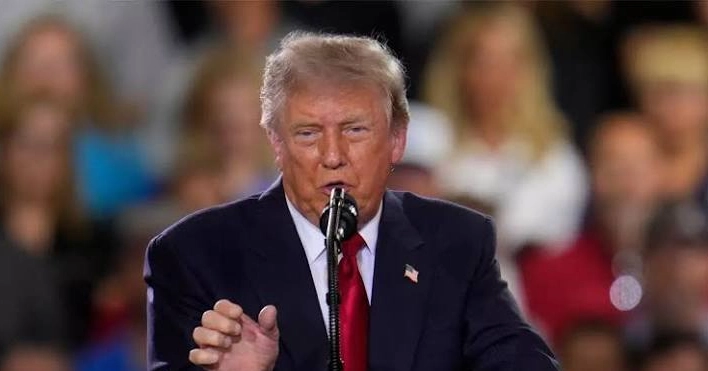
US President Donald Trump said Saturday that he is prepared to suspend further American military strikes against Iran, saying regional partners have outlined the framework of a possible agreement aimed at ending the five-month conflict.
In a post on social media, Trump said the proposed agreement would include the immediate reopening of the Strait of Hormuz and measures to eliminate what he described as Iran's nuclear threat.
He said he had agreed to call off planned military action in the interest of global stability and Iran's future prosperity, while stressing that the decision would depend on the swift conclusion of a deal.
Trump has previously announced pauses in military action against Iran since the United States and Israel launched attacks on Feb. 28, though hostilities have resumed after earlier diplomatic efforts failed.
Iran's defence minister responded on X, saying Tehran remained vigilant and prepared to respond to any tangible threats from the United States, adding that the country was neither surprised nor passive following Trump's remarks.
Proposal seeks renewed negotiations
A regional official involved in mediation efforts said the latest proposal envisions the United States and Iran returning to the negotiating table to resolve issues that have blocked previous agreements.
According to the official, the proposal includes reopening the Strait of Hormuz and halting attacks across the region, including operations by Iran-backed militias in Iraq targeting Gulf states and Jordan.
In return, the United States would lift its naval blockade on Iran and permit Tehran to resume oil exports under the terms of a proposed ceasefire.
The official, speaking on condition of anonymity because of the sensitivity of the talks, said negotiations are continuing and no final agreement has been reached.
Trump also claimed Israel would support the ceasefire initiative, though Israeli authorities did not immediately comment on the statement.
Saudi concerns over escalation
Saudi Crown Prince Mohammed bin Salman discussed the situation with Trump by phone on Saturday, expressing concern that further US military action could trigger Iranian retaliation, according to the Saudi Press Agency.
A person familiar with the conversation said Saudi officials fear Iran could target energy infrastructure in Saudi Arabia and other Gulf nations if tensions escalate. The call took place before Trump's social media announcement.
The source said the crown prince sought clarification on possible US actions toward Iran. A White House official confirmed the call but declined to disclose details.
Iran has repeatedly targeted vessels transiting the Strait of Hormuz without its approval during its confrontation with the United States.
Israeli strikes continue in Gaza
Meanwhile, Israeli airstrikes across Gaza overnight killed at least eight Palestinians, including two children, and injured more than a dozen others, according to local health authorities.
Health officials said three members of a family, including a four-year-old child, were killed in a strike on a residential apartment in southern Gaza. Another strike in Gaza City killed three more family members, including a child, while the mother, who was six months pregnant, was among those killed, according to hospital officials.
In central Gaza, an Israeli strike killed a man and his wife and wounded four others, local medical authorities said.
The Israeli military said the strikes targeted Hamas operatives but did not provide further details.
According to Gaza's Health Ministry, at least 1,222 Palestinians, including more than 260 children, have been killed since the October ceasefire. Five Israeli soldiers have also died during the same period. Israel and Hamas continue to accuse each other of violating the truce.
Separately, the US State Department issued fresh security alerts on Saturday advising American citizens across the Middle East to prepare for possible flight cancellations, temporary airspace closures and other travel disruptions. The advisory covers Bahrain, Israel, Iraq, Jordan, Kuwait, Lebanon, Oman, Qatar, Saudi Arabia and the United Arab Emirates.