
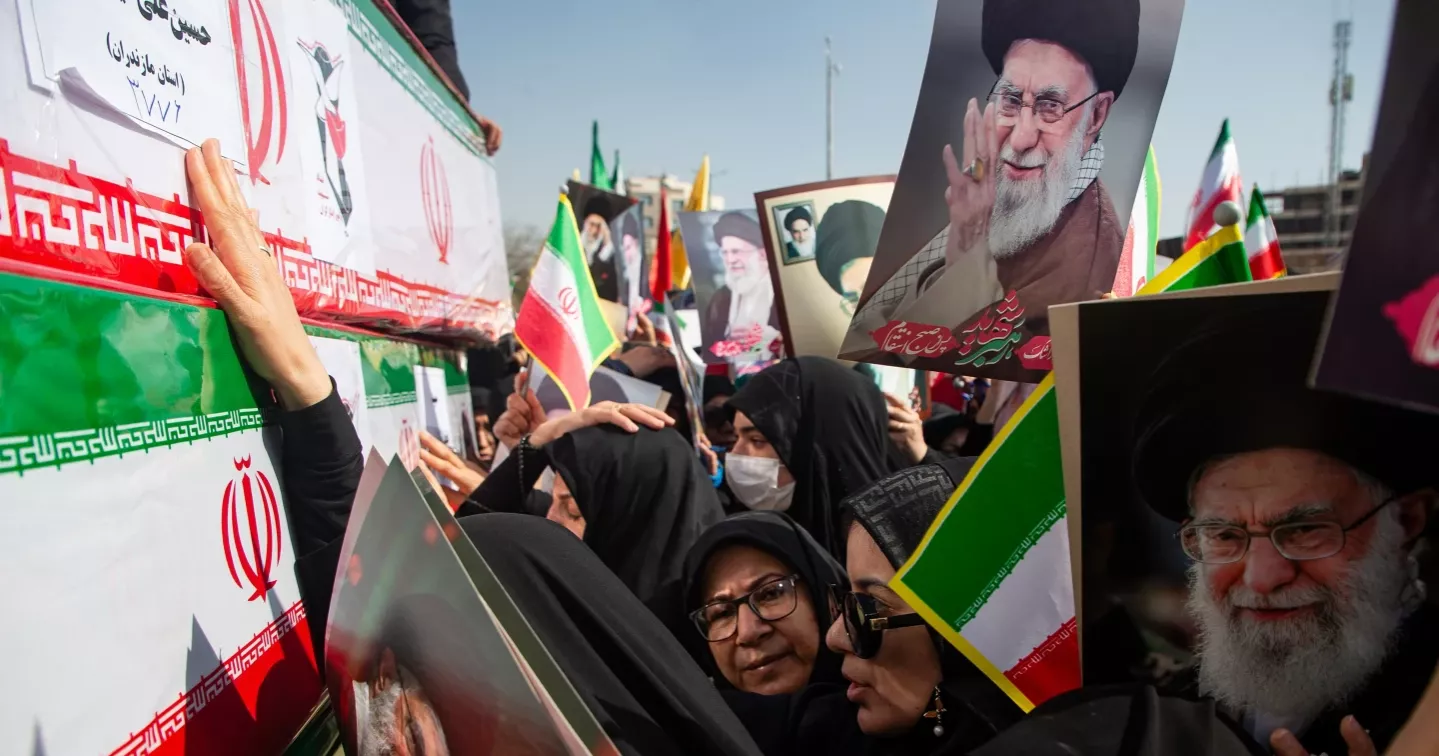
US President Donald Trump said Thursday that he should have a role in selecting Iran’s next supreme leader as the United States and Israel continued heavy strikes on Iran for a sixth straight day, while Tehran carried out retaliatory attacks across the region.
The intensifying conflict has already affected at least 14 countries in the Middle East and beyond, raising fears of a wider regional war.
Speaking to the news site Axios, Trump dismissed Mojtaba Khamenei, widely seen as a potential successor to his father, Iran’s slain supreme leader Ali Khamenei. Khamenei was reportedly killed in the opening phase of the war.
Trump said he wanted a leader who could bring “harmony and peace” to Iran and argued that the United States should have a role in determining the country’s next leadership.
His remarks are likely to fuel speculation about whether Washington and Israel aim to overthrow Iran’s Islamic Republic or simply force policy changes from Tehran.
War intensifies across the region
The fighting has escalated steadily, with Iran launching missiles and drones at Israel, US military bases and several countries aligned with Washington.
US Defense Secretary Pete Hegseth warned that American military power over Tehran would soon increase significantly.
Israel’s military said its strikes have already destroyed most of Iran’s air defense systems and missile launchers, though Israeli army chief Eyal Zamir cautioned that the threat from Iran has not yet been eliminated.
According to officials, the conflict has killed at least 1,230 people in Iran, more than 120 in Lebanon and around a dozen in Israel. Six US soldiers have also died.
Trump urges Iranians to rise against government
In brief remarks at the White House, Trump again called on Iranians to reclaim their country from the current leadership.
He said the United States would grant “total immunity” to Iranians who support such a change, though he provided no details about what that would entail.
Iran, however, has rejected any suggestion of negotiations.
Iran’s ambassador to Egypt, Mojtaba Ferdousi Pour, told The Associated Press that Tehran had not sought talks with Washington and denied Trump’s claim that Iran wanted negotiations.
He said trust between the two countries had collapsed after two failed rounds of nuclear deal discussions that ultimately led to war.
“There will be no trust in Trump,” he said.
Naval clash and rising tensions
Iran’s Foreign Minister Abbas Araghchi accused the US Navy of committing an “atrocity at sea” after an Iranian frigate, the IRIS Dena, was sunk in the Indian Ocean.
The ship had been returning from a naval exercise hosted by India and was carrying nearly 130 crew members, Araghchi said. At least 87 sailors were killed, while 32 were rescued by Sri Lankan authorities.
Sri Lanka said another Iranian warship with more than 200 sailors near its coast was being escorted to a naval base outside Colombo.
Attacks spread to Gulf states
The US military said an Iranian drone carrier was also struck and set on fire during operations.
Adm. Brad Cooper said American forces have sunk more than 30 Iranian vessels during the conflict, including a drone carrier comparable in size to a World War II aircraft carrier.
Meanwhile, several Gulf countries reported attacks linked to the conflict.
Kuwait activated air defense systems and the US State Department announced the temporary closure of the US Embassy there.
In United Arab Emirates, a drone was intercepted near the Al Dhafra Air Base, which hosts US forces, while falling debris injured several people.
Qatar evacuated residents near the US Embassy in Doha as a precaution and later reported a missile attack. Saudi Arabia said it destroyed a drone near its border with Jordan.
Bahrain said an Iranian missile struck a state-owned oil refinery on Thursday, sparking a fire that was later extinguished without casualties.
Meanwhile, Ilham Aliyev accused Iran of “terror and aggression” after drones crashed near an airport and a school in Azerbaijan, injuring several civilians. Tehran denied launching drones toward the country.
The fighting has also disrupted global oil shipping through the Strait of Hormuz and the Gulf of Oman, pushing oil prices higher and sending US stock markets downward.
Fighting expands to Lebanon
As the conflict spread, Israel issued an evacuation warning for residents in the southern suburbs of Beirut before launching strikes Thursday evening.
The Lebanese health ministry said at least 123 people have been killed since hostilities resumed between Israel and the Iran-backed militant group Hezbollah.
A spokesperson for the UN peacekeeping mission in southern Lebanon said peacekeepers had witnessed clashes, including ground combat, as additional Israeli forces crossed the border.