Britain on Tuesday announced a ban on trade in goods from Israeli settlements in the occupied West Bank, accusing settler groups of carrying out “ethnic cleansing” against Palestinians.
France and Canada also announced similar measures, saying expanding settlements and rising settler violence could undermine prospects for establishing a Palestinian state.
Israel condemned the move and said it would close the British consulate in Jerusalem.
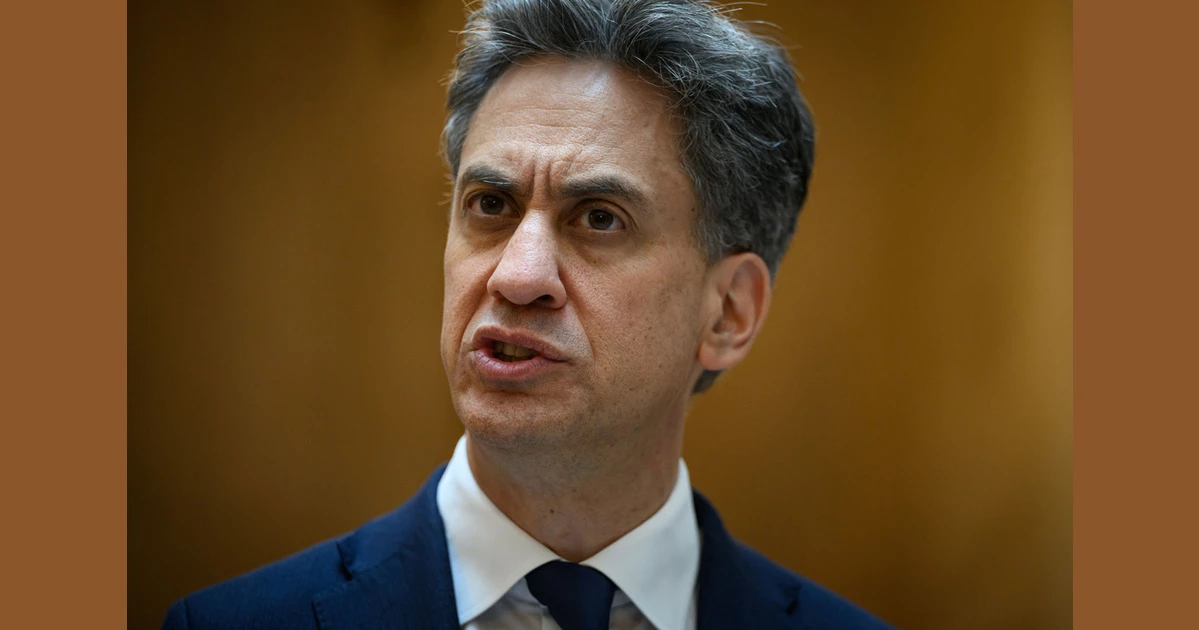
British Foreign Secretary Ed Miliband said the UK would prohibit imports of goods produced in the settlements and prevent companies from providing services there, including financing, construction, infrastructure, real estate and advertising.
He said the British government did not want to support the occupation by allowing settlement products to be sold in British shops and supermarkets.
In a joint statement, British Prime Minister Andy Burnham, French President Emmanuel Macron and Canadian Prime Minister Mark Carney said settlement expansion and settler violence posed an urgent threat to the two-state solution.
The economic impact of the ban is expected to be limited because Israeli settlements produce relatively small quantities of mainly agricultural goods. However, the decision represents a significant political signal from countries that have traditionally maintained close ties with Israel.
Miliband said Britain would not accept actions that undermine the possibility of a two-state solution.
Settlements and settler violence
Settlement construction in the West Bank has expanded significantly under Israeli Prime Minister Benjamin Netanyahu’s ultranationalist government.
Israel captured the West Bank in the 1967 Middle East war. The international community overwhelmingly considers Israeli settlements there illegal.
Miliband said Britain now considered Israel’s occupation of the West Bank, as well as the settlements themselves, illegal.
He accused settler groups of displacing Palestinian families, demolishing homes and destroying roads and other infrastructure.
The trade ban is expected to take effect within six to nine months. Miliband said Denmark, Finland, Iceland, Poland, Portugal and Sweden had pledged support for further measures.
He also said the UK had tightened restrictions on weapons sales to Israel for use in Gaza to include arms that materially contribute to the occupation of Palestinian territories.
Britain’s recognition of Palestine
The move follows Britain’s recognition of Palestinian statehood last year as part of efforts to revive the two-state solution.
The decision is likely to receive support from Labour lawmakers and voters who have called for stronger measures against Israel and greater support for Palestinians.
However, some British officials and Jewish leaders warned that the measures could deepen divisions and fuel antisemitism.
Israeli Foreign Minister Gideon Sa’ar condemned Britain’s decision and said Israel would remove UK representatives from a joint military center monitoring the Gaza ceasefire and end British training for Palestinian Authority security forces in the West Bank.
Israel also barred a number of British lawmakers and other UK citizens from entering the country, accusing them of involvement in antisemitic and anti-Israel activities.
Israeli President Isaac Herzog called the British move a serious mistake, while US Ambassador to Israel Mike Huckabee criticized the decision as discrimination against Jews and warned that Washington could respond.
Miliband, who is Jewish and has expressed support for Israel, said the British government’s disagreement was with the conduct of the Israeli government, not the Israeli people.