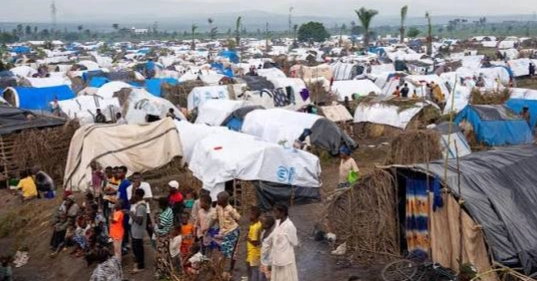
The East Africa region continues to face significant displacement of people driven by conflict, instability and climate shocks, according to Barham Salih, the United Nations High Commissioner for Refugees (UNHCR).
"The refugee situation in East Africa remains complex with ongoing emergencies, and many families are displaced multiple times while we are seeing some people choose to return home in areas of relative stability," Salih told Xinhua in a recent interview, disclosing that the region hosts some 6.3 million refugees, one of the largest refugee populations in the world.
He said the deadly mix of conflict and climate continues to be a main factor contributing to the surge of refugee crises in the region.
"New wars and protracted instability have significantly limited and in some cases destroyed essential services in countries of origin, forcing millions of people in particular women and children to seek safety and assistance in neighboring countries," Salih said.
The UN Refugee Agency's chief noted that as more people have continued to flee, opportunities for self-reliance have diminished, subjecting many refugees to remain displaced for decades.
Appreciating Eastern and Southern African countries for keeping their doors open to people fleeing conflict, violence and persecution, the high commissioner called for greater solidarity, investment and responsibility-sharing from the international community to support large refugee population hosting countries, including Ethiopia and Uganda.
According to Salih, funding gap remains the greatest challenge, threatening UNHCR, the UN Refugee Agency's ability to support the most vulnerable displaced people in the region.
"The ripple effects of reduced funding are heartbreaking. Families have to miss meals or children have to drop out of school; refugee teachers are unable to teach because they lack the right tools; health and nutrition services are in short supply while many families lack adequate shelter," the high commissioner pointed out.
"The funding cut also limits the agency's ability to provide long-term solutions, such as skills training, advanced education or job opportunities, keeping families trapped in a cycle of dependency," he said, appealing for increased investments from donors and development partners.
In 2026, funding stands at just 23 percent from the overall operational needs, putting lifesaving, health, education, hygiene, and protection services at risk of shutting down by the end of July this year, according to the UNHCR.
The high commissioner warned that without additional funding, the situation will lead to severe, long-term negative impacts on protection, security, and life-saving support systems for refugees, the displaced and host communities.