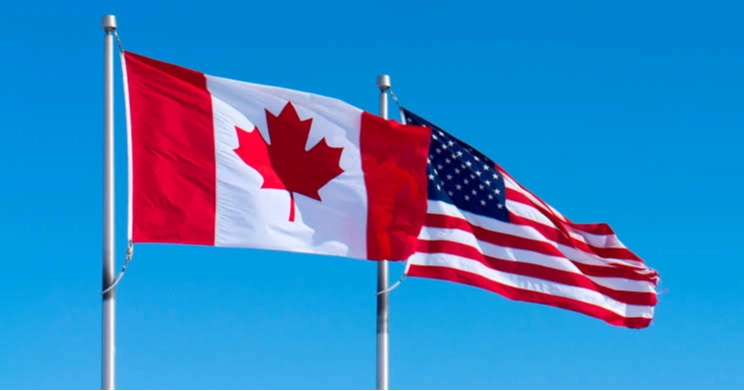
US-Canada relations are likely to face further strain after the United States early Tuesday implemented a ban on nearly $1 billion worth of Canadian imports, including alcoholic beverages, dairy products and motorcycles.
The ban represents only a small portion of the nearly $880 billion in annual two-way trade between the neighboring countries. However, it marks another escalation in President Donald Trump's second-term trade war with a longtime US ally and trading partner.
The latest measure took effect at 12:01 a.m. Eastern time Tuesday and follows Trump's decision to impose 50% tariffs on about $20 billion worth of Canadian imports over allegations that Canada discriminates against US dairy, auto and alcoholic beverage producers.
Canada responded with tariffs ranging from 15% to 50% on US imports.
To punish Canada for retaliating against the US tariffs, Trump ordered the ban on a list of Canadian products. Trade attorney Patrick Childress, a partner at Holland & Knight and former US trade official, said the move would not help ease trade tensions between the two countries.
Jacob Jensen, director of trade policy at the center-right American Action Forum think tank, estimates that the ban covers about $967 million worth of Canadian imports based on 2025 figures. About 87% of the affected goods are alcoholic beverages, which were targeted after some Canadian provinces responded to Trump's measures by removing US alcohol from store shelves.
The ban also covers some dairy products, including whey, as well as motorcycles. The two countries have long disagreed over Canada's protection of its dairy industry through high tariffs once imports exceed established quotas.
Bombardier Recreational Products (BRP), based in Quebec, confirmed that its three-wheel Can-Am Spyder and Canyon motorcycles would be excluded from the US market. However, the company said the impact may not be felt until next year as most production and shipments for the current season have already been completed.
Jensen said the latest measure marked another escalation in the trade war and could prompt further retaliation from Canada. He said affected Canadian exporters and US importers would likely push trade officials on both sides to find a resolution.
The standoff also threatens efforts to renew the US-Mexico-Canada Agreement (USMCA), the North American trade pact negotiated during Trump's first term that allows most goods to move across the region's borders duty free.
Since returning to the White House last year, Trump has announced a series of tariffs, creating uncertainty over the future of regional trade. He has particularly targeted Canada and has repeatedly suggested that the country could become the 51st US state.
Canadian Prime Minister Mark Carney, who came to power last year promising to stand up to Trump, has retaliated against US tariffs while seeking to reduce Canada's dependence on the US market. The United States accounted for more than 70% of Canadian exports last year.
“There is now a price to be paid for access to the United States market,” Carney said earlier this month, as he pledged to double Canada's non-US trade over the next decade.
Carney has also backed the possibility of Canada becoming the European Union's first associate member and said trade negotiations with India were making “good progress,” with the two countries aiming to conclude talks by the G20 summit in mid-December.
Canada also struck a deal with China earlier this year allowing a limited number of Chinese electric vehicles into the Canadian market at a reduced tariff in exchange for China lowering tariffs on Canadian canola.
Gabriel Brunet, a spokesman for Canada's Trade Minister Dominic LeBlanc, said the government’s priority remained protecting Canadian workers, farmers, families and businesses from what it called unjustified US measures.
Trump, meanwhile, expressed confidence that Canada would eventually agree to a deal.
“I think a deal will be made but it's gonna be fair,” he told reporters Monday.
Trade attorney Childress said the standoff could continue for months rather than weeks, noting that the bans and tariffs imposed so far may not cause enough economic disruption to force either side back to the negotiating table.